Adhyaya 178
Tṛtīyā-vratāni (Vows for the Third Lunar Day): Lalitā Tṛtīyā, Mūla-Gaurī Vrata, and Saubhāgya Observances
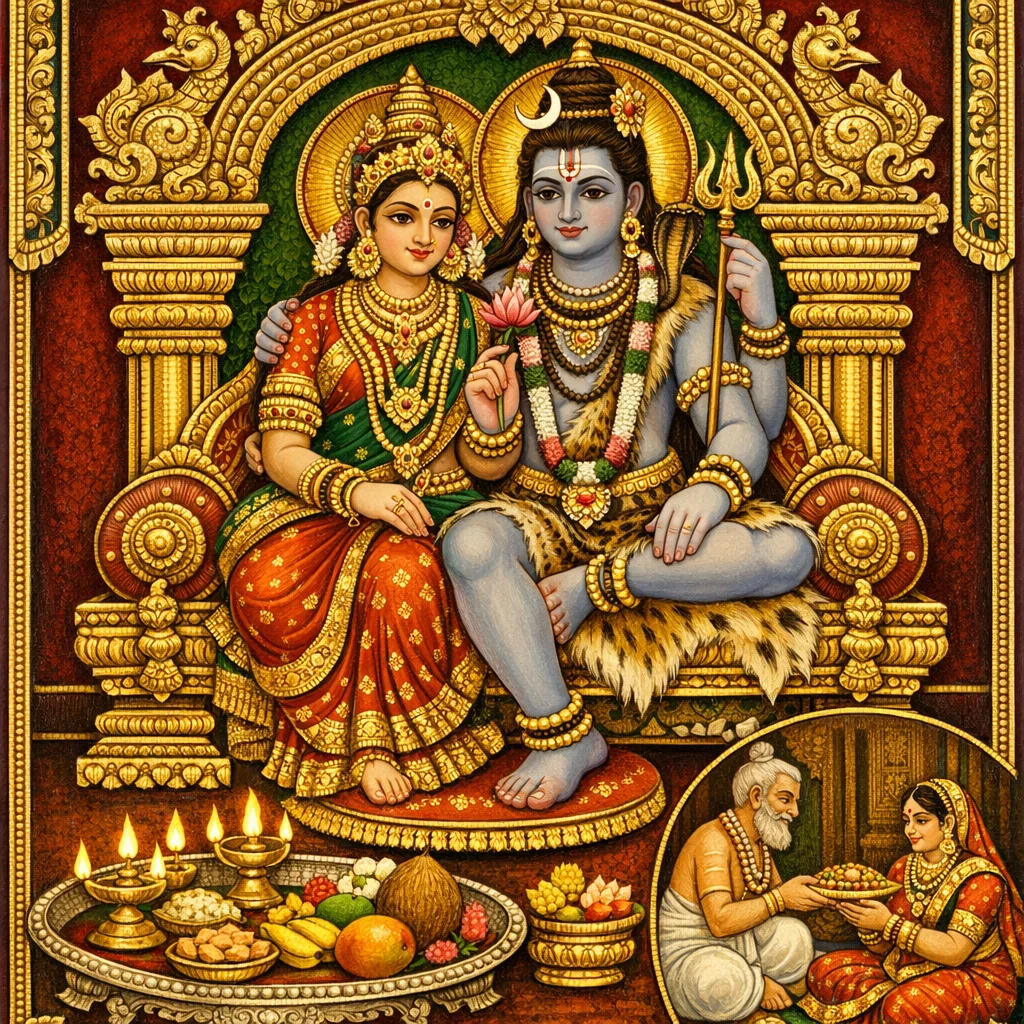
アグニ神は本章の冒頭で、ドヴィティーヤ(第二日)の誓戒からトリティーヤ(第三日)の誓戒へと移り、これらがブクティ(現世の享受・繁栄)とムクティ(解脱)の双方を授けると明言する。ついで、チャイトラ月白分第三日(Caitra śukla tṛtīyā)に行うムーラ・ガウリーの行法を説き、ガウリーがハラ(シヴァ)と婚姻したことを記念するものとする。胡麻湯の沐浴による浄化に始まり、シャンブーとガウリーを吉祥の供物(「黄金の果実」など)で同時に供養する。中心となるのは長大なマントラ・ニヤーサ(肢体別の招請)で、足・足首・脛・膝・腰・腹・乳房・喉・手・腕・顔・鼻・眉・口蓋・髪・頭頂へと神名と力を安置し、シヴァ=シャクティの神学を身体化された礼拝に統合する。花と香料、月ごとの供養次第が定められ、最後はダーナとして、バラモン夫婦を敬い、諸品の一式を施し、黄金のウマー=マヘーシュヴァラ像と牛などの大施を行う。代替の時期(ヴァイシャーカ、バードラパダ/ナーバスヤ、マールガシールシャ)や、繰り返しの礼拝とムリティユンジャヤの誦持を含む第二の手順も示される。さらにアグニ神はサウバギャ誓戒(とくにパールグナ月第三日からの塩断ち)を導入し、各トリティーヤに対応する女神の相を列挙して、サウバギャとスヴァルガ(天界)を約束する。
Shlokas
No shlokas available for this adhyaya yet.
Frequently Asked Questions
The chapter primarily teaches Tṛtīyā-vratas, especially Lalitā Tṛtīyā and the Mūla-Gaurī vrata, including a detailed mantra-nyāsa and concluding dāna; it also introduces the Saubhāgya-vrata for marital prosperity.
By embedding limb-wise mantra-nyāsa (a technical ritual technology) within Śiva–Śakti worship and ethical-social duties (honoring a brāhmaṇa couple and dāna), the chapter frames embodied discipline and generosity as means toward both prosperity (bhukti) and liberation (mukti).
Caitra śukla tṛtīyā is highlighted for Lalitā/Mūla-Gaurī; alternative performance months include Vaiśākha, Bhādrapada (Nābhasya), and Mārgaśīrṣa, with additional mentions of Māgha and Bhādra for Tṛtīyā-vrata practice.