Adhyaya 176
Pratipadā-vratāni (Vows Observed on the Lunar First Day)
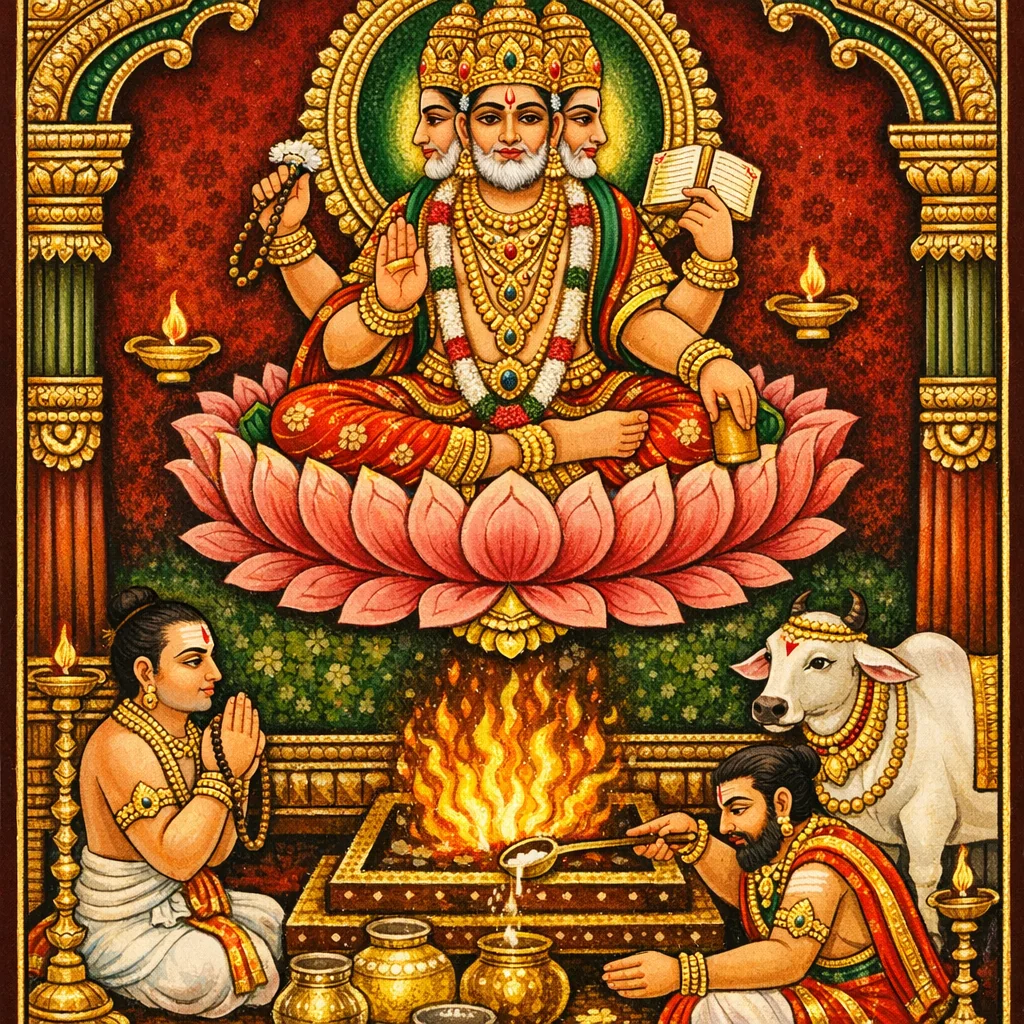
アグニ神は、プラティパダー(Pratipadā:月の第一日)に基づく諸ヴラタを体系的に説き起こし、朔後の初日を一年にわたる修行規律へ入るための、儀礼的に力ある入口として示す。さらに、カールッティカ(Kārttika)・アーシュヴァユジャ(Āśvayuja)・チャイトラ(Caitra)のプラティパダーをブラフマー(Brahmā)のティティ(tithi)と定め、暦の時間を特定の神格への帰依焦点と結び付ける。章はついでヴラタの「実践技法」を述べる――断食規定(長期の食断ちや統制された食事法を含む)、マントラ「Oṃ tat sat brahmaṇe namaḥ」をガーヤトリー(Gāyatrī)とともにジャパすること、そしてブラフマーの明確な観想(黄金色、結髪、アクシャマーラーakṣamālāと供杓を持ち、カマンダルkamaṇḍaluを備える)。布施(dāna)は測り得る倫理的成果として組み込まれ、力に応じた乳の施与が勧められ、その果として浄化・天界の享楽・バラモンの世俗的繁栄が説かれる。第二の流れでは、マールガシールシャ(Mārgaśīrṣa)におけるダンニャ・ヴラタ(Dhanya-vrata)を、ナクタ(nakta:夜のみ食す)とホーマを伴って示し、続いて一年間アグニを礼拝し、最後に黄褐色の牝牛を施して円成する。章末はシキー・ヴラタ(Śikhī-vrata)とその果――ヴァイシュヴァーナラ(Vaiśvānara)の境地/住処の獲得――を挙げ、ヴラタ行がブクティ(bhukti:繁栄)と高次の霊的到達の双方に結び付くことを明らかにする。
Shlokas
No shlokas available for this adhyaya yet.
Frequently Asked Questions
Kārttika, Āśvayuja, and Caitra are identified as months where Pratipadā is regarded as Brahmā’s tithi.
The chapter prescribes the mantra “Oṃ tat sat brahmaṇe namaḥ” together with Gāyatrī, maintained as a year-long observance.
Brahmā is described as golden and matted-haired, with akṣamālā and a ladle (śruva) in the right hand, and a sacrificial ladle (śruc) and kamaṇḍalu in the left, with a long tuft/brush-like emblem (lambakūrca).
Milk is to be donated according to capacity with the resolve “May Brahmā be pleased,” yielding purification, heavenly enjoyment, and wealth on earth (for a brāhmaṇa). The Dhanya/Agni-oriented year observance culminates in gifting a kapilā (tawny) cow.
By mapping time-discipline (tithi), mantra, and dāna into repeatable observances culminating in destinations like Vaiśvānara pada, it frames vrata as a sādhana that integrates ethical action and higher spiritual attainment (bhukti-mukti samanvaya).