Adhyaya 146
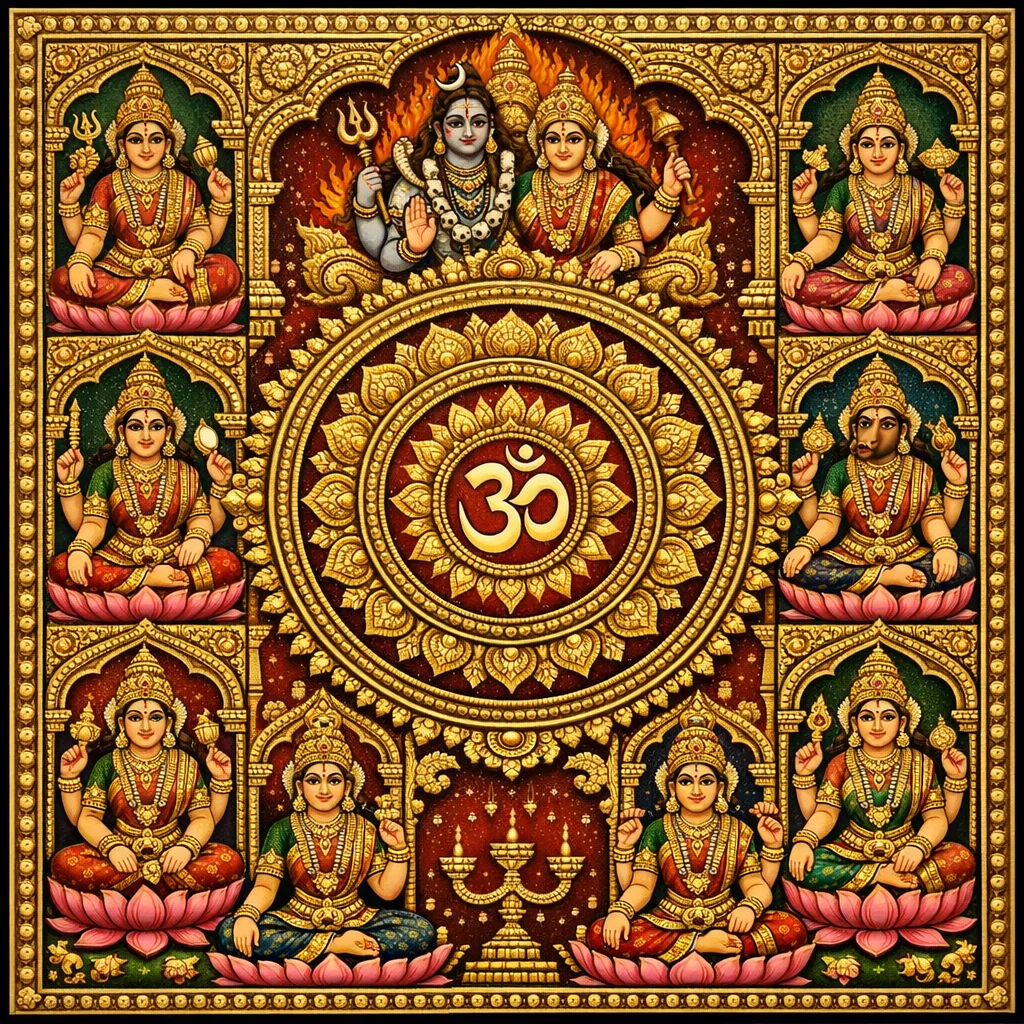
Chapter 146 — Aṣṭāṣṭaka Devī-s (अष्टाष्टकदेव्यः)
本章でアグニ神(ここではイーシュヴァラの声として)は、トリカーンディー Trikhaṇḍī—ブラフマー Brahmā、ヴィシュヌ Viṣṇu、マヘーシュヴァリー Maheśvarī—を、母神群マートリカー Mātṛkā の秘奥の「心」(hṛdaya)に結びつくマントラ構造として示す。母神たちは実働する力として、目的を成就し、不朽で、障りなく動き、制伏・追放・根絶をもたらし、とりわけ敵対の作法を断ち切って悉地 siddhi を確保すると説かれる。続いて「vicce svāhā」で終わるマントラ単位が挙げられ、写本異同に触れつつ、技術的な数え方(pada/語数、より大きなマントラ集成内での配置)が規定される。さらに五つの praṇava の境界をもつジャパと礼拝、語の継ぎ目(pada-sandhi)への Kubjikā-hṛdaya の挿入、音声配置の規則(「三つの中の中位」)、Śikhā-Śivā/Bhairava の式、32字配列に合わせた三音節 bīja 群(種子あり/なし)が説示される。後半では kula/系統ごとに女神名—Brahmāṇī、Māheśvarī、Kaumārī、Vaiṣṇavī、Vārāhī、Aindrī、Cāmuṇḍā、Mahālakṣmī—を列挙し、Yuddhajayārṇava の勝利儀礼として jaya(勝利)のためのマンダラ maṇḍala 礼拝を強調する。
Shlokas
No shlokas available for this adhyaya yet.
Frequently Asked Questions
A Trikhaṇḍī mantra-framework tied to the secret Mātṛkā-hṛdaya, with prescribed japa/worship, pada-sandhi insertion of Kubjikā-hṛdaya, and phonetic (varṇa) arrangements supporting maṇḍala-based victory rites.
It repeatedly frames the Mothers’ powers as operative for jaya: uprooting obstacles/enemies, cutting hostile rites (para-karma), and prescribing maṇḍala worship of specific kula-born goddess groups explicitly “for victory.”
Because mantra efficacy and transmission depend on exact phonetic forms; the chapter preserves variant endings and syllable-forms to document recensional differences while still maintaining counting schemes (pada totals; inclusion within larger mantra sets).