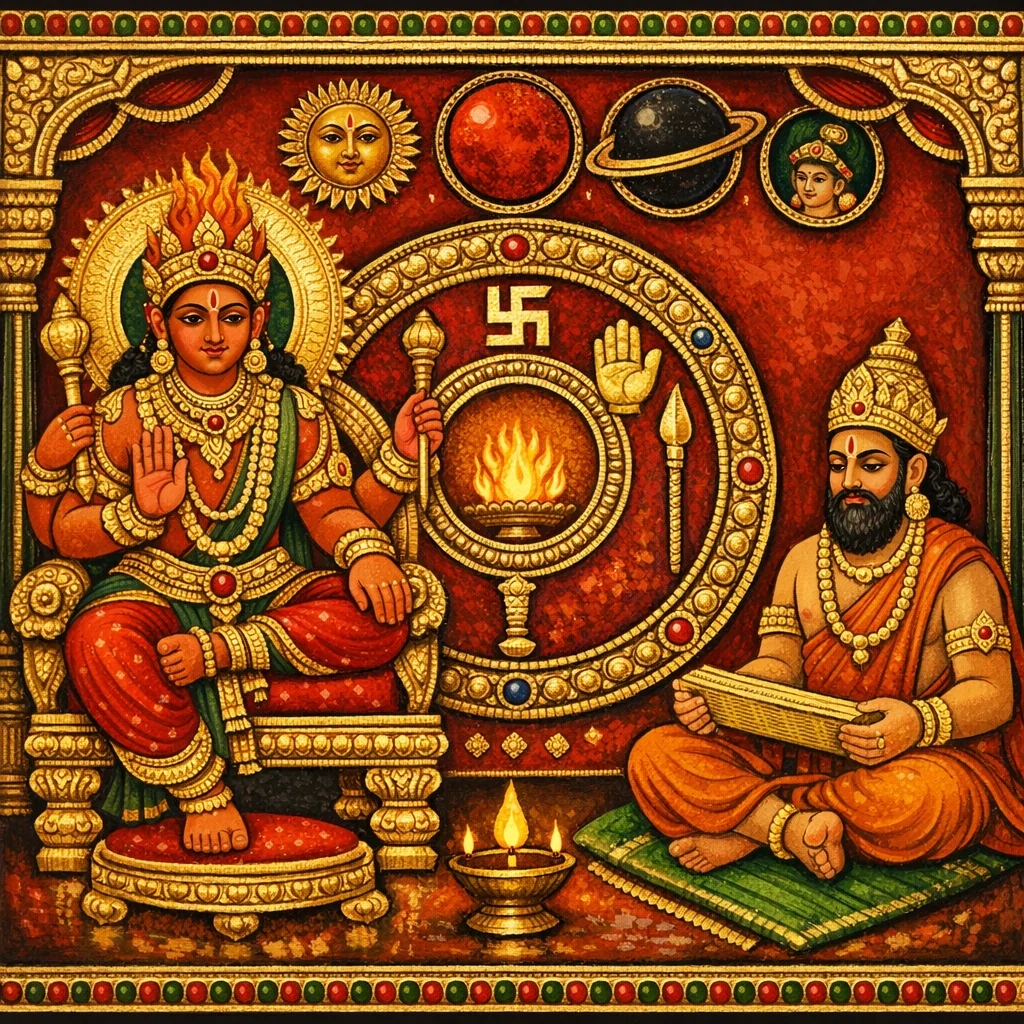
Adhyaya 136
The Nakṣatra Wheel (नक्षत्रचक्रम्)
第136章で火神アグニは、旅などの企ての成否を占う実用的なジョーティシャの器具「ナクシャトラ・チャクラ(宿輪)」を説き起こす。輪はアシュヴィニー(Aśvinī)から描き始め、三重の同心帯(tri-nāḍī)として構成され、解釈の層状の通路を示す。続いて、ナクシャトラの群分けと、それに付随する音節/ムドラーの標識(例:Muṣṭi–Mudgara、Ṛṣṭi–Mudgara、また Abhaya・Svastika・Stambhikā を伴う諸組)を列挙し、結果判読のための符号化された運用分類を示唆する。さらに、特定の宿(Kṛttikā・Rohiṇī;Citrā・Svātī・Viśākhā;Śravaṇā・Revatī)を音声標識(Ahi、Bhaṁ)に結び付け、輪の記憶術的論理を補強する。この構造は「パニーシュヴァラ(蛇主)のチャクラ」と名づけられ、tri-nāḍī と結合するグラハ(惑星)の配置によって吉凶を判ずると説く。要の兆しとして、太陽・火星・土星・ラーフ(Rāhu)の合は不吉を示すが、好条件により吉へ転ずることもあり、解釈は土地(国/村)や人間関係(兄弟、妻など)にも及ぶ。
Shlokas
No shlokas available for this adhyaya yet.
Frequently Asked Questions
The construction and reading protocol of the tri-nāḍī nakṣatra-cakra (Phaṇīśvara cakra): starting from Aśvinī, arranging nakṣatras with coded syllable/mudrā markers, and judging results via graha-conjunctions—especially the Sun–Mars–Saturn–Rāhu inauspicious configuration.
It frames predictive technique as disciplined dharmic support: by aligning journeys, campaigns, and social actions with cosmic order (ṛta/dharma), the practitioner reduces harm, chooses timely action, and treats worldly success (bhukti) as subordinate to righteous conduct that ultimately supports inner purification and mukti.