Adhyaya 126
Chapter 126 — Nakṣatra-nirṇaya (Determination of the Lunar Mansions) and Rāhu-Based Victory/Defeat Omens
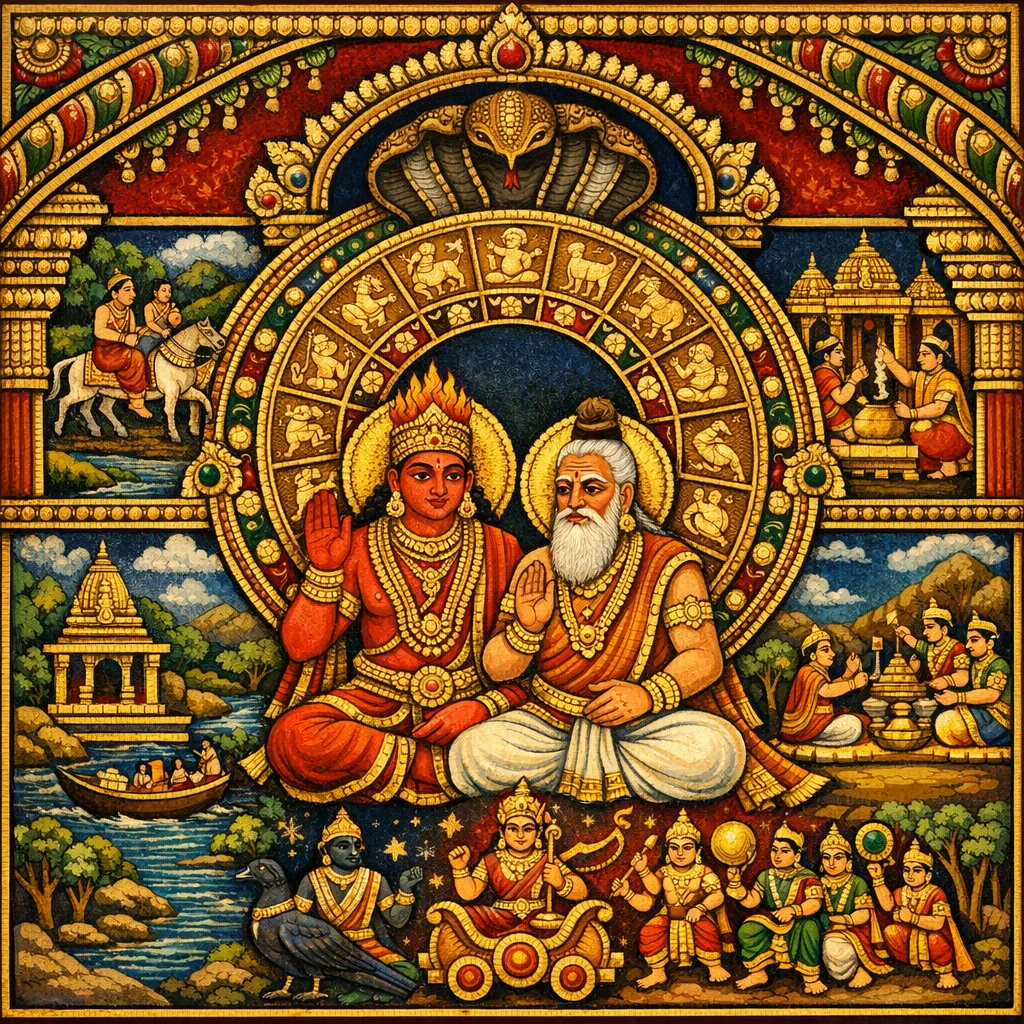
イーシュヴァラは、吉凶を判別するための「ナクシャトラ身の球(宿身球)」という図式を示し、太陽が現在在るナクシャトラを身体部位(頭・顔・眼・心・四肢・腰・尾)に配当して兆しを読むことを説く。続いて章は『ユッダジャヤールナヴァ』風の戦勝占へ移り、ラーフ(Rāhu)のための「蛇のフード図」を、28の点を記してからラーフの在宿を起点に27宿を配列して作ると述べる。特定の配置(とりわけ第七に関わる示唆)は戦場での致命・損傷の徴とされ、他の配置は名誉・勝利・名声を約束する。さらに、ヤーマの半分割を司る惑星を列挙し、戦術規則として、土星・太陽・ラーフを「背後に置く」なら戦争・旅・さらには賭け事においても成功すると説く。次に、宿を機能類型(固定・迅速・温和・猛烈、ならびにPitṛ/Nairṛtaの系属)に分類し、旅立ち、安置・設置、建築、掘削、王儀礼のためのムフールタ選定を示す。最後に、ティティの「焼却」規則、結果を増幅するトリプシュカラ(tithi–曜日–宿の組)を定義し、旅の往復の徴を挙げ、ガンダーンタ等の危険な結節では吉祥儀礼のみならず出産さえ重大な危険を伴うと警告する。
Shlokas
No shlokas available for this adhyaya yet.
Frequently Asked Questions
It maps the Sun’s current nakṣatra onto a schematic body (head/face/eyes/heart/limbs/waist/tail) and interprets outcomes—e.g., head indicates sovereignty, heart indicates wealth, certain placements indicate theft or death.
A serpent-hood (phani) diagram is formed by dots and lines; the nakṣatra occupied by Rāhu is placed on the hood and the remaining nakṣatras are arranged in order, after which specific positional relations (notably seventh-related) are read as victory, defect, or fatality indicators.
Tripuṣkara is defined through specific sets of tithis, weekdays, and nakṣatras; when present, results—gain, loss, victory, increase, or outcomes regarding birth—are said to become amplified (notably threefold).
The text cautions against the Revatī–Aśvinī and Āśleṣā–Maghā junction zones with specified avoidance measures (nāḍī/ghaṭikā/yāma), and names the Jyeṣṭhā–Mūla junction as a fierce ‘yāmaka’.