Adhyaya 216
Gāyatrī-nirvāṇa (The Liberative/Concluding Doctrine of Gāyatrī)
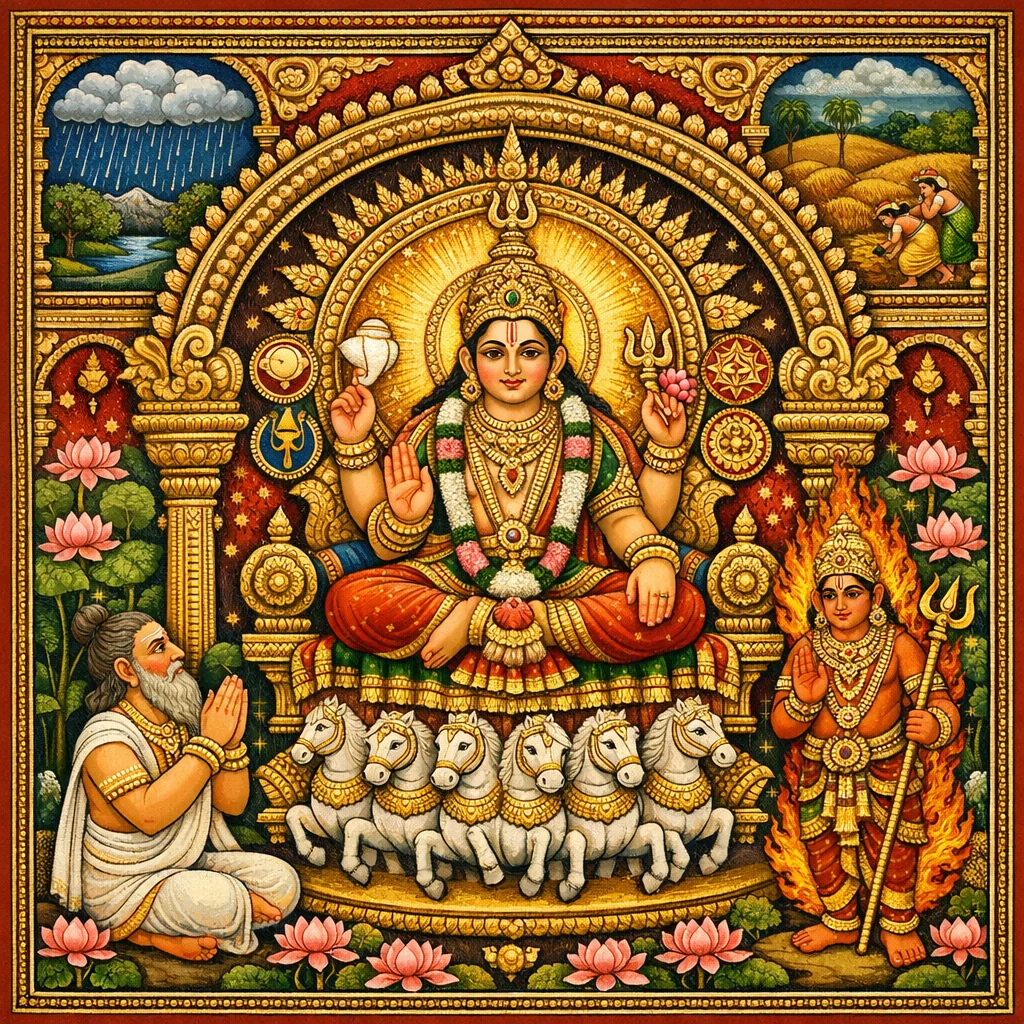
サンディヤー儀軌(Sandhyā-vidhi)を終えたのち、アグニは行者に、ガーヤトリーのジャパ(Gāyatrī-japa)と想起(smaraṇa)によって儀礼を結ぶべきことを説き、マントラを護り(rakṣā)であり内的鍛錬であると強調する。続いて文献学・神学的注釈が展開され、ガーヤトリーは照明するゆえにサーヴィトリー(Sāvitrī)、サヴィトṛの言(vāc)の形態であるゆえにサラスヴァティー(Sarasvatī)と説かれる。bharga は「輝く」「浄める」を含む語根から、「焼く/煮る」のような精錬として解され、光輝が変容的浄化に結び付けられる。vareṇyam は天界と解脱を求める者が選び取るべき至上の境地、dhīmahi は心に持続的に保持し観想することと注解される。さらに、マントラの光は一つの実在であり、ヴィシュヌ、シヴァ、シャクティ、スーリヤ、アグニとして様々に誦されるが、ヴェーダの始めには一味のブラフマンがあると断じて宗派的解釈を融和する。次いで儀礼宇宙論として、アグニへの供物が太陽を支え、雨・食物・生類を生むことで、マントラと祭式が世界を維持することを示す。頂点は不二一元(アドヴァイタ)で、太陽円盤の至上光はトゥリーヤの実在でありヴィシュヌの最高位(Viṣṇu-parama-pada)である;瞑想により生死と三種の苦を滅し、「我はブラフマン…我こそ無限なる太陽のプルシャ(Oṃ)」という同一宣言に至る。
Shlokas
No shlokas available for this adhyaya yet.
Frequently Asked Questions
Completion through Gāyatrī-japa and mental recollection (smaraṇa), framed as both spiritual discipline and protective power for disciples, spouse, and vital breaths (prāṇa).
Bharga is interpreted as tejas (radiance) and purifying brilliance, supported by etymological links to roots meaning ‘to shine’ and ‘to burn/cook’ (purificatory transformation).
It acknowledges multiple recitations (Śiva, Śakti, Sūrya, Agni) while asserting their unity in the one supreme light/Brahman, explicitly identifying that light with Viṣṇu as the world-cause.
It presents a causal chain: oblation to Agni supports Āditya; from the Sun comes rain; from rain food; from food living beings—linking ritual action to world-order.
By meditating on the supreme light as turīya within the solar orb, one destroys birth-death and threefold suffering, culminating in the non-dual recognition ‘I am Brahman’ and identity with the Āditya-Puruṣa.