Adhyaya 212
Meru-dānāni (Meru-Donations) — Kāmya-dāna, Month-wise Offerings, and the Twelvefold Meru Rite
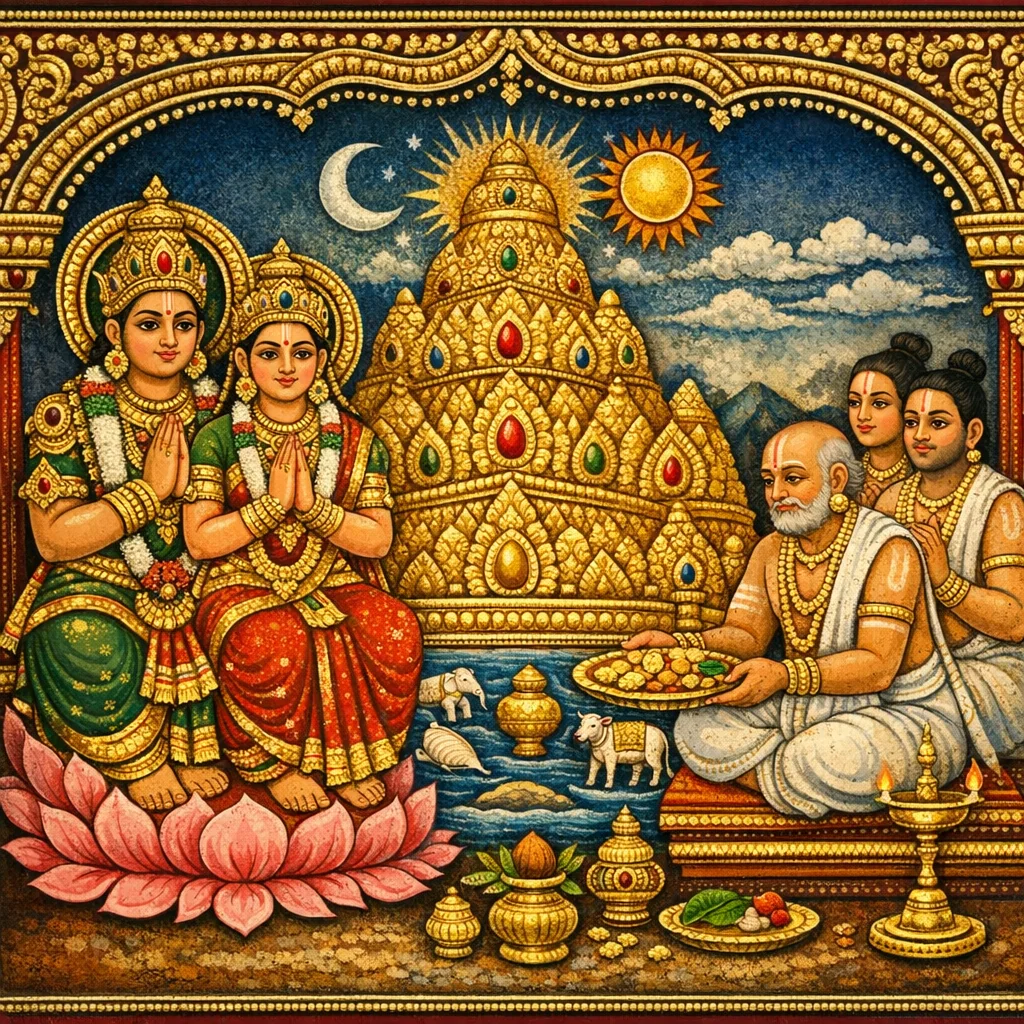
火神アグニは前章の施与目録から転じ、月々の持続的礼拝に基づき年末の大儀へと結実する kāmya-dāna(特定の願いを成就させる誓願の布施)を体系的に説く。月別の供物(粉で作る像を含む)とその果報を示したのち、核心たる Meru-vrata—カールッティカ月に行う十二重の Meru-dānaで、bhukti と mukti の双方を約束する—を提示する。本章は儀礼建築の手引きとなり、段階的な寸法と貴重な素材でメル山を造立し、蓮華の図式の中に安置して中央軸に Brahmā–Viṣṇu–Īśa を据え、方位順に名づけられた諸山で周囲を囲む。さらに、布施の作法(真言、gotra を名指しての施与、金銭の欺きの回避)、吉時(saṅkrānti、ayana、日月食)、および多様なメル供養(黄金・白銀・馬・牛・布・ギー・穀物・胡麻・khaṇḍa-meru)を規定する。結びには、メルをヴィシュヌの姿と同定する讃歌と、清浄・家系の高揚・天界・そして最終的にハリへ近づくための信愛の nivedana が捧げられる。
Shlokas
No shlokas available for this adhyaya yet.
Frequently Asked Questions
Regular monthly worship → year-end grand worship → Kārttika Meru-vrata with bathing/fasting → worship of Viṣṇu (or Śiva) → mantra-guided gifting of a constructed Meru to a brāhmaṇa (often gotra-addressed) → dedication (nivedana) for bhukti and mukti.
Ratna-meru (jeweled), Hema/Svarṇa-meru (gold), Rāupya-meru (silver), Hasti-meru (elephant-form), Aśva-meru (horses), Go-meru (cows), Vastra-meru (cloth), Ājya-parvata (ghee mountain), Dhānya-meru (grain), Tila-meru (sesame), and Khaṇḍa-meru (symbolic/segmented Meru).
It frames giving as a mokṣa-supporting discipline: purity through non-deceit, devotion-centered worship, cosmological visualization (Meru as Viṣṇu-form), lineage uplift, and final orientation toward Hari/Viṣṇuloka—thus integrating merit, devotion, and liberation.
Graded measurement logic (highest/middle/lower), prescribed weights (palas, khāras, prastha), construction rules (three peaks with Brahmā–Viṣṇu–Maheśvara), directional mountain placement, and calendrical triggers (Kārttika, saṅkrānti, ayana, grahaṇa).