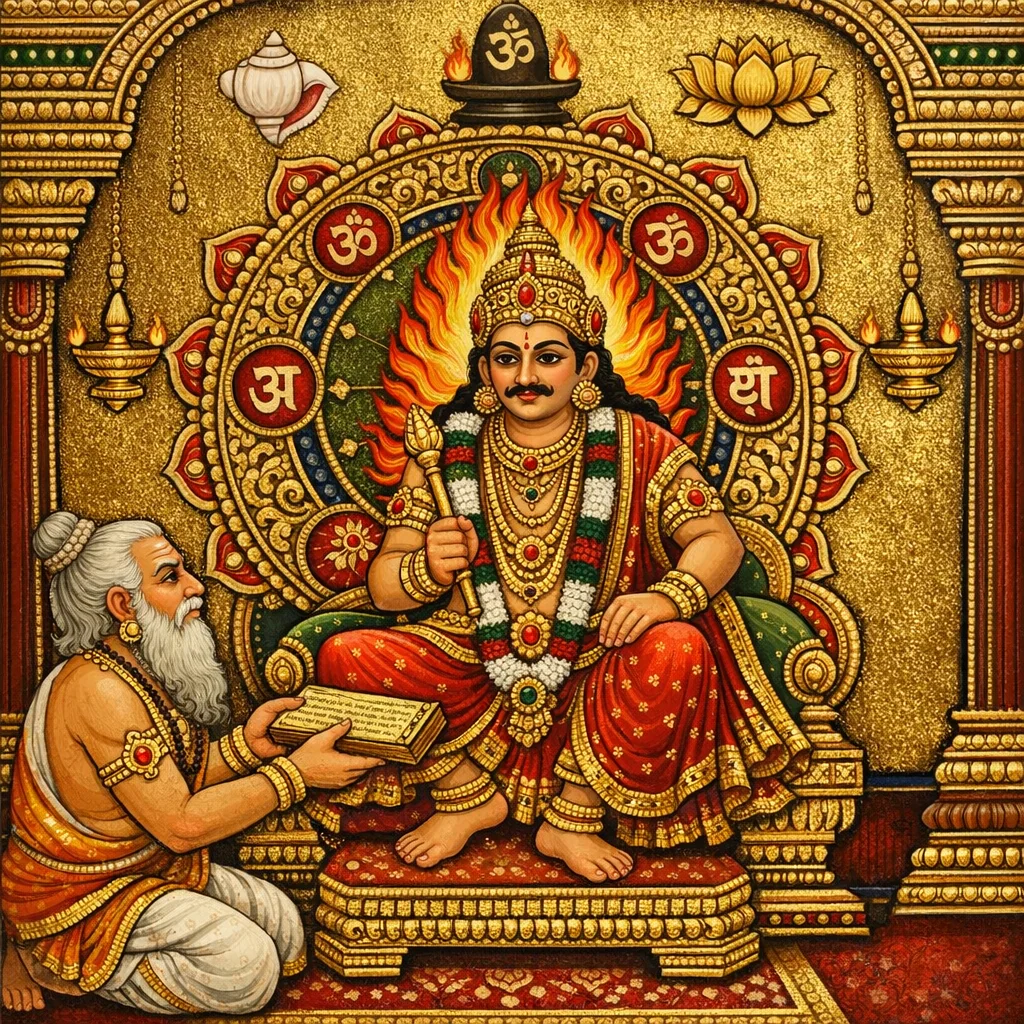
Adhyaya 335
अध्यायः ३३५ — शिक्षानिरूपणम् (Explanation of Śikṣā / Phonetics)
前章の prastāra 論を受け、韻律学(chandas)中心の学修を進める中で、火神アグニはマントラ・韻律・正統な伝承の基盤となる音声学 Śikṣā を説く。音素の総数(varṇa-saṅkhyā)を挙げ、母音と子音の諸類を区別し、anusvāra・visarga・ayogavāha などの付随音も含める。さらに、発声を内的生理—心(意)、内なる火、生命の風—と結びつけ、音が生起して意味ある言葉となる過程を示す。アグニは音素をアクセント、長短、調音位置、努力(発音の力)によって分類し、主要な調音部位として胸・喉・頭・舌根・歯・鼻・唇・口蓋を列挙する。規範的強調も明確で、誤った発音は霊的に害をなし儀礼を無効にするが、正しい抑揚と明晰な発音は吉祥で人を高める。結びに、Śikṣā の核心分類—udātta/anudātta/svarita の三アクセント、hrasva/dīrgha/pluta の三時量、そして接触に基づく aspṛṣṭa・īṣat-spṛṣṭa・spṛṣṭa—を示し、音声学を bhakti の実践と śāstra 学習を守るダルマの技法として位置づける。
Shlokas
No shlokas available for this adhyaya yet.
Frequently Asked Questions
A structured śikṣā taxonomy: phoneme counts (63/64), vowel and stop totals, accessory sounds (anusvāra/visarga/ayogavāha), three Vedic accents, three time-measures (hrasva/dīrgha/pluta), and a fivefold classification by accent, duration, place, effort, and meaning-bestowal.
It frames correct pronunciation and intonation as dharmic discipline: accurate sound preserves mantra potency, prevents ritual fault, protects the lineage of teaching, and aligns speech (vāk) with purity—thereby supporting both worldly competence in vidyā and the higher aim of auspiciousness and liberation.