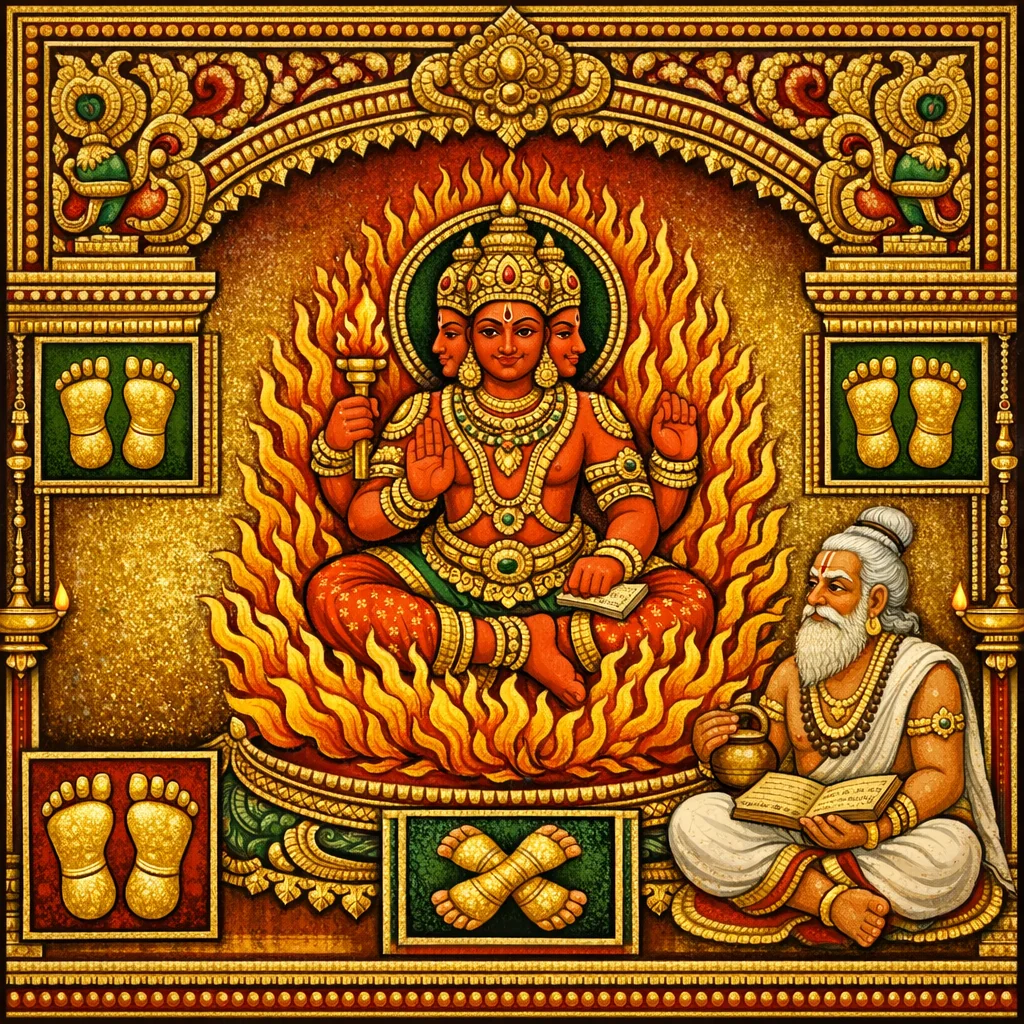
Adhyaya 332
Definition of Ardha-sama (Half-equal) Metres (अर्धसमनिरूपणम्)
アグニ神はヴァシシュタ仙に対するチャンダス・シャーストラ(韻律学)の教示を続け、viṣama(不均等)韻から ardha-sama(半等)韻の分類へと移る。本章はこの類に記憶される韻型—Upacitraka、Sa-samānā、Bhojabhagā、Drūtamadhyā、Bhagāgathā、Unanā、Jayā—を列挙して始まり、続いてそれらを識別・構成するための gaṇa 配列と名称あるリズム型を規定する。さらに叙事的韻律様式(ākhyānikā)とその viparīta(反転)形を区別し、Rajasā、Gogatha、Droṇa、Ketumatī、Jagāgatha、Tatajagāgatha などを例示し、Dhariṇavallabhā、Aparākrama、Puṣpitā といった追加の名目も紹介する。結びでは samavṛtta(等音節)構成を、明示的な gaṇa 順序と mātrā(nāga 単位)による計数で示し、逆形 Khañjā も挙げて、韻律学が厳密で再現可能な śāstra として、節度ある言語とダルマ的文化に即して説かれることを明らかにする。
Shlokas
No shlokas available for this adhyaya yet.
Frequently Asked Questions
The chapter emphasizes identification and construction of ardha-sama metres through explicit gaṇa-sequences (e.g., Vegavatī’s bha-bha-bha-ga-go-ga-tha), named pattern-sets (including Rudra-vistāra), and mātrā/nāga-based counting culminating in a samavṛtta demonstration with a defined reverse-form (Khañjā).
By disciplining speech through exact metrical knowledge, it supports dhārmic communication, accurate preservation of sacred and literary utterance, and cultivated aesthetic order—treating linguistic precision as a form of sādhana that complements ritual life and ethical culture on the path toward puruṣārtha.