Adhyaya 30
Chapter 30: मण्डलविधिः (Maṇḍala-vidhi) — Procedure for the Maṇḍala
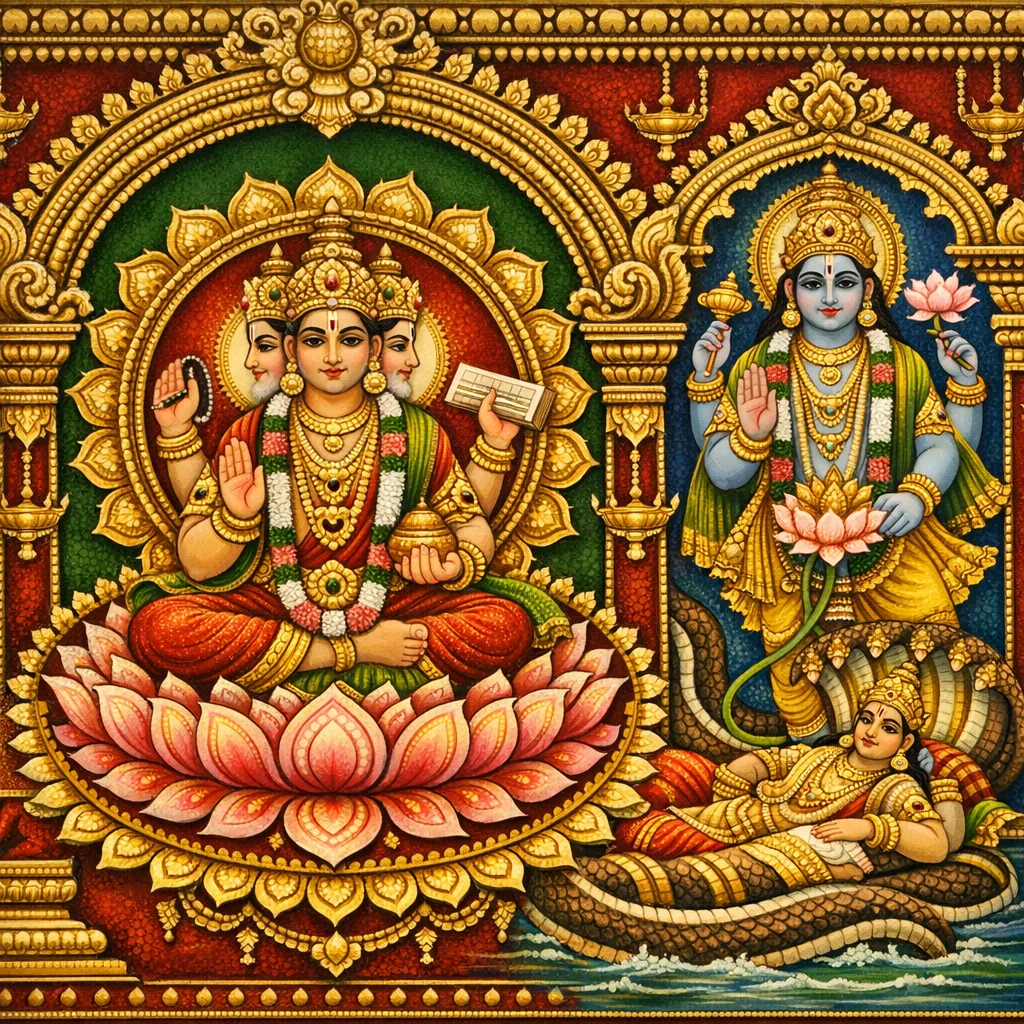
本章は、先に述べたマンダラの諸特徴を締めくくり、ただちに規定的な儀礼技法へと移る。ナーラダは、蓮華を基盤とするマンダラ内での礼拝次第を示し、修行者に対して蓮華の中央(madhye padme)に梵天ブラフマーを、そのaṅga(随伴する肢分・補助要素)とともに安置して供養するよう命じる。これによりマンダラは単なる図式ではなく、生きた神性の場として確立される。さらに蓮華の東方区画は、蓮臍のヴィシュヌ(Padmanābha)に配当され、神々を方位と花弁/区画に対応させて秩序立ててupāsanā(観想・礼拝)するという方位神学が示される。叙述はAgneya-vidyāの要諦、すなわち聖なる幾何(マンダラ)が、聖像配置・真言により構造化された供養・ダルマの秩序を結ぶ手続き的な媒体となることを明らかにする。冒頭の詩句から、プラーナの方法—精密な儀礼の地図作成によって信愛と反復可能な体系的実践を調和させる—が示されている。
Shlokas
Frequently Asked Questions
It prescribes worship within a lotus-maṇḍala: Brahmā is worshiped at the center together with his aṅgas, and Viṣṇu (Padmanābha) is worshiped in the eastern lotus-sector/petal, establishing a directional and hierarchical placement of deities.
By turning spatial design into disciplined upāsanā: the maṇḍala organizes attention, mantra, and deity-placement into a repeatable procedure, so technical correctness becomes a form of dharma that supports inner purification and devotional concentration.