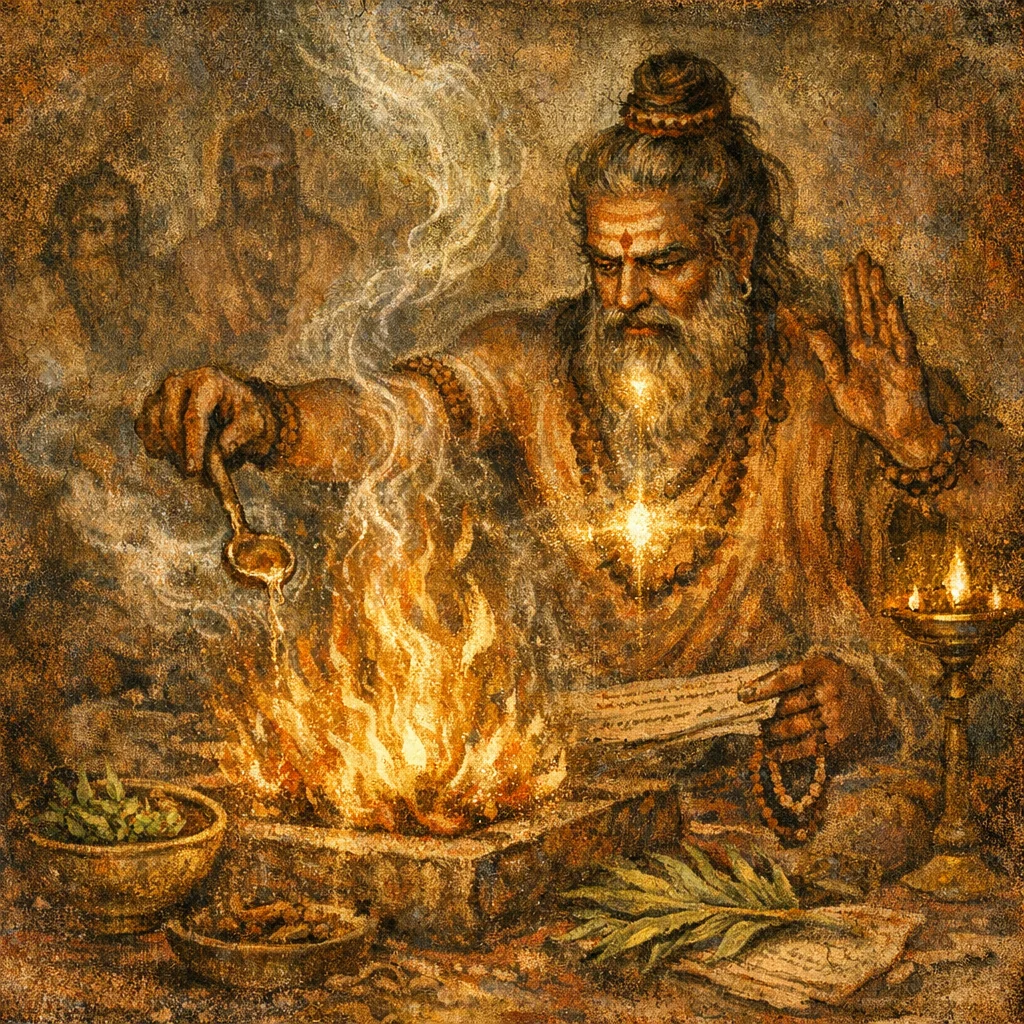
Sukta 61
Rishi: Atharvanic tradition (specific r̥ṣi not supplied in the input)
Devata: Agni (as tapas-bearer)
Chandas: Anuṣṭubh (likely; Atharvanic homa-formulas commonly in anuṣṭubh)
Mantras
Mantra 1
तपः। यदग्ने तपसा तप उपतप्यामहे तपः । प्रियाः श्रुतस्य भूयास्मायुष्मन्तः सुमेधसः
Tapas. When, O Agni, with tapas we kindle tapas—yea, we heat it up as tapas—may we be dear to sacred fame, long-lived, and of good understanding.
Mantra 2
अग्ने तपस्तप्यामह उप तप्यामहे तपः । श्रुतानि शृण्वन्तो वयमायुष्मन्तः सुमेधसः
O Agni, tapas we practise; we further heat up tapas. Hearing the sacred things, may we be long-lived and of good understanding.
Frequently Asked Questions
It asks Agni to intensify tapas (transformative heat/discipline) so the reciters become long-lived (āyus), clear-minded (sumeḍhas/medhā), and favored in sacred hearing and good repute (śruti/śruta).
Both senses are present, but the hymn emphasizes a fire-centered technology: tapas as heat generated through Agni and disciplined practice, yielding tangible paustika benefits like longevity and sharpened understanding.
It can be recited while kindling or tending a fire (homa/household Agni), especially before study or recitation, focusing on steady attention and ‘heating up’ resolve so that learning and mental clarity increase along with vitality.