Sukta 58
Rishi: Unspecified here (to be resolved via Anukramaṇī for AVŚ 7.58).
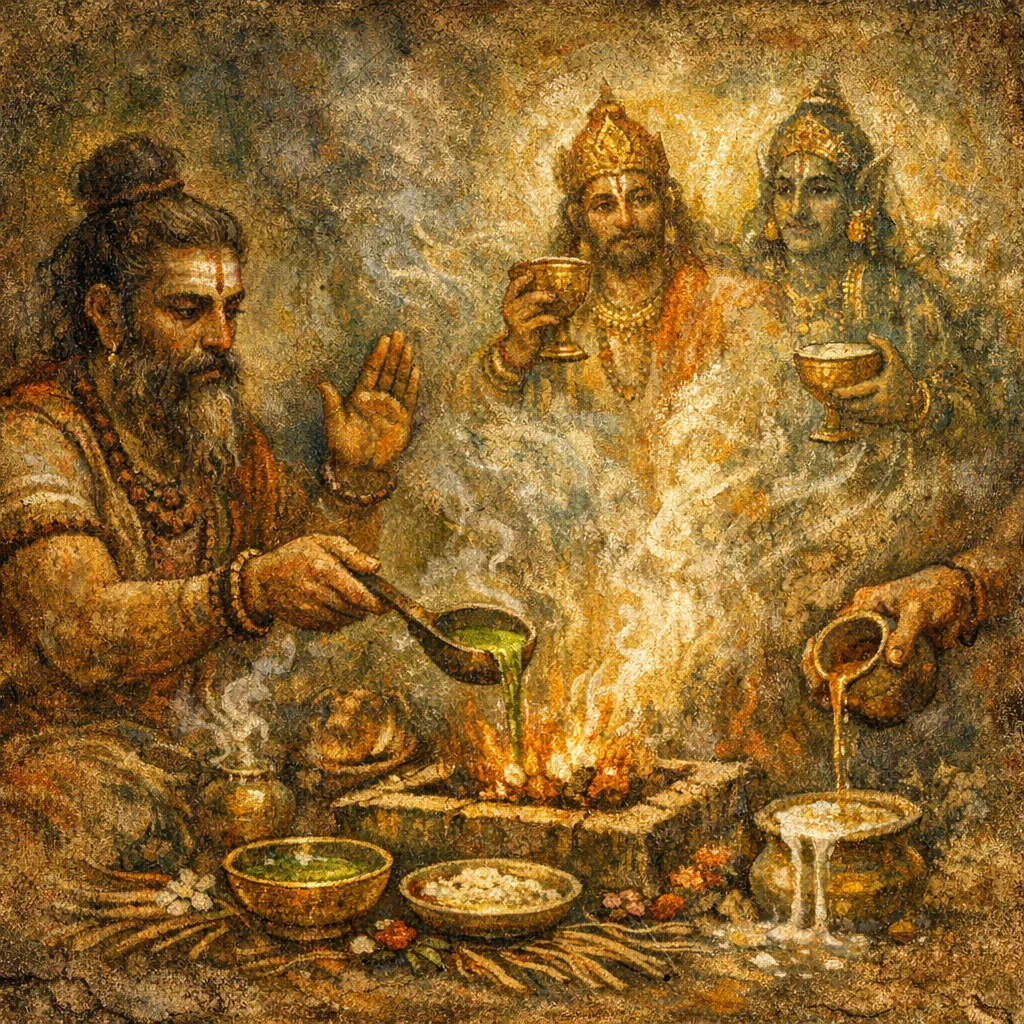
Devata: Indra-Varuṇa; Soma as offering/deity.
Chandas: Likely Triṣṭubh (to be verified against full hymn).
Mantras
Mantra 1
अन्नम्। इन्द्रावरुणा सुतपाविमं सुतं सोमं पिबतं मद्यं धृतव्रतौ । युवो रथो अध्वरो देववीतये प्रति स्वसरमुप यातु पीतये
Food (be this). O Indra-Varuṇa, ye purifiers of the pressed, drink ye this pressed Soma, the exhilarating draught, O steadfast in ordinance. Your chariot—this sacrifice—let it come up in answer for the gods’ enjoyment, unto the Sister, for the drinking.
Mantra 2
इन्द्रावरुणा मधुमत्तमस्य वृष्णः सोमस्य वृषणा वृषेथाम्। इदं वामन्धः परिषिक्तमासद्यास्मिन् बर्हिषि मादयेथाम्
O Indra-Varuṇa, of the most honeyed, of the vigorous Soma—ye two Bulls, be ye strong therein. This Soma-essence for you, poured all about, having sat down upon this sacred grass, do ye take delight therein.
Frequently Asked Questions
To get divine acceptance of the offering—especially Soma/andhas—so that food (anna) becomes a source of strength, nourishment, and stable prosperity.
Indra represents invigorating power and increase, while Varuṇa represents firm ordinance and ṛta. Together they symbolize prosperity that is both strong and properly sanctioned.
In Atharvanic domestic practice, Soma is often represented by a ritually acceptable substitute drink offered with purity and intention; the hymn’s focus is the consecration and acceptance of nourishment.