Sukta 42
Rishi: Atharvanic tradition (specific ṛṣi ascription varies by Anukramaṇī)
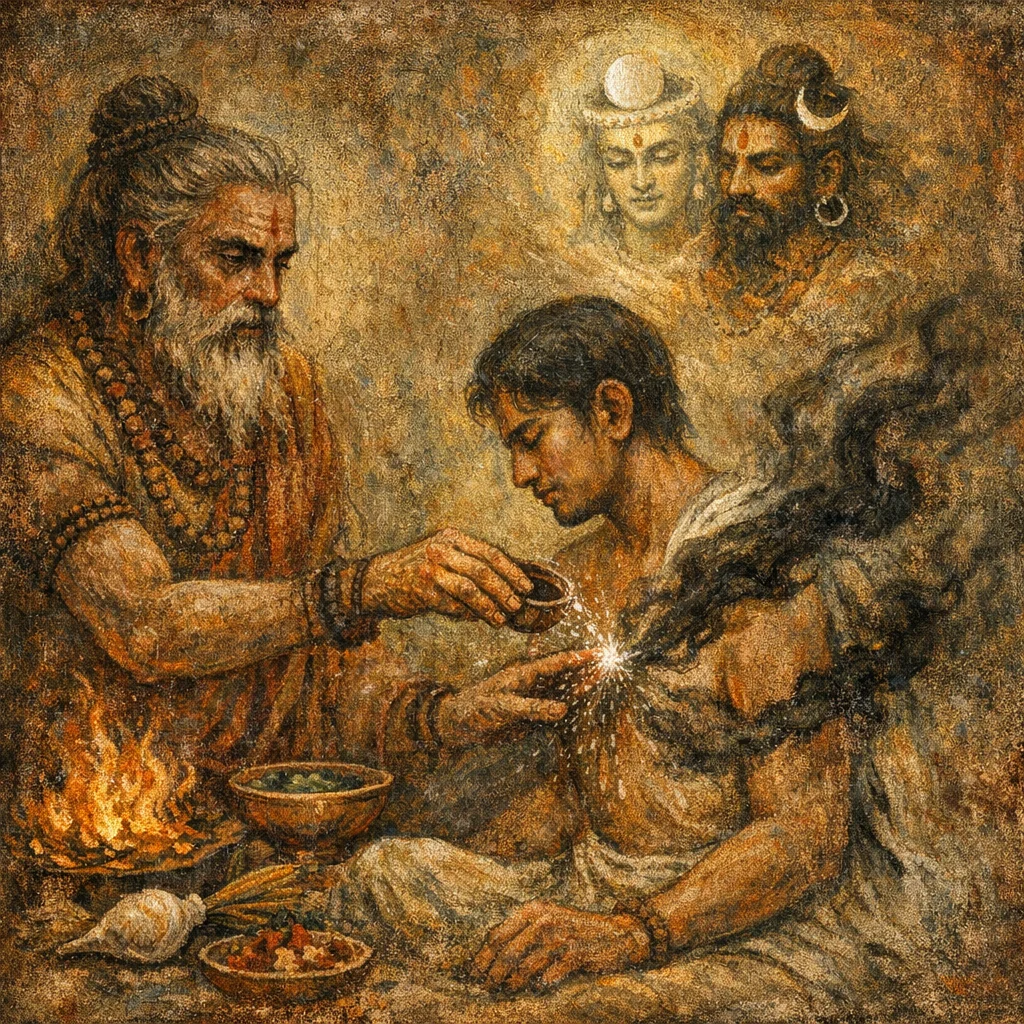
Devata: Soma-Rudra (dual); with Nirṛti and Enas as targeted afflictions
Chandas: Triṣṭubh (probable)
Mantras
Mantra 1
पापमोचनम्। सोमारुद्रा वि वृहतं विषूचीममी वा या नो गयमाविवेश । बाधेथां दूरं निरृतिं पराचैः कृतं चिदेनः प्र मुमुक्तमस्मत्
O Soma and Rudra, drive ye apart the straying evil—or the sickness—which hath entered our life and home. Smite ye away, far off, Destruction backward; and even the sin that is done, from us set free.
Mantra 2
सोमारुद्रा युवमेतान्यस्मद् विश्वा तनूषु भेषजानि धत्तम्। अव स्यतं मुञ्चतं यन्नो असत् तनूषु बद्धं कृतमेनो अस्मत्
O Soma and Rudra, do ye twain bestow upon our bodies all these medicines. Drive ye away, unloose ye, whatsoever hath been to us—bound within our bodies—the guilt, the sin wrought, from us.
Frequently Asked Questions
They are invoked as a paired healing power: Soma provides purifying, medicinal essence, while Rudra forcefully drives away affliction and calamity. Together they heal and protect.
Nirṛti is personified ruin or misfortune that must be sent far away. Enas is a fault or guilt that is imagined as something that can cling to a person and even feel ‘bound’ within the body, needing release.
It can be recited for sickness or household misfortune with simple purification acts—sprinkling water, offering a Soma-symbolic drink, and making an ‘untying’ gesture to dramatize the mantra’s request to unbind and remove harm.