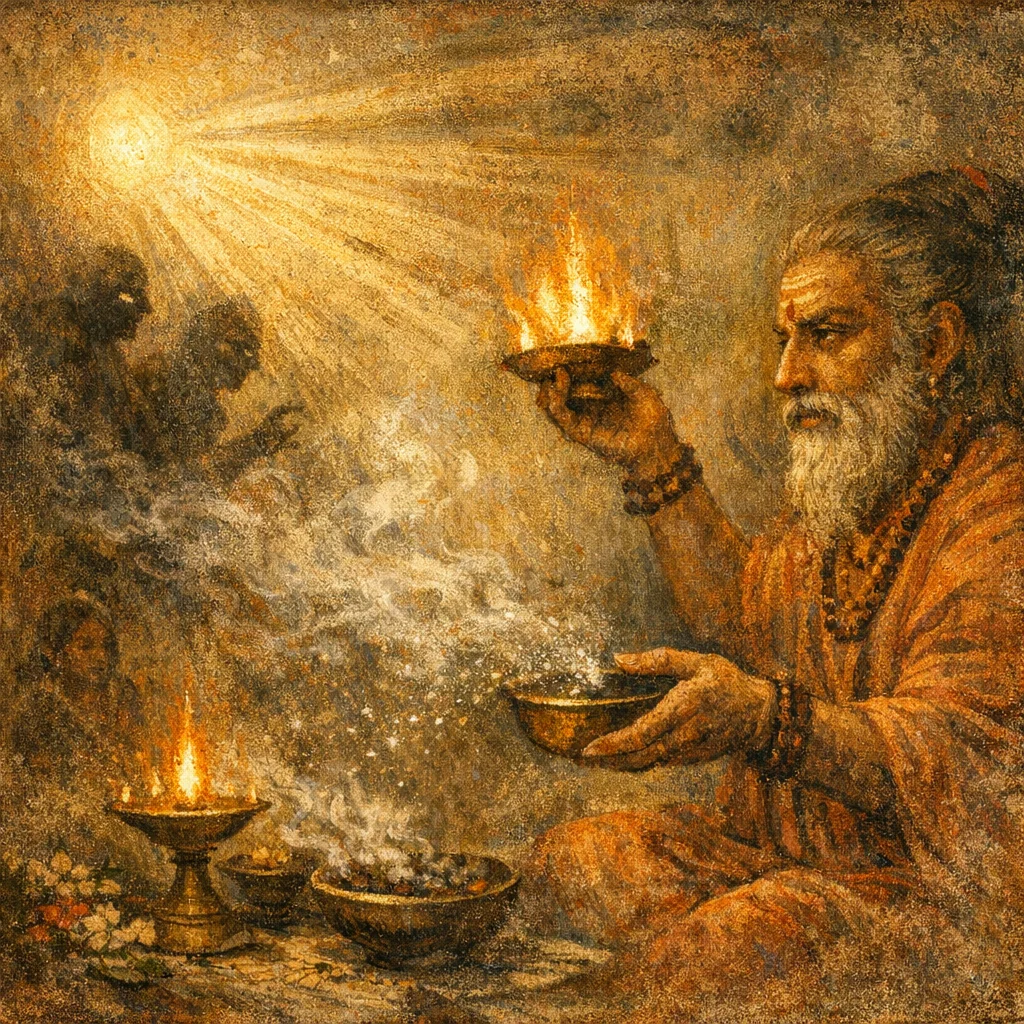
Sukta 22
Rishi: Uncertain (requires anukramaṇī verification for AVŚ 7.22.1).
Devata: Jyotis/Āditya (Light as a deified power).
Chandas: Likely Anuṣṭubh-like brevity but metrically irregular; requires scansion.
Mantras
Mantra 1
ज्योतिः। अयं सहस्रमा नो दृशे कवीनां मतिर्ज्योतिर्विधर्मणि
Light is this: a thousandfold it cometh forth for us to see—the seers’ inspired thought, light set in the ordinance of order.
Mantra 2
ब्रध्नः समीचीरुषसः समैरयन्। अरेपसः सचेतसः स्वसरे मन्युमत्तमाश्चिते गोः
The tawny One—the Dawns converging—together have they set in motion: spotless, of one accord, in their own season, most filled with ardor, in the manifest realm of the Cow.
Frequently Asked Questions
For invoking ‘light’ (jyotis) to bring clear perception and ordered conduct, and to protect against confusion, impurity, and hostile influences—often with a dawn-time (uṣas) emphasis.
No. The verses themselves work as a luminous protective-healing charm; at most, practitioners may add simple purity acts like washing or sprinkling clean water.
In Vedic symbolism, ‘go’ can indicate cattle/wealth and also a manifest field of nourishment and radiance; here it seals the hymn’s aim of purity plus flourishing in the properly timed (svásara) order.