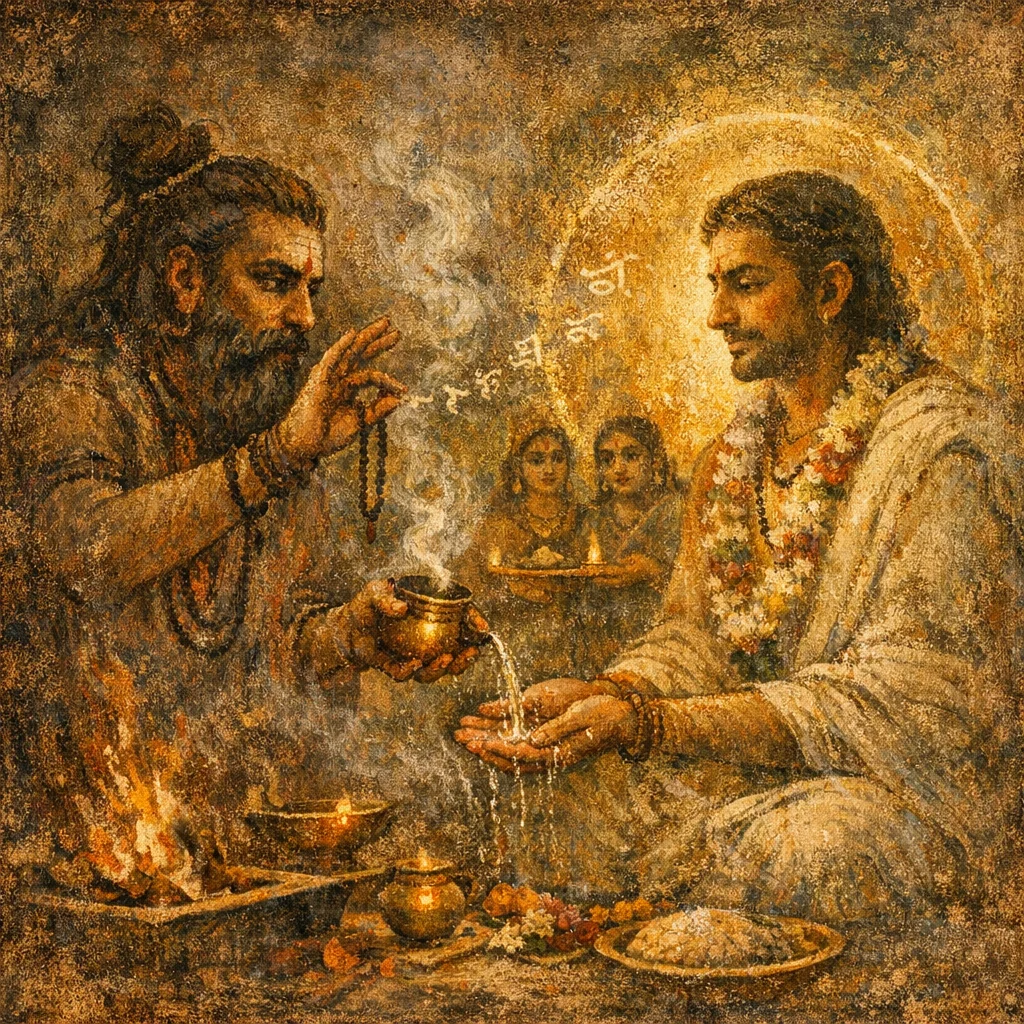
Sukta 21
Rishi: Atharvanic/Angirasa tradition (specific ṛṣi attribution varies by anukramaṇī; requires verification for AVŚ 7.21.1).
Devata: Āditya/Sūrya as 'the One, all-pervading Lord'; alternatively a monistic 'Pati' principle.
Chandas: Mixed/irregular (close to Triṣṭubh cadence in parts; requires metrical checking against pada lengths).
Mantras
Frequently Asked Questions
Both readings are traditional and compatible: the ‘Lord of heaven’ fits Āditya/Sūrya theology, while the repeated ‘One, all-pervading’ supports a monistic Pati principle behind all powers.
It portrays the deity as the ever-present, continually arriving presence in human life—received through speech, worship, and daily recognition—who also ‘welcomes the newcomer’ (new beginnings and transitions).
By reciting it at dawn or before an undertaking, the practitioner aligns speech and intention with the single ruling order; the hymn’s imagery of ‘paths turning along his track’ is used to seek steady success and auspicious continuity.