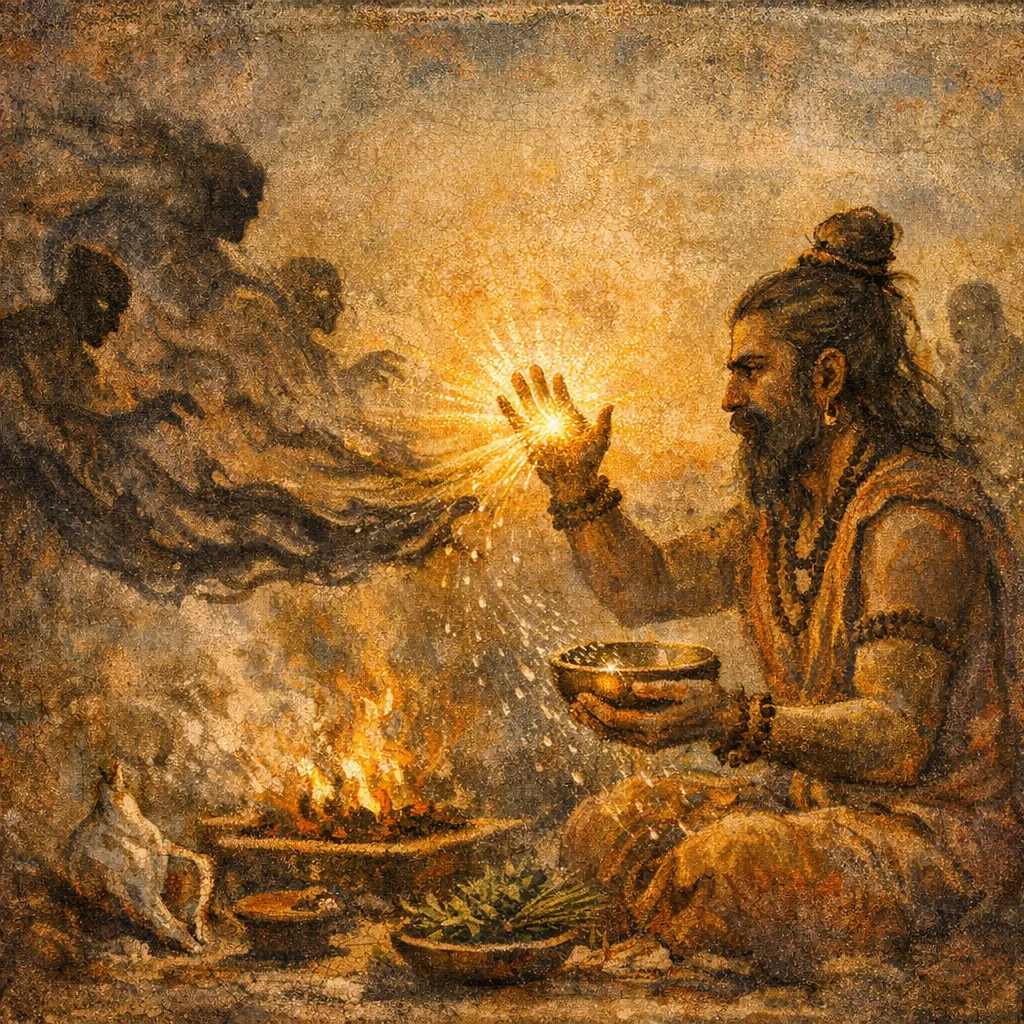
Sukta 13
Rishi: Atharvanic tradition (unspecified in excerpt).
Devata: Sūrya (as paradigmatic victor); the operative target is the dvīṣant (enemy).
Chandas: Triṣṭubh-like cadence (simile + application), though Atharvanic metrics may be loose.
Mantras
Mantra 1
शत्रुनाशनम्। यथा सूर्यो नक्षत्राणामुद्यंस्तेजांस्याददे। एवा स्त्रीणां च पुंसां च द्विषतां वर्च आ ददे
As the Sun, uprising, taketh to himself the splendours of the stars, even so from women and from men that hate—mine adversaries—I take away their lustre and their might of glory.
Mantra 2
यावन्तो मा सपत्नानामायन्तं प्रतिपश्यथ । उद्यन्त्सूर्य इव सुप्तानां द्विषतां वर्च आ ददे
As many as are my rivals—behold ye them as they come on. Like the Sun uprising over sleepers, I take unto me the splendour of the hateful.
Frequently Asked Questions
It aims to weaken rivals by withdrawing their varcas—splendour, prestige, and practical efficacy—and to consolidate that potency in the practitioner, using sunrise as the model of inevitable victory.
Because sunrise visibly overpowers the stars every day; the hymn treats that certainty as a ritual guarantee that the enemy’s ‘light’ (status and strength) can be eclipsed and taken.
Not in the verses provided. The rite is primarily timed recitation at sunrise, with the ‘transfer’ of varcas enacted through mantra and focused intention rather than physical substances.