Sukta 114
Rishi: Atharvanic tradition (Anukramaṇī attribution not supplied in input)
Devata: Varcas/Tejas (as transferable power); implicitly the operator’s will as agent
Chandas: Likely Anuṣṭubh (needs metrical verification)
Mantras
Mantra 1
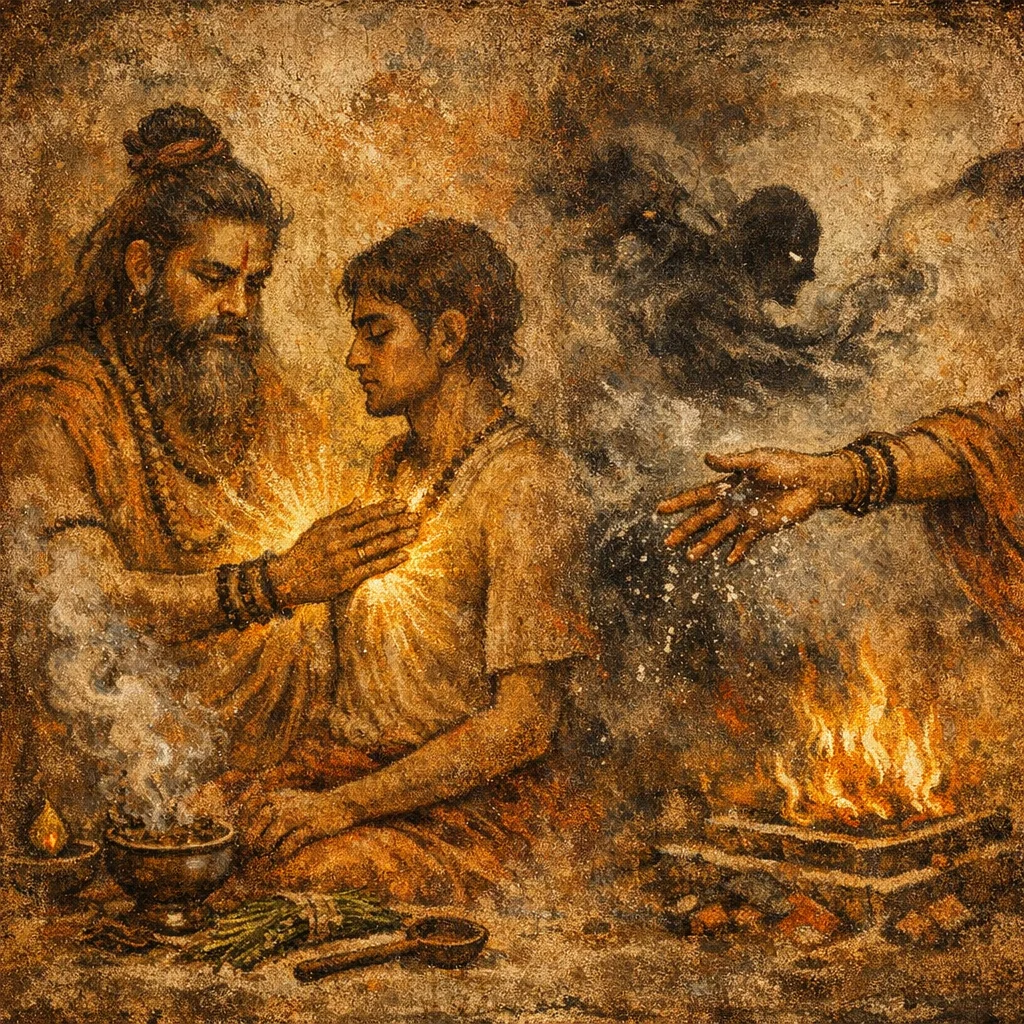
शत्रुनाशनम्। आ ते ददे वक्षणाभ्य आ तेऽहं हृदयाद् ददे । आ ते मुखस्य सङ्काशात् सर्वं ते वर्च आ ददे
From thy shoulders I take it to me; from thy heart I, even I, take it: from the brightness of thy face I take to me all thy lustre and thy glory.
Mantra 2
प्रेतो यन्तु व्याऽध्यः प्रानुध्याः प्रो अशस्तयः । अग्नी रक्षस्विनीर्हन्तु सोमो हन्तु दुरस्यतीः
Forth from hence let maladies depart, forth the pursuing oppressions, forth the evil speakings. Let Agni smite the demon-women; let Soma smite the ill-intending powers.
Frequently Asked Questions
It means a person’s radiance—vital strength, courage, authority, and social brilliance—treated as a transferable power that can be diminished in one person and increased in another.
They function as symbolic ‘seats’ of strength and presence: shoulders for bearing/power, heart for resolve, and face for visible brilliance. Naming them makes the transfer act total and concrete.
Both. The first verse is aggressive (taking an opponent’s varcas), while the second verse is protective and cleansing, sending away disease and hostile speech and calling on Agni and Soma to strike harmful forces.