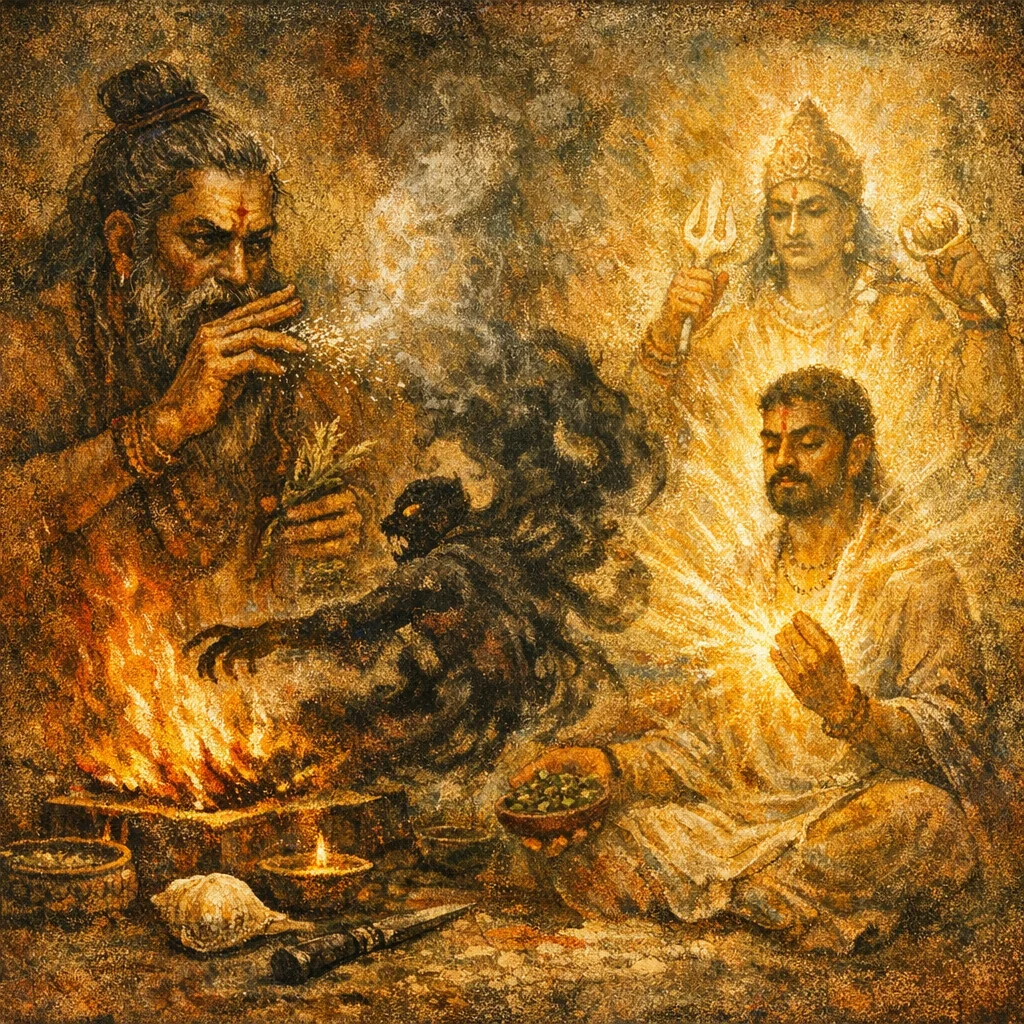
Sukta 110
Rishi: To be confirmed from AVŚ anukramaṇī (Agni–Indra hymn-type).
Devata: Agni–Indra
Chandas: Anuṣṭubh (likely; short pāda structure).
Mantras
Mantra 1
शत्रुनाशनम्। अग्न इन्द्रश्च दाशुषे हतो वृत्राण्यप्रति। उभा हि वृत्रहन्तमा
Agni and Indra, for the pious giver, have smitten the obstructions, irresistibly; for both are, in truth, the most puissant slayers of Vṛtra.
Mantra 2
याभ्यामजयन्त्स्व१रग्र एव यावातस्थतुर्भुवनानि विश्वा । प्रचर्षणी वृषणा वज्रबाहू अग्निमिन्द्रं वृत्रहणा हुवेऽहम्
By whom, in the beginning, they won the heavenly light, even as far as all the worlds took their station—those two impelling Bulls, whose arms are the thunderbolt, Agni and Indra, the Vṛtra-slayers, do I invoke.
Mantra 3
उप त्वा देवो अग्रमीच्चमसेन बृहस्पतिः । इन्द्र गीर्भिर्न आ विश यजमानाय सुन्वते
Unto thee the God, Bṛhaspati, hath led the way with the cup. O Indra, enter hither with our hymns, for the sacrificer who presseth.
Frequently Asked Questions
It is used to remove obstacles and subdue hostile forces by invoking Agni–Indra’s Vṛtra-slaying power, aiming at decisive victory for the patron.
Agni supplies the rite’s driving fire-power and consecration, while Indra supplies conquering force and the vajra; together they make the sacrifice ‘militant’ against resistance.
Verse 3 refers to the cup and the soma-presser, but the core obstacle-breaking force rests on invocation and fire-offering; many traditions use a symbolic cup if soma is not available.