Sukta 95
Rishi: Atharvanic/Angiras-type attribution (traditional for śatrunāśana hymns; requires padapāṭha-anukramaṇī confirmation)
Devata: Apotropaic forces; personified pains/portents (no single high deity foregrounded)
Chandas: Predominantly Anuṣṭubh-like cadence (to be metrically verified against pada counts)
Mantras
Mantra 1
शत्रुनाशनम्। उदस्य श्यावौ विथुरौ गृध्रौ द्यामिव पेततुः । उच्छोचनप्रशोचनावस्योच्छोचनौ हृदः
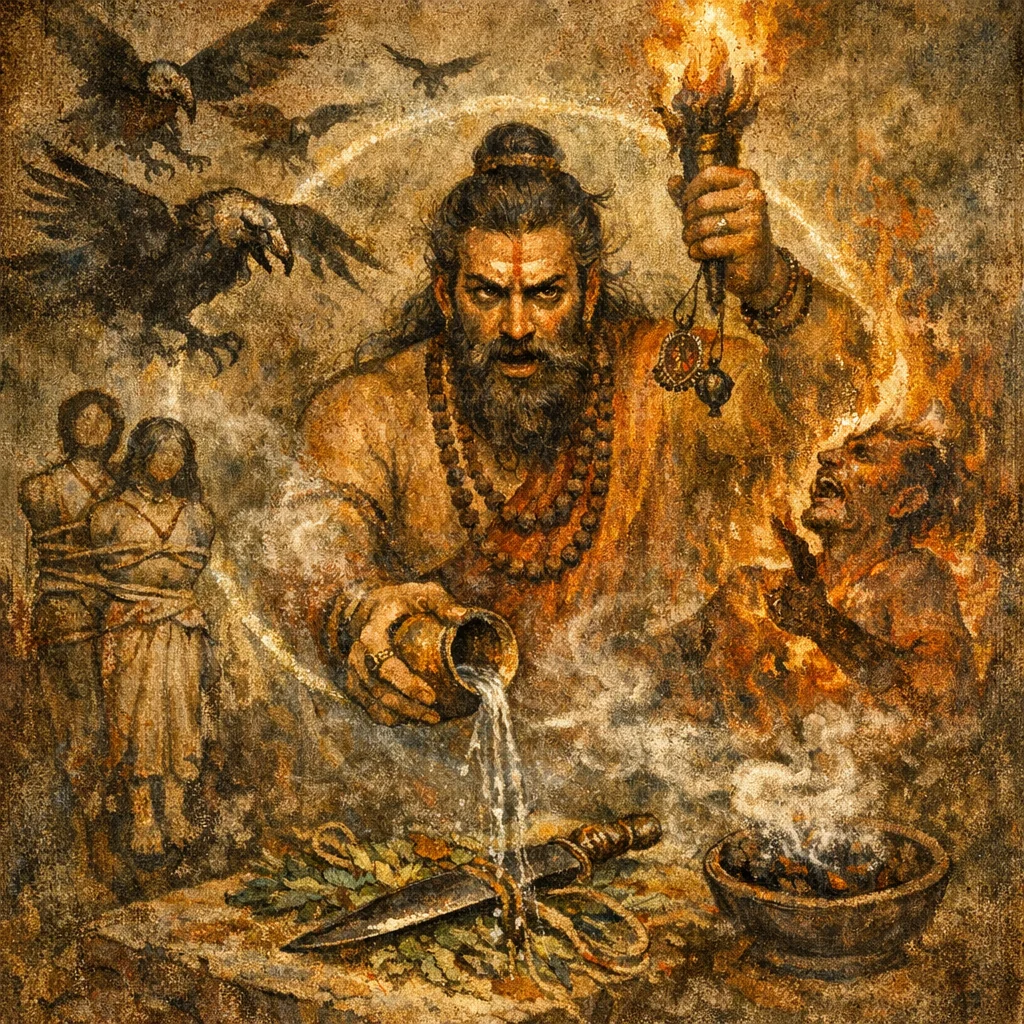
Enemy-destruction. Up and away—his two dark ones, his two quivering vultures, have flown as though to heaven. The two Burners and Thorough-burners—those two Burners—(let them be) driven forth from his heart.
Mantra 2
अहमेनावुदतिष्ठिपं गावौ श्रान्तसदाविव । कुर्कुराविव कूजन्तावुदवन्तौ वृकाविव
These two have I lifted forth and set away—like two cows that, wearied, sink down; like two yelping curs, going up and off; like two wolves (driven from the fold).
Mantra 3
आतोदिनौ नितोदिनावथो संतोदिनावुत। अपि नह्याम्यस्य मेढ्रं य इतः स्त्री पुमान् जभार
The two assailing Piercers, the two down-piercers, yea, the two thorough-piercers—moreover I bind fast his virile member, who from hence hath carried off a woman, a man (as ravisher).
Frequently Asked Questions
It is used to drive away hostile agencies and ill-omens from an enemy and, in its final verse, to restrain a sexual offender by a binding charm aimed at his potency.
These are banishing images: vultures signal death-portents, while yelping dogs and driven wolves convey disgrace, noise, weakness, and forcible expulsion from the protected space.
No. Its focus is Atharvanic operative power—expulsion and binding—addressing personified pains/tormentors (burners and piercers) rather than foregrounding one major deity.