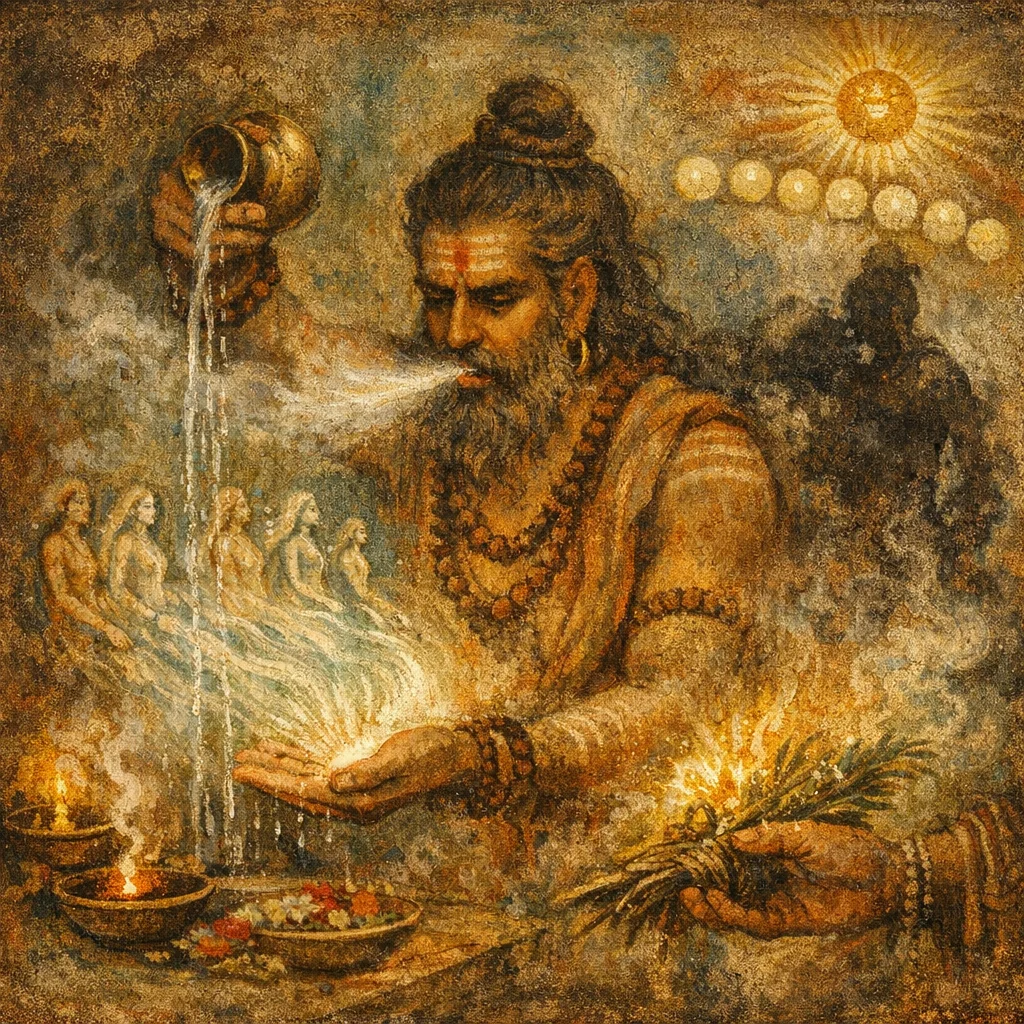
Sukta 61
Rishi: Atharvanic tradition
Devata: Āpaḥ, Sūrya, Viśve Devāḥ (tapo-jāḥ), Savitṛ
Chandas: Mixed/triṣṭubh-like cadence possible; AV 6 includes non-anuṣṭubh meters—requires metrical verification by pada count in critical edition
Mantras
Mantra 1
विश्वस्रष्टा। मह्यमापो मधुमदेरयन्तां मह्यं सूरो अभरज्ज्योतिषे कम्। मह्यं देवा उत विश्वे तपोजा मह्यं देवः सविता व्यचो धात्
For me let the Waters, honeyed, set their powers in motion; for me the Sun hath brought joy for light. For me the Gods, yea all the Gods born of holy heat; for me may the god Savitṛ establish wide-reaching might.
Mantra 2
अहं विवेच पृथिवीमुत द्यामहमृतूंरजनयं सप्त साकम्। अहं सत्यमनृतं यद् वदाम्यहं दैवीं परि वाचं विशश्च
I sundered and set in order Earth and also Heaven; I generated the seasons, seven together. I—what I speak—make both truth and untruth; I encompass with divine Speech the peoples also.
Mantra 3
अहं जजान पृथिवीमुत द्यामहमृतूंरजनयं सप्त सिन्धून्। अहं सत्वमनृतं यद् वदामि यो अग्नीषोमावजुषे सखाया
I begot Earth and also Heaven; I generated the seasons, the seven rivers. I—what I speak—make being and unbeing, truth and untruth: I, for him whom the companion-pair Agni and Soma favor not.
Frequently Asked Questions
It is used to gain purification and vitality through consecrated water and light, and to strengthen one’s speech so that words become effective, respected, and protective.
The rite first gathers life-force (water, radiance, Savitṛ’s impulse), then ‘seats’ that force in mantra itself: Vāc is invoked to make the recitation and the speaker’s words world-ordering and binding.
Recite 6.61.1 over clean water, sip or sprinkle it, then recite 6.61.2–3 slowly with clear intention for truthful, effective speech—ideally at sunrise or in bright daytime.