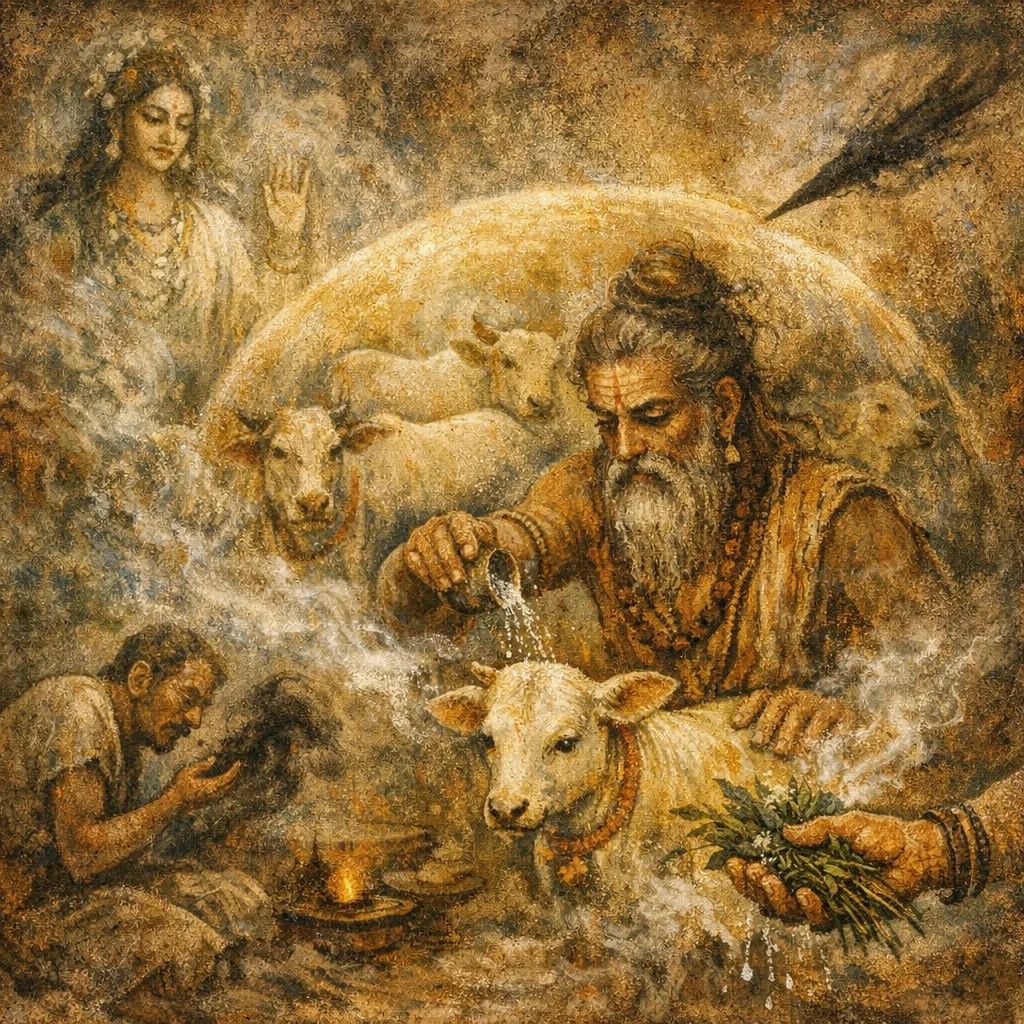
Sukta 59
Rishi: Atharvanic tradition (anonymous/collective)
Devata: Oṣadhi (Arundhatī) as a personified healing/protective power
Chandas: Anuṣṭubh-like (AV domestic-healing style)
Mantras
Mantra 1
औषधिः। अनडुद्भ्यस्त्वं प्रथमं धेनुभ्यस्त्वमरुन्धति । अधेनवे वयसे शर्म यच्छ चतुष्पदे
For the oxen thou art first; for the milch-cows thou, O Arundhatī. Grant shelter to the non-milking one, to the young, to the four-footed herd.
Mantra 2
शर्म यच्छत्वोषधिः सह देवीररुन्धती। करत् पयस्वन्तं गोष्ठमयक्ष्मां उत पूरुषान्
Let the herb, Arundhatī, together with the goddess-herbs, grant protection; let her make the cowshed rich in milk, free from wasting sickness, and men as well.
Mantra 3
विश्वरूपां सुभगामच्छावदामि जीवलाम्। सा नो रुद्रस्यास्तां हेतिं दूरं नयतु गोभ्यः
To the all-formed, the auspicious, the life-bestowing, I utter speech hitherward: may she for us drive far away from the kine that missile of Rudra.
Frequently Asked Questions
Here Arundhatī is a personified healing herb (oṣadhi), treated as an auspicious, life-giving protective power that safeguards the herd and the cowshed.
Both. It primarily protects cattle and increases milk-yield, but it also asks that the cowshed be free from yákṣma (wasting sickness) and that human members of the household be protected too.
It is a Vedic image for a sudden, dangerous strike—often understood as murrain, epidemic affliction, or abrupt cattle-death—sent away from the herd through Arundhatī’s protective agency and the mantra’s command.