Sukta 51
Rishi: Atharvanic tradition (exact r̥ṣi not specified in the provided excerpt)
Devata: Soma (with Vāyu and Indra as associated purifiers/protectors)
Chandas: Mixed/irregular (close to triṣṭubh-jagatī cadence; requires full pada-count verification)
Mantras
Mantra 1
एनोनाशनम्। वायोः पूतः पवित्रेण प्रत्यङ् सोमो अति द्रुतः । इन्द्रस्य युजः सखा
Sin-destroying: purified by Vāyu, with the strainer, Soma—turned back—hath run beyond; Indra’s yoked companion, his friend.
Mantra 2
आपो अस्मान् मातरः सूदयन्तु घृतेन नो घृतप्वः पुनन्तु । विश्वं हि रिप्रं प्रवहन्ति देवीरुदिदाभ्यः शुचिरा पूत एमि
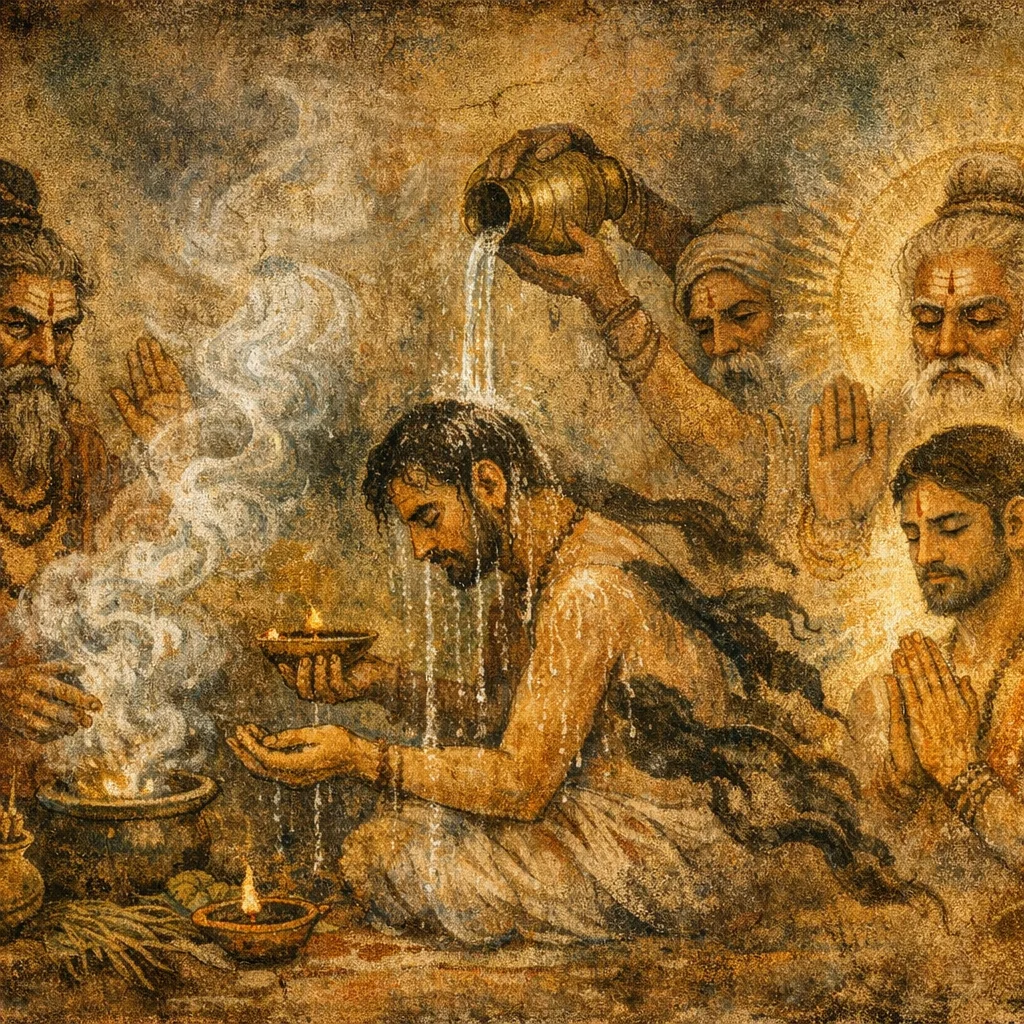
May the Waters, Mothers, set us in right estate; with ghee may they, ghee-cleansing, purify us. For all defilement do the Goddesses wash away: from them, yea, I come forth—clean, purified.
Mantra 3
यत् किं चेदं वरुण दैव्ये जनेऽभिद्रोहं मनुष्या३श्चरन्ति । अचित्त्या चेत् तव धर्मा युयोपिम मा नस्तस्मादेनसो देव रीरिषः
Whatsoever here—O Varuṇa—in the divine folk, as hostile wrong, men practise; if, unwitting, we have overstepped thy ordinances, from that, from guilt, O God, do thou not harm us.
Frequently Asked Questions
It is used for expiation and purification—removing enas (guilt/ritual pollution), washing away defilement, and calming Varuṇa so that inadvertent faults do not bring harm.
They cover three levels of cleansing: Soma (strained purity and reversal of contamination), the Waters (physical and ritual lustration), and Varuṇa (moral order and release from guilt through confession).
No. In most practical uses, Soma is invoked as a divine purifier; the rite can be done with clean water, a symbolic pavitra (filter/kuśa ring/cloth), and optionally a little ghee, focusing on the hymn’s purification intent.