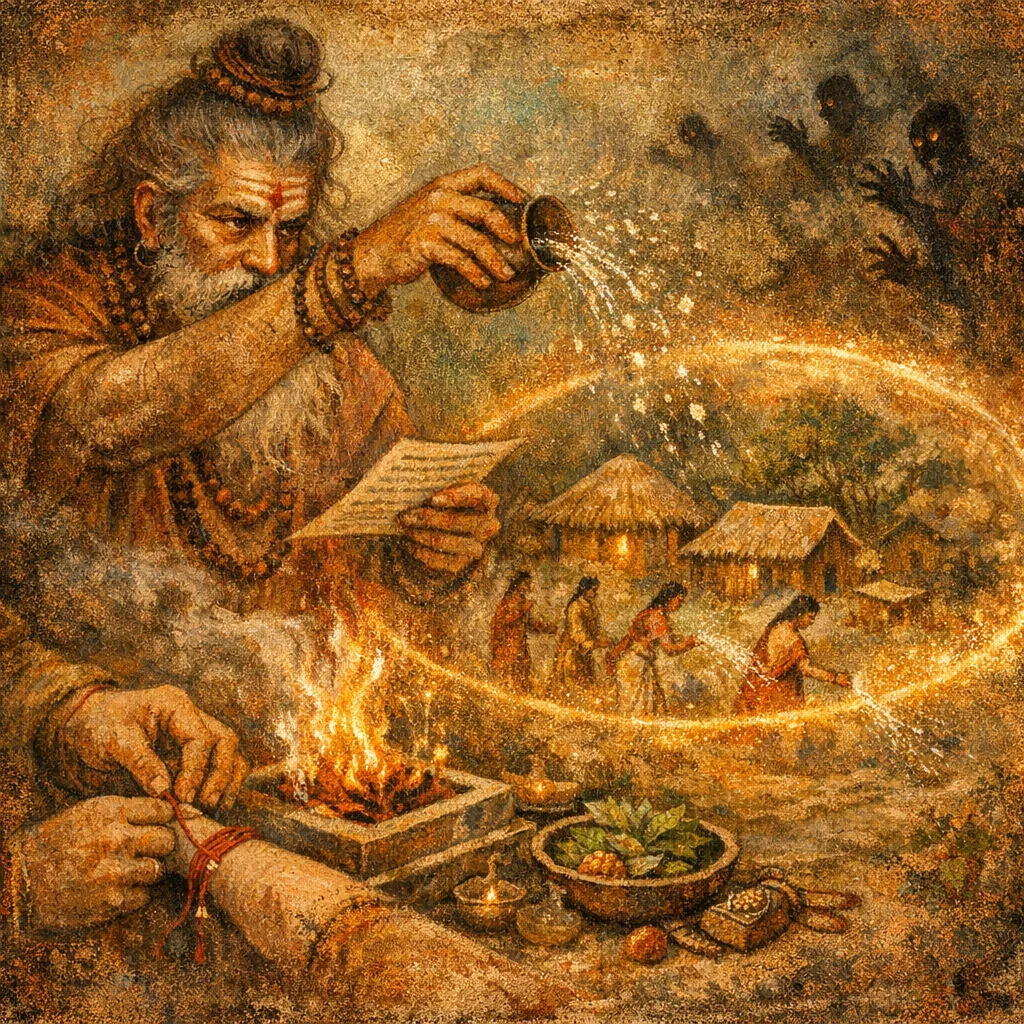
Sukta 40
Rishi: Atharvanic tradition
Devata: Abhaya (Fearlessness) / Dyāvāpṛthivī, Soma, Savitar, Saptarṣi as protectors
Chandas: Mixed/irregular (protective prose-like anuṣṭubh tendency; Atharvanic charm style)
Mantras
Mantra 1
अभयम्। अभयं द्यावापृथिवी इहास्तु नोऽभयं सोमः सविता नः कृणोतु । अभयं नोऽस्तूर्व१न्तरिक्षं सप्तऋषीणां च हविषाभयं नो अस्तु
Fearlessness! Let Heaven and Earth here be fearlessness for us; let Soma, let Savitar make fearlessness for us. Let the wide mid-air be fearlessness for us; and by oblation, of the Seven Seers—let fearlessness be for us.
Mantra 2
अस्मै ग्रामाय प्रदिशश्चतस्र ऊर्जं सुभूतं स्वस्ति सविता नः कृणोतु । अशत्र्विन्द्रो अभयं नः कृणोत्वन्यत्र राज्ञामभि यातु मन्युः
For this our village may Savitar make welfare—nourishing strength, good being—in the four quarters. May Indra, foe-dispelling, make fearlessness for us; elsewhere, against the kings, let wrath depart.
Mantra 3
अनमित्रं नो अधरादनमित्रं न उत्तरात्। इन्द्रानमित्रं नः पश्चादनमित्रं पुरस्कृधि
Foeless for us from below, foeless for us from above: O Indra, foeless for us from behind; foeless set thou in front.
Frequently Asked Questions
To establish fearlessness (abhaya) and welfare for a village or household by invoking cosmic guardians and sealing protection in every direction.
Savitar grants ordered well-being (svasti) in the quarters, Soma represents vital strengthening, the Seven Seers function as protective ancestral-sage guardians, and Indra provides active enemy-repelling and directional defense.
Recite the three verses with a clear intention of protection, turning attention to the four directions; optionally offer a small havis-like offering (such as a simple ghee oblation) during the first verse to formalize the protective resolve.