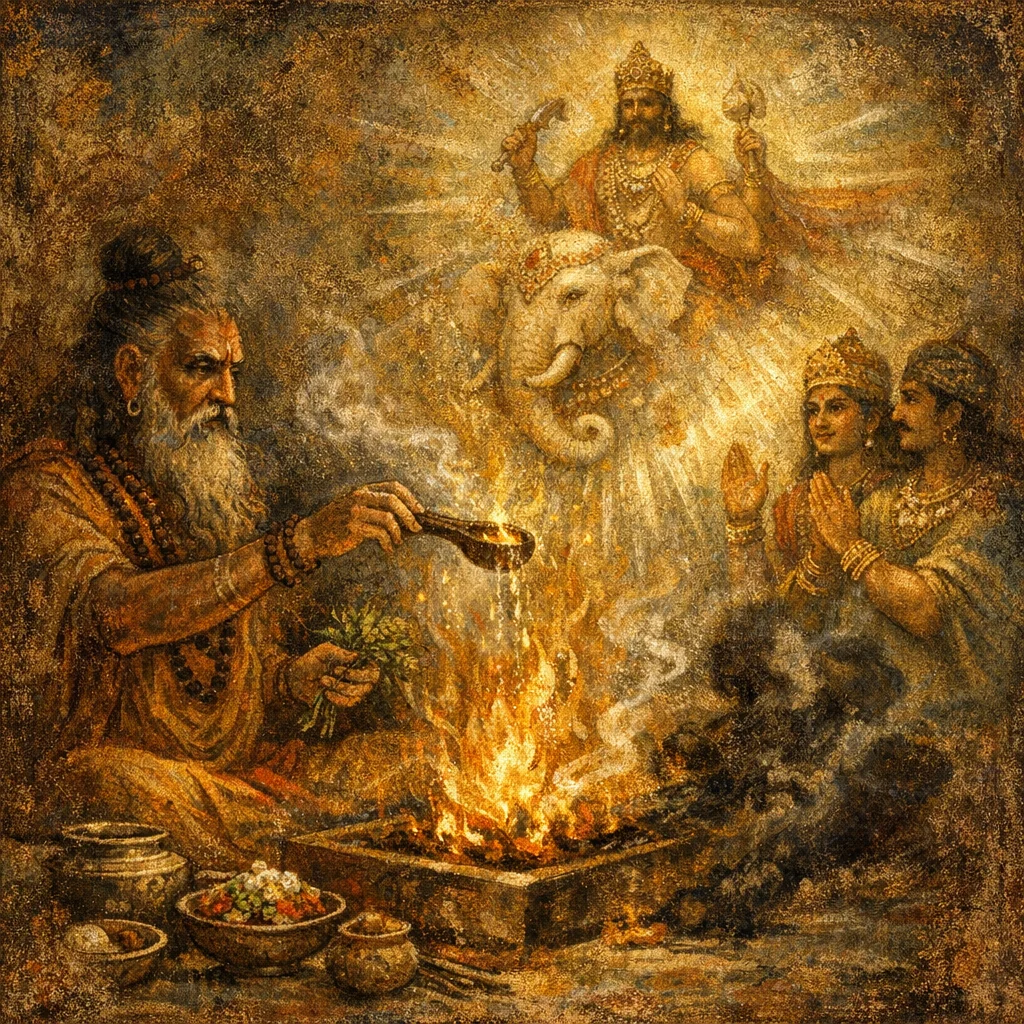
Sukta 39
Rishi: Atharvanic tradition (Anukramaṇī attribution varies; commonly treated as a royal/prosperity prayer)
Devata: Indra
Chandas: Triṣṭubh (by cadence and length; common for Indraic royal petitions)
Mantras
Mantra 1
वर्चस्यम्। यशो हविर्वर्धतामिन्द्रजूतं सहस्रवीर्यं सुभृतं सहस्कृतम्। प्रसर्स्राणमनु दीर्घाय चक्षसे हविष्मन्तं मा वर्धय ज्येष्ठतातये
For splendour. Let fame, as oblation, increase—Indra-driven, of thousandfold might, well-sustained, force-wrought—spreading forth in continuous course for long-enduring visibility. Me, rich in offerings, do thou increase unto pre-eminence.
Mantra 2
अच्छा न इन्द्रं यशसं यशोभिर्यशस्विनं नमसाना विधेम । स नो रास्व राष्ट्रमिन्द्रजूतं तस्य ते रातौ यशसः स्याम
Hither to Indra, glorious, with our glories, to the fame-bestower, bowing we would do service. Do thou bestow on us a realm, Indra-impelled; in that thy giving may we be men of glory.
Mantra 3
यशा इन्द्रो यशा अग्निर्यशाः सोमो अजायत । यशा विश्वस्य भूतस्याहमस्मि यशस्तमः
Glorious is Indra, glorious Agni; glorious Soma hath been born. Glorious, of all that is, am I—most glorious.
Frequently Asked Questions
It asks for an Indra-impelled realm (rāṣṭra) and for enduring public fame (yaśas) and splendour (varcas), so the patron/community gains recognized pre-eminence.
The hymn treats yaśas as something that can be ritually nourished and increased—like oblation-fed fire—so reputation becomes steady, visible, and socially effective over time.
Both layers are present: the closing affirmation claims glory personally, but its primary Atharvanic use is public—strengthening leadership, legitimacy, and communal standing under Indra’s sanction.