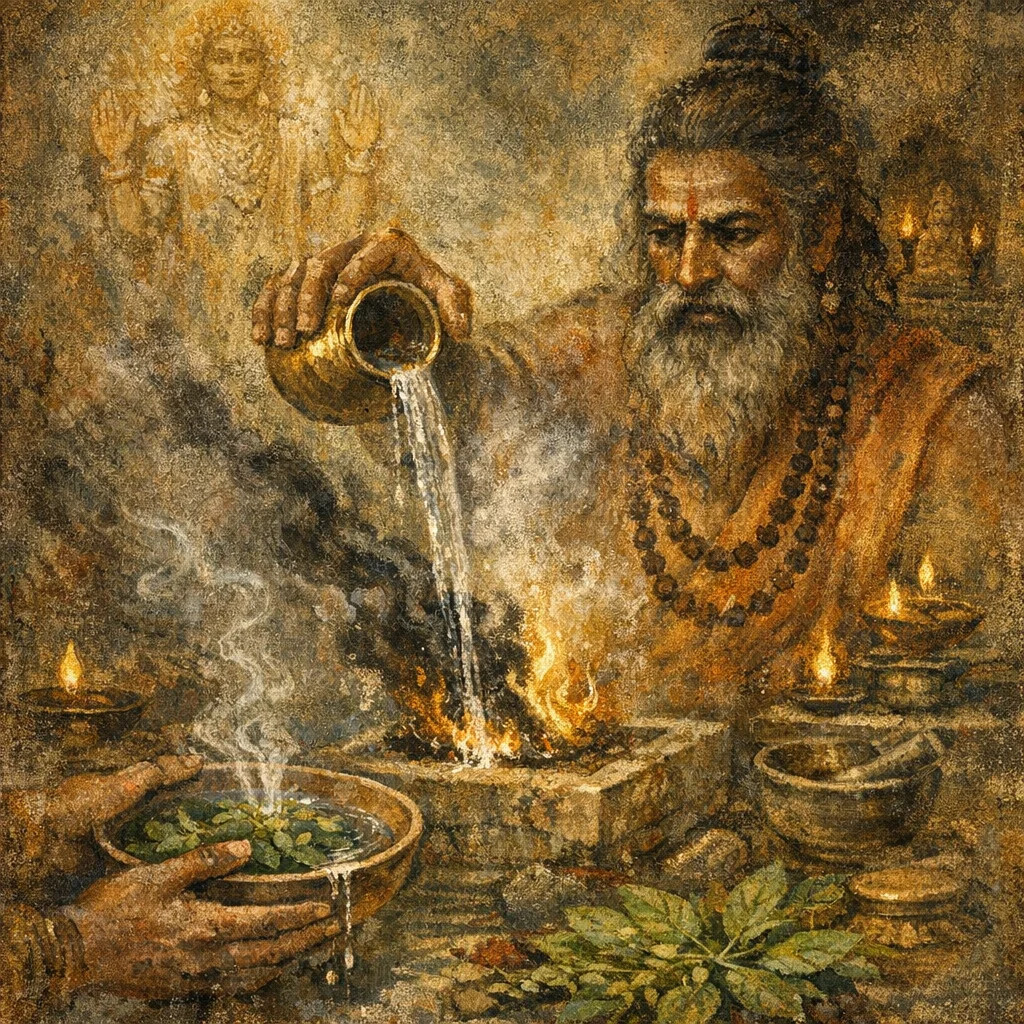
Sukta 23
Rishi: Atharvanic tradition (anonymous)
Devata: Āpas (divine Waters)
Chandas: Anuṣṭubh-like (shorter, incantatory)
Mantras
Mantra 1
अपां भैषज्यम्। सस्रुषीस्तदपसो दिवा नक्तं च सस्रुषीः । वरेण्यक्रतुरहमपो देवीरुप ह्वये
The Waters’ remedy: swift-flowing are those waters—swift-flowing by day and swift-flowing by night. I, of choice resolve, call hither the divine Waters.
Mantra 2
ओता आपः कर्मण्याऽमुञ्चन्त्वितः प्रणीतये । सद्यः कृण्वन्त्वेतवे
Woven-in are the Waters within the rite: let them from hence release (the ill) for leading forth; let them straightway make it to depart.
Mantra 3
देवस्य सवितुः सवे कर्म कृण्वन्तु मानुषाः । शं नो भवन्त्वप ओषधीः शिवाः
Under the god Savitar’s impulsion let men perform the work; and may the Waters and the Herbs be for us welfare—benign and kindly.
Frequently Asked Questions
It calls the divine Waters as a healing remedy and asks them to release and drive away illness or harmful influence immediately, bringing welfare through water and herbs.
To stress that the Waters’ healing availability is continuous—effective at any time, not limited to a particular hour or occasion.
Savitar authorizes and impels the correct performance of the rite, and the herbs (oṣadhīs) are invoked alongside the Waters so that both act benignly and support complete well-being.