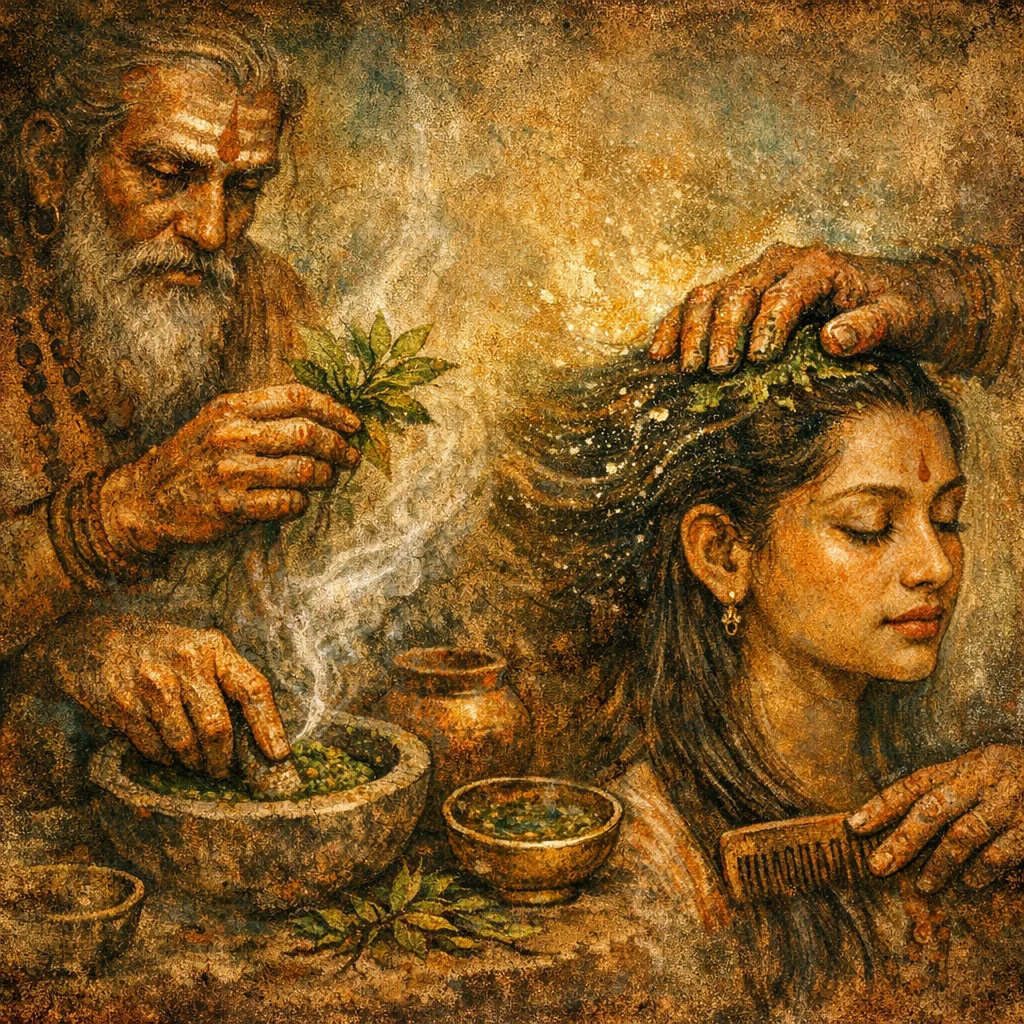
Sukta 21
Rishi: Atharvanic seer tradition for oṣadhi hymns (often anonymous/collective in later indices).
Devata: Oṣadhi (the herb) and Bhūmi/Pṛthivī as source of medicinal power.
Chandas: Anuṣṭubh tendencies with prose-like opening label; metrical classification varies due to the initial rubric-like phrase.
Mantras
Mantra 1
केशवर्धनी औषधिः। इमा यास्तिस्रः पृथिवीस्तासां ह भूमिरुत्तमा। तासामधि त्वचो अहं भेषजं समु जग्रभम्
The Hair-Increaser is a herb. Of these three earths, verily the soil is the highest; from their surface-skin have I wholly taken the remedy.
Mantra 2
श्रेष्ठमसि भेषजानां वसिष्ठं वीरुधानाम्। सोमो भग इव यामेषु देवेषु वरुणो यथा
Thou art the best of remedies, the most excellent of plants: as Soma is like Bhaga in the seasons, as Varuṇa among the gods.
Mantra 3
रेवतीरनाधृषः सिषासवः सिषासथ । उत स्थ केशदृंहणीरथो ह केशवर्धनीः
Ye are bounteous, unassailable, striving for success and making success; ye are hair-strengtheners, yea, indeed, hair-increasers.
Frequently Asked Questions
It is used to consecrate a hair-promoting herb so it strengthens hair and increases growth, treating the remedy as an earth-derived power that can be made ritually effective.
Because the hymn grounds medicinal potency in the earth itself: Bhūmi is called the highest support, and the remedy is said to be taken from the earth’s outer layer—symbolizing concentrated, accessible healing power.
Traditionally it refers to keśavardhanī, a hair-increasing herb; in practice, a locally known hair-strengthening plant may be used, but the rite’s logic is to treat the herb (especially its ‘skin/bark’ layer) as the medicine empowered by the mantra.