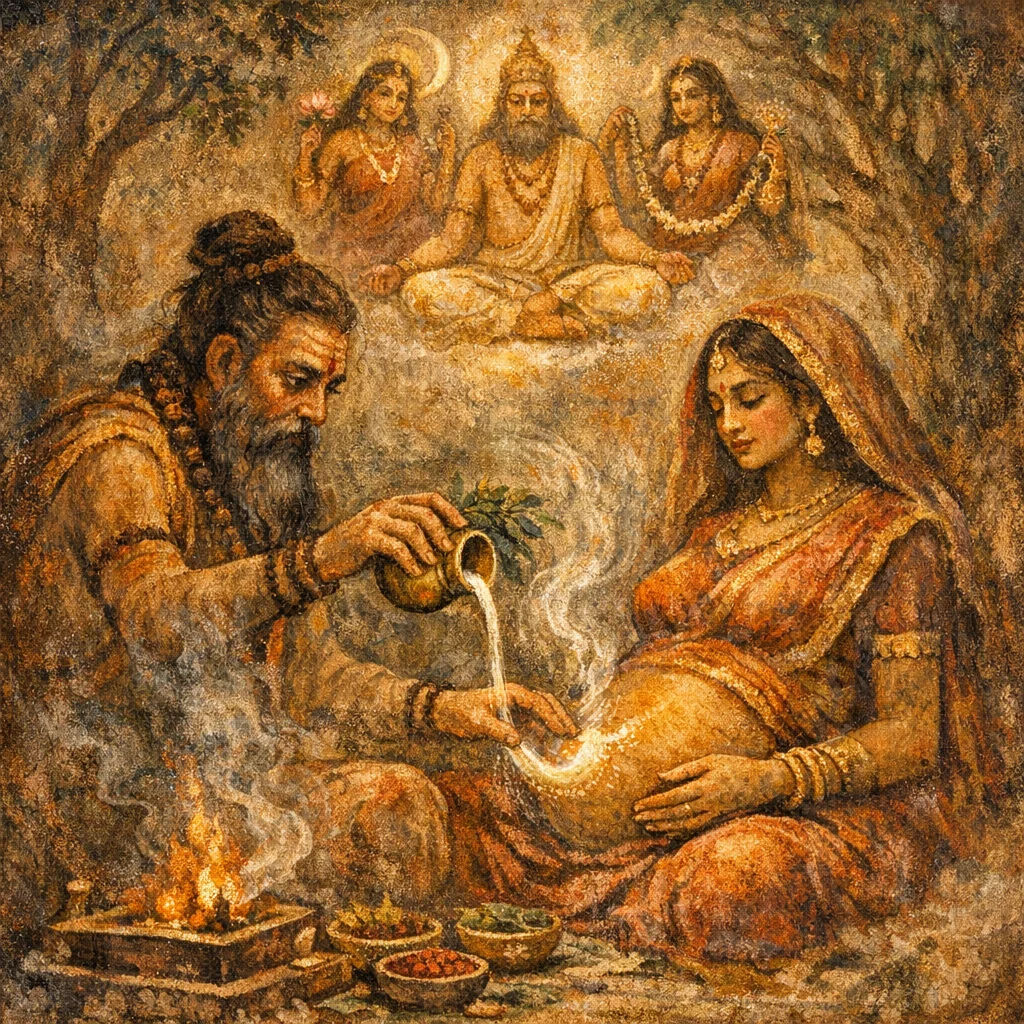
Sukta 11
Rishi: Atharvanic tradition (often treated as Atharvan/Angiras-type domestic fertility lore; specific r̥ṣi not explicit in the supplied excerpt).
Devata: Pumsavana-śakti (generative potency); implicitly Prajāpati as procreative lord across the hymn.
Chandas: Anuṣṭubh (probable; AV domestic verses commonly in anuṣṭubh—requires metrical confirmation against full pada-count).
Mantras
Mantra 1
पुंसवनम्। शमीमश्वत्थ आरूढस्तत्र पुंसुवनं कृतम्। तद् वै पुत्रस्य वेदनं तत् स्त्रीष्वा भरामसि
The Śamī, mounted upon the Aśvattha—therein the begetting of a male is wrought. That, verily, is the winning of a son: that power we bring and lay within the women.
Mantra 2
पुंसि वै रेतो भवति तत् स्त्रियामनु षिच्यते । तद् वै पुत्रस्य वेदनं तत् प्रजापतिरब्रवीत्
In the man, verily, the seed hath being; thereafter it is poured into the woman. That, indeed, is the winning of a son: thus spake Prajāpati.
Mantra 3
प्रजापतिरनुमतिः सिनीवाल्यऽचीक्लृपत्। स्त्रषूयमन्यत्र दधत् पुंमांसमु दधदिह
Prajāpati, Anumati, Sinīvālī have ordered it aright: setting womanhood elsewhere, they here set up and bring forth the male.
Frequently Asked Questions
Its stated aim is pumsavana—installing generative potency so that conception results in a male child, described as the “winning of a son.”
They function as botanical carriers of fertility power: the hymn locates pumsavana efficacy in the image of Śamī ‘mounted upon’ Aśvattha, then ritually transfers that potency into the woman.
Anumati is the power of assent/permission and Sinīvālī is a fertility-and-pregnancy deity; together with Prajāpati they ‘set the rite in order,’ stabilizing conception and directing the desired outcome.