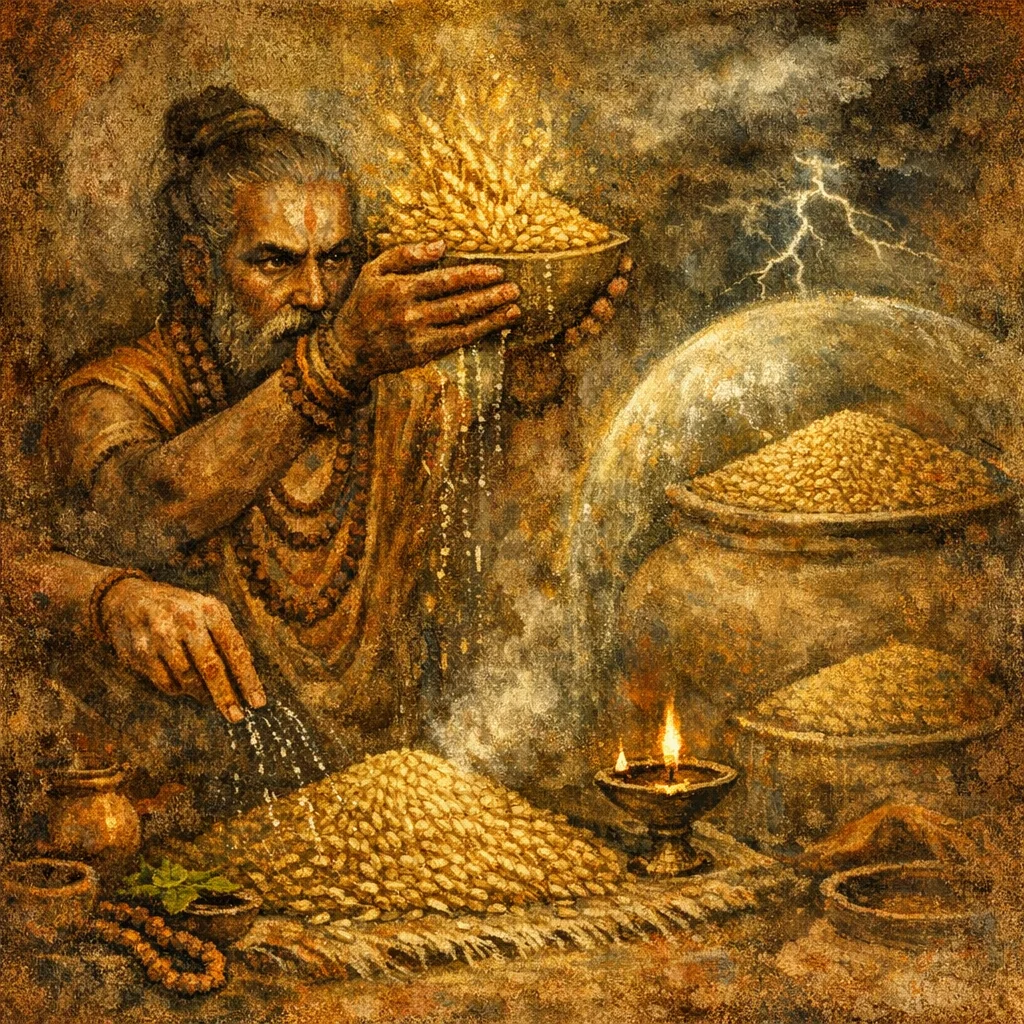
Sukta 142
Rishi: Atharvanic tradition (Anukramaṇī attribution not supplied in input)
Devata: Yava (Barley) / Annam (Food) with apotropaic force against Āśani
Chandas: Anuṣṭubh (probable; common for AV prosperity charms)
Mantras
Mantra 1
अन्नसमृद्धिः। उच्छ्रयस्व बहुर्भव स्वेन महसा यव । मृणीहि विश्वा पात्राणि मा त्वा दिव्याशनिर्वधीत्
Rise thou aloft; be thou exceeding plenteous, O Barley, by thine own mighty power. Crush down all vessels (of want and harm): let not the heavenly bolt smite thee.
Mantra 2
आशृण्वन्तं यवं देवं यत्र त्वाच्छावदामसि । तदुच्छ्रयस्व द्यौरिव समुद्र इवैध्यक्षितः
The godlike Barley, hearkening, whereunto we speak to thee—there rise thou up: like heaven be lofty, like ocean wax thou, unwasting.
Mantra 3
अक्षितास्त उपसदोऽक्षिताः सन्तु राशयः । पृणन्तो अक्षिताः सन्त्वत्तारः सन्त्वक्षिताः
Unwasting be thy visitants; unwasting let the heaps be. Unwasting be the fillers; unwasting let the eaters be.
Frequently Asked Questions
To increase barley/food stores and keep them from diminishing, while protecting the grain heap and storage vessels from harm and sudden disaster.
Āśani symbolizes destructive calamity—especially lightning or ruin that can strike crops or granaries. The hymn explicitly asks that this bolt not smite the barley or the store.
Akṣita means “unwasting” or “undiminishing.” The hymn applies it to heaps, guests, those who fill the stores, and those who eat—so abundance remains stable even through use and giving.