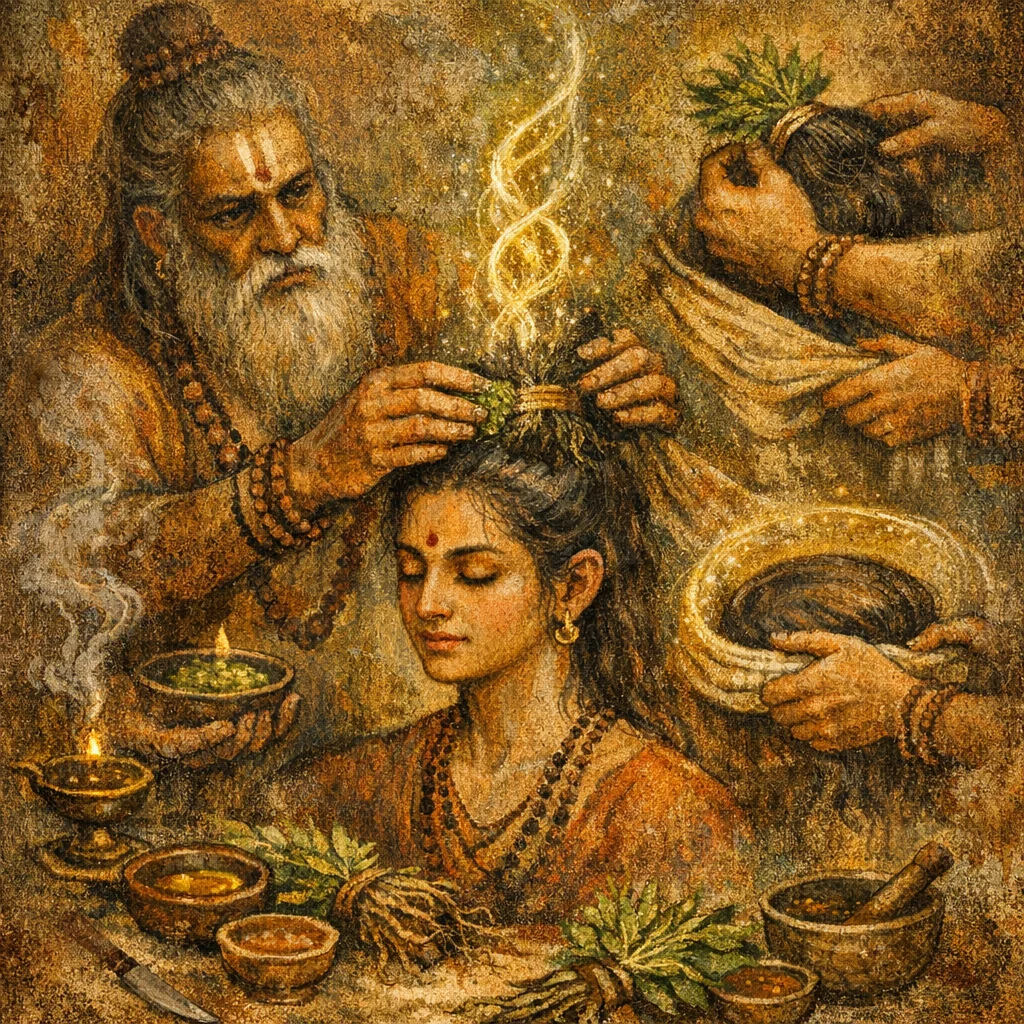
Sukta 137
Rishi: Jamadagni / Vītahavya (named authorities within the verse; hymn attribution varies by anukramaṇī)
Devata: Keśavardhanī (the hair-growing plant as devatā-like agent)
Chandas: Anuṣṭubh (probable; confirm in metrical collation)
Mantras
Mantra 1
केशवर्धनम्। यां जमदग्निरखनद् दुहित्रे केशवर्धनीम्। तां वीतहव्य आभरदसितस्य गृहेभ्यः
A hair-increaser: the hair-growing (plant) which Jamadagni dug up for his daughter—this Vītahavya brought hither from the houses of Asita.
Mantra 2
अभीशुना मेया आसन् व्यामेनानुमेयाः । केशा नडा इव वर्धन्तां शीर्ष्णस्ते असिताः परि
Measured as with reins, measured again by the span—let thy hairs grow like reeds, dark and abundant, all about thy head.
Mantra 3
दृंह मूलमाग्रं यच्छ वि मध्यं यामयौषधे । केशा नडा इव वर्धन्तां शीर्ष्णस्ते असिताः परि
Strengthen the root; hold fast the tip; lengthen well the middle, O herb: let thy hairs grow like reeds, dark and plentiful, round about thy head.
Frequently Asked Questions
Keśavardhanī is a hair-growing medicinal plant treated as a personified power (oṣadhi-devatā). The hymn activates it through lineage-authorization and direct commands for growth.
Their names function as authorities that certify the remedy’s authenticity—who first found it, for whom it was used, and from where it was properly obtained—so the medicine is ritually ‘validated.’
It asks—and commands—that hair grow thick and evenly like reeds, become dark and abundant, and remain strong: rooted firmly, not breaking at the ends, and lengthening well in the middle.