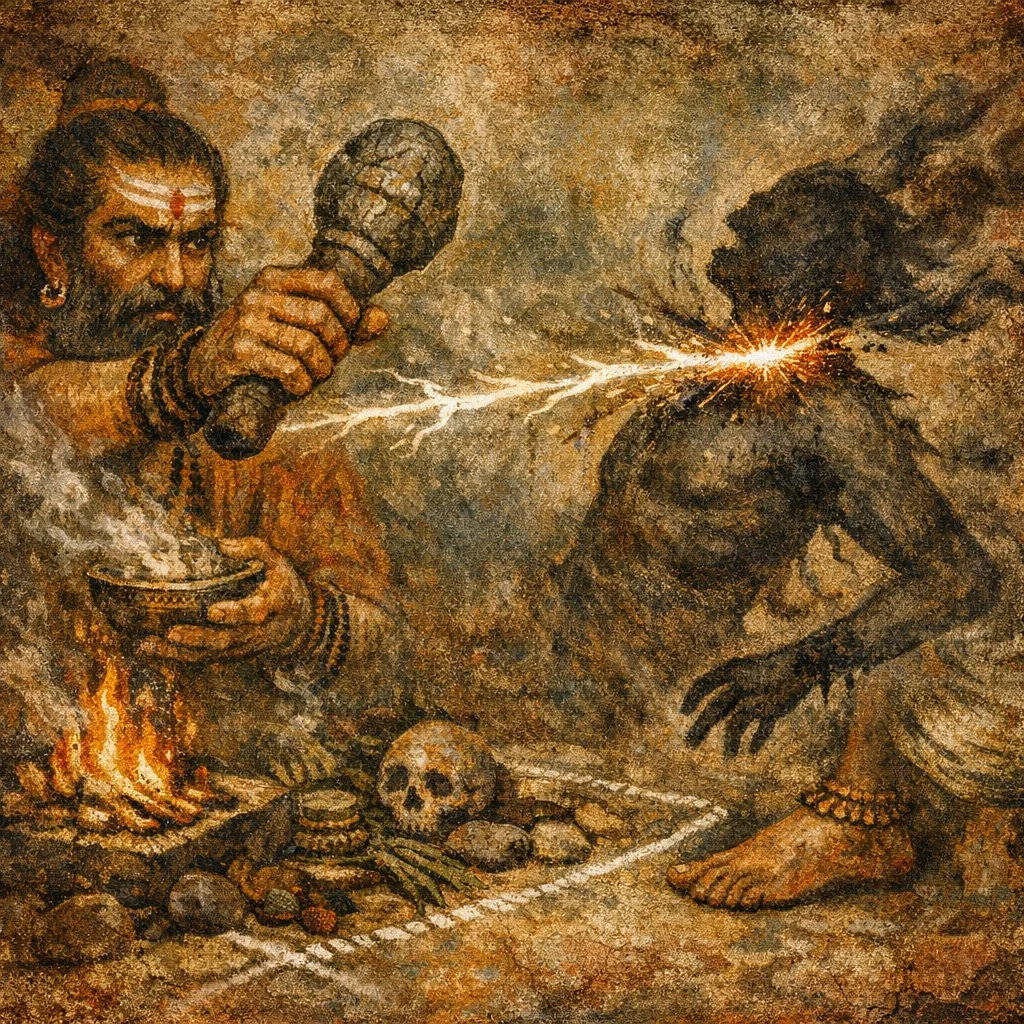
Sukta 134
Rishi: Atharvanic tradition (not specified in excerpt)
Devata: Indra (Śacīpati) / Vajra as personified force
Chandas: Uṣṇih (explicitly referenced as operative meter)
Mantras
Mantra 1
शत्रुनाशनम्। अयं वज्रस्तर्पयतामृतस्यावास्य राष्ट्रमप हन्तु जीवितम्। शृणातु ग्रीवाः प्र शृणातूष्णिहा वृत्रस्येव शचीपतिः
This thunderbolt—let it be sated with the Immortal’s might—let it smite away the life of him who threatens this realm. Let it shatter necks, yea, shatter them forth, with the Uṣṇih, as Śacī’s Lord did Vṛtra.
Mantra 2
अधरोऽधर उत्तरेभ्यो गूढः पृथिव्या मोत् सृपत्। वज्रेणावहतः शयाम्
Lower, yea lower than the upper folk—hidden in the earth—let him not creep forth upward. Smitten down with the thunderbolt, may he lie.
Mantra 3
यो जिनाति तमन्विच्छ यो जिनाति तमिज्जहि । जिनतो वज्र त्वं सीमन्तमन्वञ्चमनु पातय
Whoso assails—seek him out; whoso assails—him verily smite. O Vajra, thou, pursuing the assailant even to the boundary, strike him down as thou followest after.
Frequently Asked Questions
It is a polity-protection (rāṣṭrabhṛt) charm with hostile-magical (abhicārika) force, meant to neutralize and destroy an aggressor who threatens the realm—driving him down, preventing his return, and ensuring pursuit even to the border.
The hymn treats chandas as an operative instrument: reciting in/with Uṣṇih is portrayed as strengthening the vajra’s strike, paralleling Indra’s mythic victory over Vṛtra.
Sīmanta is the territorial boundary or limit of jurisdiction; the mantra commands the vajra to chase the attacker up to that boundary, ensuring the threat is not merely expelled but decisively struck down.