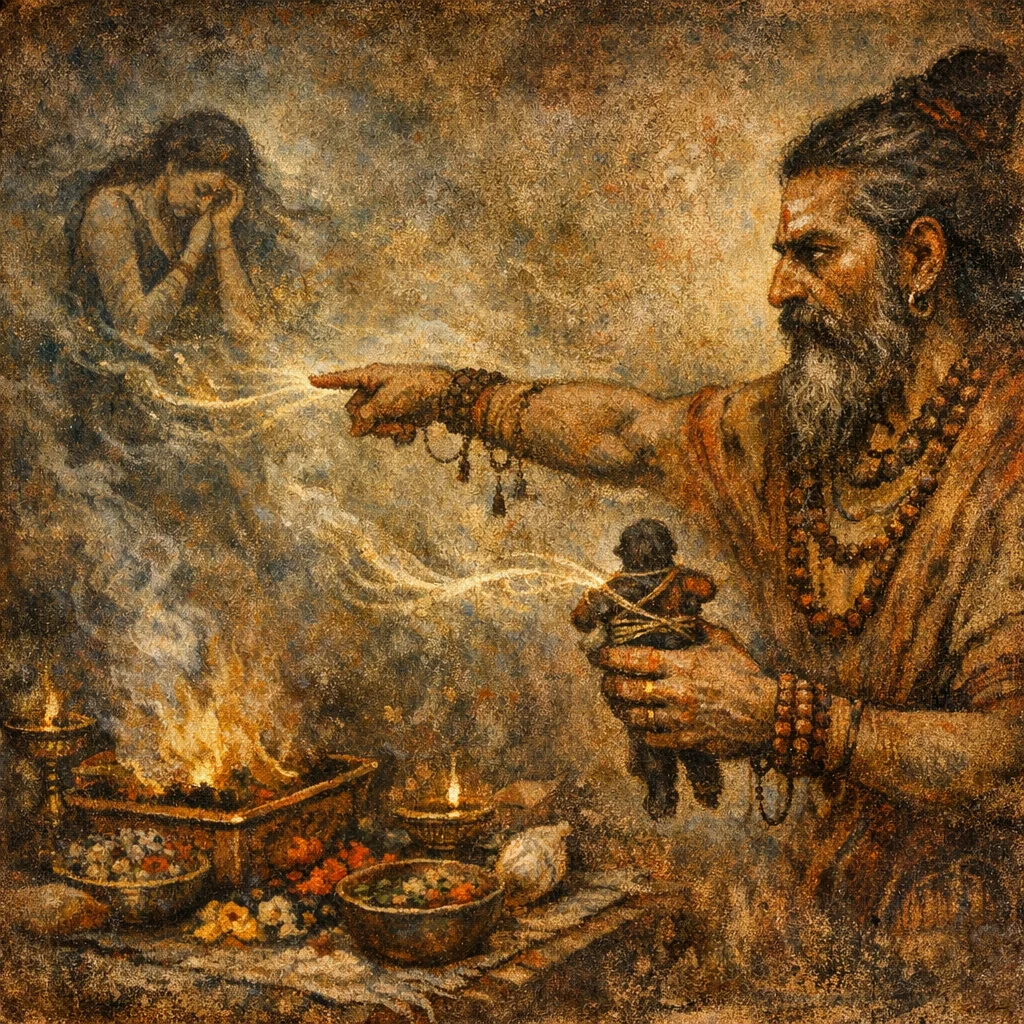
Sukta 131
Rishi: Atharvanic/anonymous
Devata: Smara (Kāma); Gods as enforcers
Chandas: Anuṣṭubh-like
Mantras
Mantra 1
स्मरः। नि शीर्षतो नि पत्तत आध्यो३ नि तिरामि ते । देवाः प्र हिणुत स्मरमसौ मामनु शोचतु
Smara. Down from the head let it fall; as an overlying burden I drive it down into thee. O Gods, drive forth Smara: let yonder one burn after me.
Mantra 2
अनुमतेऽन्विदं मन्यस्वाकूते समिदं नमः । देवाः प्र हिणुत स्मरमसौ मामनु शोचतु
O Anumati, approve this duly; O Ākūti, accept this fuel-stick—obeisance! Ye Gods, drive Smara forth: let yonder one burn after me.
Mantra 3
यद् धावसि त्रियोजनं पञ्चयोजनमाश्विनम्। ततस्त्वं पुनरायसि पुत्राणां नो असः पिता
Though thou runnest three leagues, five leagues, with Aśvin-swiftness, from thence thou comest back again: thou art the father of our sons.
Frequently Asked Questions
It is primarily an attraction/compulsion charm (vaśīkaraṇa) meant to implant Smara (desire) into a target so the person longs for the performer and, if absent, turns back.
Anumati represents approval/assent—making the act ‘permitted’ and effective—while Ākūti is focused intention. Together they frame the rite as authorized and correctly aimed, then Smara supplies the burning desire.
No herbs or amulets are specified in the verses provided. The only explicit ritual item is a samid (fuel-stick) in mantra 6.131.2, used as a simple offering/gesture while reciting.