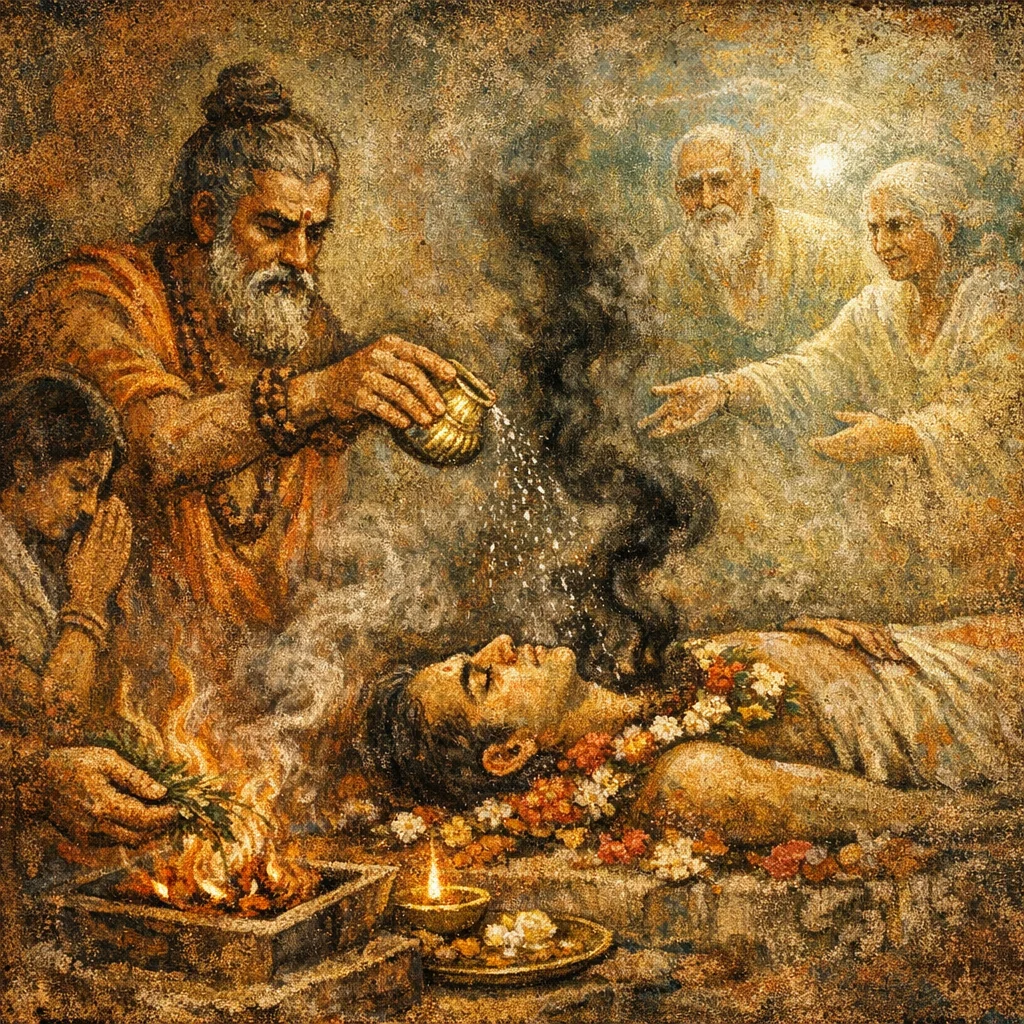
Sukta 120
Rishi: Atharvanic tradition (often transmitted under Atharvan/Angiras lineages; specific r̥ṣi attribution varies by anukramaṇī).
Devata: Cosmic family triad: Bhūmi (Earth), Antarikṣa (Midspace), Dyauḥ (Heaven); with Pitṛs implied.
Chandas: Triṣṭubh/Jagatī-like cadence (edition-dependent; not strict anuṣṭubh).
Mantras
Mantra 1
सुकृतस्य लोकः। यदन्तरिक्षं पृथिवीमुत द्यां यन्मातरं पितरं वा जिहिंसिम। अयं तस्माद् गार्हपत्यो नो अग्निरुदिन्नयाति सुकृतस्य लोकम्
The world of well-doing: if we have harmed mid-air, or earth, or heaven; if (we have harmed) mother or father—this our Gārhapatya Agni, from that, doth verily lead upward unto the world of well-doing.
Mantra 2
भूमिर्मातादितिर्नो जनित्रं भ्रातान्तरिक्षमभिशस्त्या नः । द्यौर्नः पिता पित्र्याच्छं भवाति जामिमृत्वा माव पत्सि लोकात्
Earth is our Mother; Aditi our begetting-place; the Mid-air our Brother—may it save us from the imprecation. Heaven is our Father: from the Fathers’ side may welfare be ours; having reached our kin in due season, fall not away from the world.
Mantra 3
यत्रा सुहार्दः सुकृतो मदन्ति विहाय रोगं तन्वः१ स्वायाः । अश्लोणा अङ्गैरह्रुताः स्वर्गे तत्र पश्येम पितरौ च पुत्रान्
Where the kindly-hearted, the merit-winners, rejoice—having left behind the sickness of their own body—unlame in their limbs, uninjured in heaven: there may we behold our parents and our sons.
Frequently Asked Questions
It is the auspicious “world gained by merit,” envisioned as a stable realm reached through right action and purification, where one is whole and among one’s kin and ancestors.
It frames the cosmos as a family relationship: Earth nurtures like a mother, Midspace stands beside and protects like a brother, and Heaven supports like a father—so reconciliation with them restores order and safety.
No. While it has a clear afterlife and ancestor-oriented aim, it also functions as prāyaścitta and śānti: a householder may use it to cleanse wrongdoing, avert imprecation, and secure welfare through the household fire.