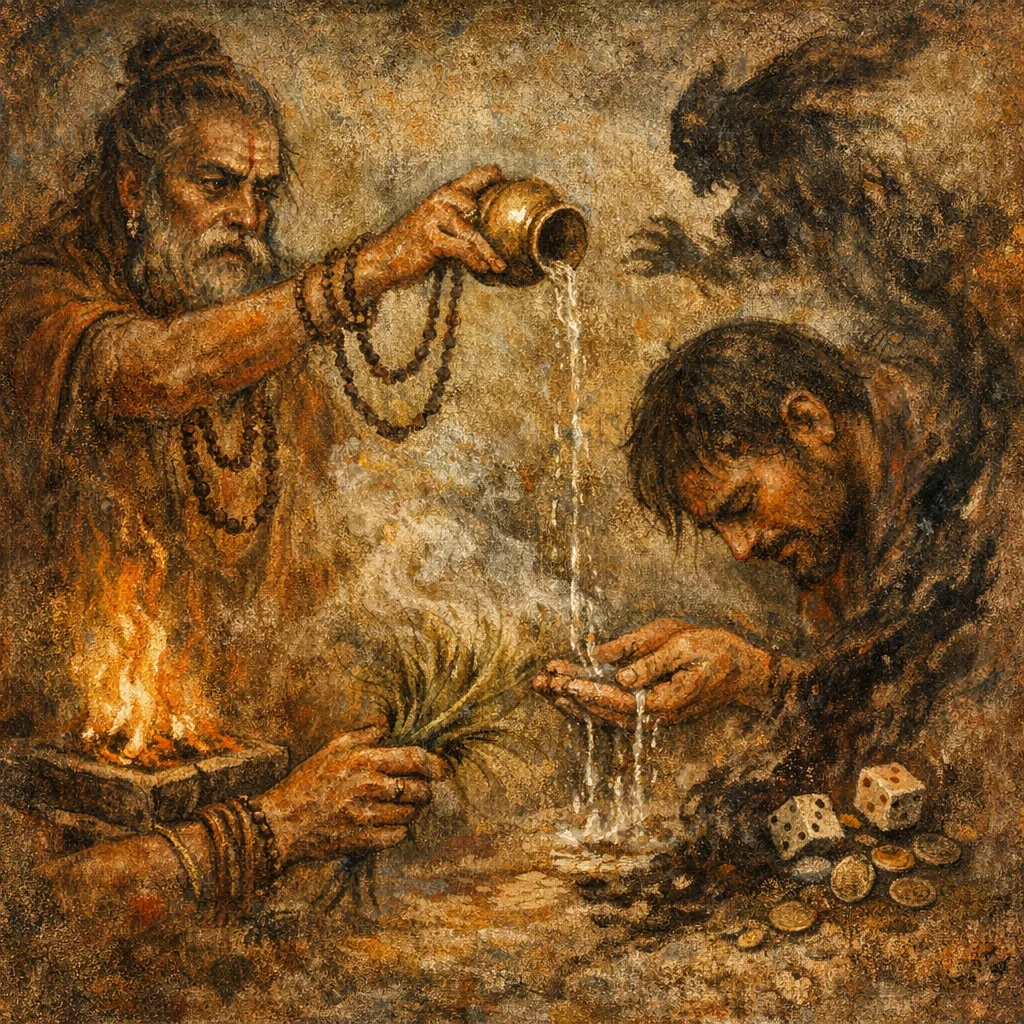
Sukta 118
Rishi: Atharvanic tradition
Devata: Apsarases (Ugrampaśyā, Ugrajit) associated with dice; ancillary aim of ānṛṇya
Chandas: Anuṣṭubh
Mantras
Mantra 1
आनृण्यम्। यद्धस्ताभ्यां चकृम किल्बिषाण्यक्षानां गत्नुमुपलिप्समानाः । उग्रंपश्ये उग्रजितौ तदद्याप्सरसावनु दत्तामृणं नः
Freedom from debt. What offences with our hands we have committed, in seeking to resort unto the dice, eager to clutch the gain—O Ugrampaśyā, O Ugrajit, ye Apsarases, that very debt, this day, bestow to follow away from us.
Mantra 2
उग्रंपश्ये राष्ट्रभृत् किल्बिषाणि यदक्षवृत्तमनु दत्तं न एतत्। ऋणान्नो नर्णमेर्त्समानो यमस्य लोके अधिरज्जुरायत्
O Ugrampaśyā, supporter of the realm: the offences—this which, as dice-practice, hath been given to follow upon us—he, seeking to reach men, from our debt, in Yama’s world, hath stretched the rope above (us).
Mantra 3
यस्मा ऋणं यस्य जायामुपैमि यं याचमानो अभ्यैमि देवाः । ते वाचं वादिषुर्मोत्तरां मद्देवपत्नी अप्सरसावधीतम्
To whom I owe the debt, whose wife I draw near unto; whom, as a suppliant, I approach—O Gods! They have uttered speech, a higher speech for me: the God-wives, the Apsaras, have established it.
Frequently Asked Questions
It targets debt and guilt created by gambling (dice-play), asking that the liability stop clinging to the person and instead be sent away, restoring freedom from debt (ānṛṇya).
Here the Apsarases (Ugrampaśyā, Ugrajit) function as personified forces tied to dice-fate and its consequences; the hymn compels them to reverse the ‘follow-on’ burden and remove it from the gambler.
It is an image of binding consequence: unpaid debt and wrongdoing can ‘reach’ a person even beyond life, like a noose. The hymn seeks to prevent that binding from taking hold.