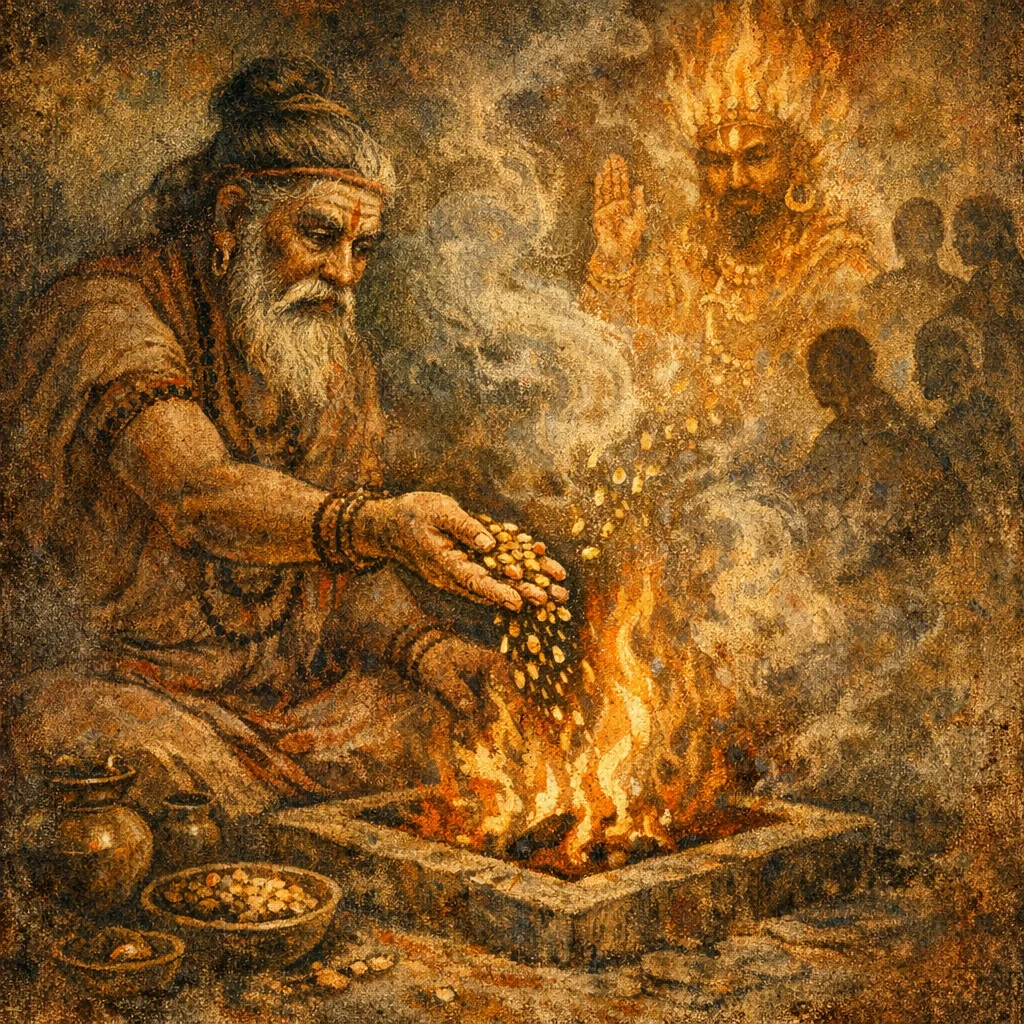
Sukta 117
Rishi: Atharvanic tradition (Anṛṇya-sūkta; specific ṛṣi attribution varies in ancillary lists)
Devata: Agni (as bond-loosener) with implicit reference to Yama’s pāśas
Chandas: Anuṣṭubh (predominant for this cluster)
Mantras
Mantra 1
आनृण्यम्। अपमित्यमप्रतीत्तं यदस्मि यमस्य येन बलिना चरामि । इदं तदग्ने अनृणो भवामि त्वं पाशान् विचृतं वेत्थ सर्वान्
Freedom from debt. The ill-lot, the unpaid due—whereby I stand within Yama’s sphere and, constrained by force, go my way: even that, O Agni, from this day I make mine own discharge; do thou—who knowest every noose, in all its spread—set me unbound.
Mantra 2
इहैव सन्तः प्रति दद्म एनज्जीवा जीवेभ्यो नि हराम एनत्। अपमित्य धान्यं१ यज्जघसाहमिदं तदग्ने अनृणो भवामि
Here, even here, while yet we live, we pay it back; we living render to the living, and wholly bear away this burden. O Misfortune—this grain which I have eaten—therewith, O Agni, for that very cause, I become discharged from debt.
Mantra 3
अनृणा अस्मिन्ननृणाः परस्मिन् तृतीये लोके अनृणाः स्याम । ये देवयानाः पितृयाणाश्च लोकाः सर्वान् पथो अनृणा आ क्षियेम
Unindebted in this world, unindebted in the other, unindebted in the third world—so may we be. What worlds are of the Gods’ path and of the Fathers’ path, all those ways—may we, debtless, reach and dwell therein.
Frequently Asked Questions
Anṛṇya means being free from debt or obligation (ṛṇa). In AV 6.117 it also implies freedom from the moral-spiritual burden that unpaid dues can create.
Agni is the purifier and truthful witness of human actions. Here he is specifically asked to ‘know all nooses’ and to loosen the binding consequences of unpaid obligations.
No. It emphasizes repayment ‘here, while living’ and treats restitution as the proper way to remove the burden and prevent it from becoming an afterlife impediment.