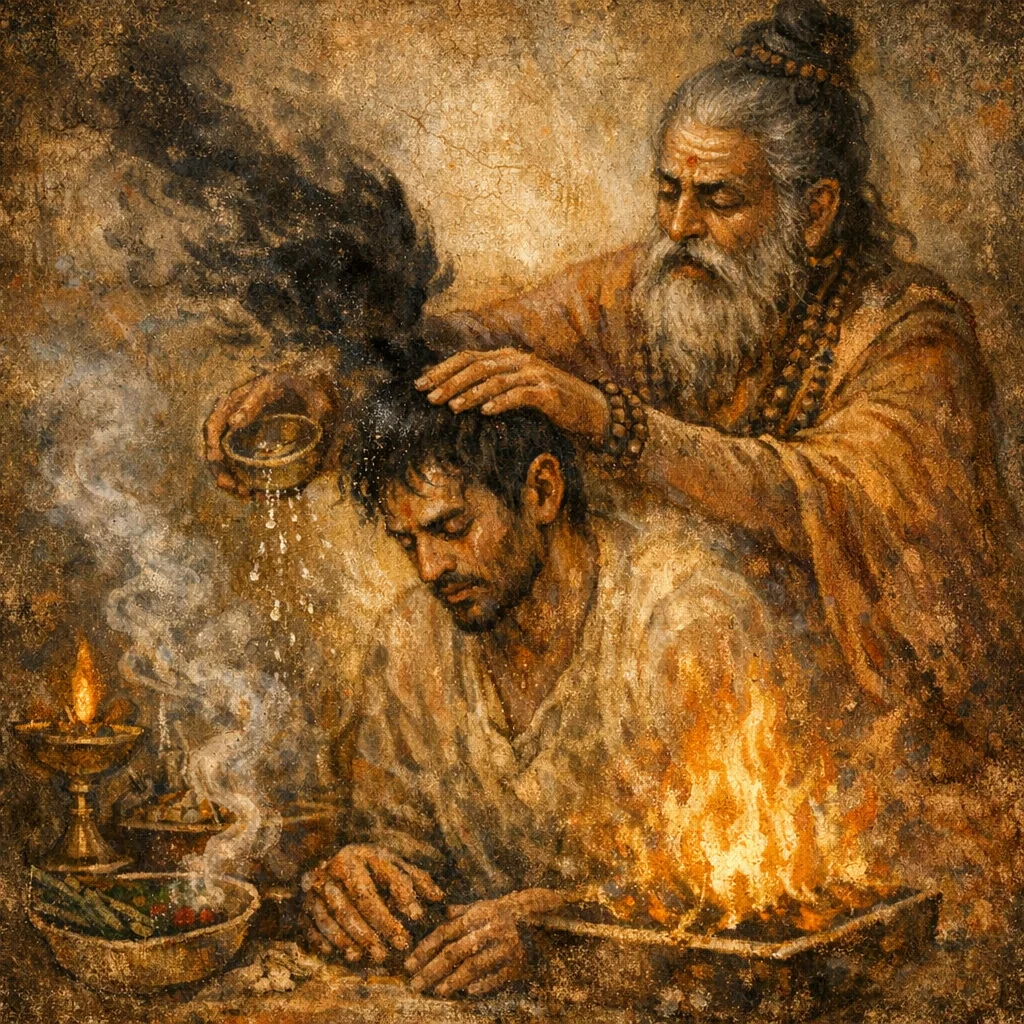
Sukta 111
Rishi: Atharvanic tradition (specific Anukramaṇī attribution not supplied in input)
Devata: Agni (as mocaka and purifier)
Chandas: Anuṣṭubh (probable; requires metrical verification)
Mantras
Mantra 1
उन्मत्ततामोचनम्। इमं मे अग्ने पुरुषं मुमुग्ध्ययं यो बद्धः सुयतो लालपीति । अतोऽधि ते कृणवद् भागधेयं यदानुन्मदितोऽसति
Release for me, O Agni, this man—this one who, bound fast, raves with babbling speech. Thereupon let him render unto thee thy due portion, when he shall be free from madness.
Mantra 2
अग्निष्टे नि शमयतु यदि ते मन उद्युतम्। कृणोमि विद्वान् भेषजं यदानुन्मदितोऽससि
May Agni quiet thee down, if thy mind be over-stirred. I, knowing, prepare the remedy, that thou mayest be free from madness.
Mantra 3
देवैनसादुन्मदितमुन्मत्तं रक्षसस्परि । कृणोमि विद्वान् भेषजं यदानुन्मदितोऽसति
From divine taint—maddened, frenzied—and from the demon wholly away: I, knowing, prepare the remedy, that he may be free from madness.
Mantra 4
पुनस्त्वा दुरप्सरसः पुनरिन्द्रः पुनर्भगः । पुनस्त्वा दुर्विश्वे देवा यथानुन्मदितोऽससि
Back from the evil Apsarases—back may Indra bring thee, back may Bhaga; back may the gods, the (hostile) All, restore thee, so that thou shalt be free from madness.
Frequently Asked Questions
It treats unmāda—derangement marked by raving or incoherent speech—understood as a kind of binding or spirit-seizure, and seeks release and restoration.
Agni is the purifier and ‘releaser’ (mocaka): fire removes enas (taint), drives away hostile beings, and re-establishes the patient’s right order and clarity.
Yes. It explicitly mentions rakṣas and ‘evil Apsarases’ as afflicting agencies, while also covering ‘divine taint’ (deva-enas) as another possible cause, aiming for a complete remedy.