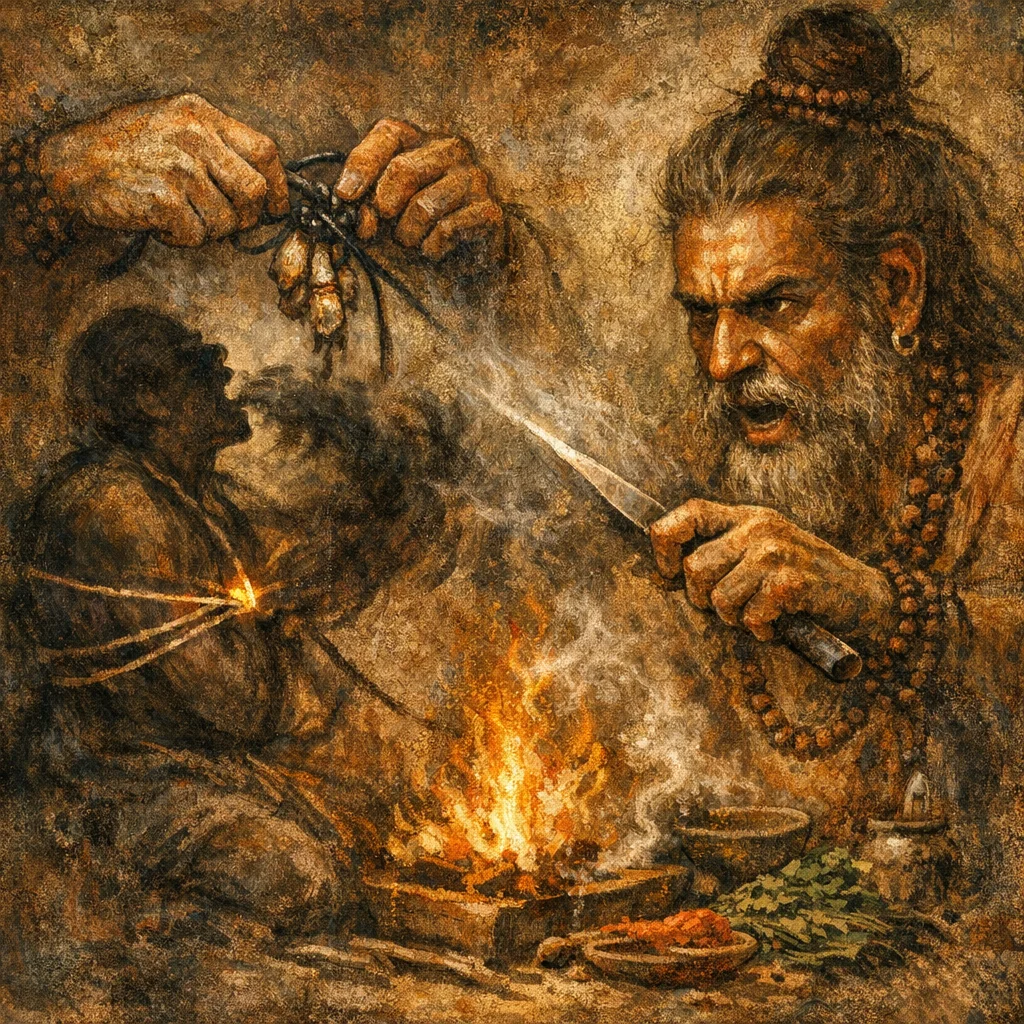
Sukta 104
Rishi: Atharvanic/Angirasa tradition (typical for śatrunāśana material)
Devata: Indra-Agni complex implied in the cycle; here the operative power is the mantra’s bandhana and prāṇa-theory
Chandas: Anuṣṭubh (probable)
Mantras
Mantra 1
शत्रुनाशनम्। आदानेन संदानेनामित्राना द्यामसि । अपाना ये चैषां प्राणा असुनासून्त्समच्छिदन्
Enemy-destruction. By seizure and by binding-fast we bind the foes; their downward breaths and their life-breaths—by (their own) life-force—have wholly cut off their lives.
Mantra 2
इदमादानमकरं तपसेन्द्रेण संशितम्। अमित्रा येऽत्र नः सन्ति तानग्न आ द्या त्वम्
This act of seizure have I fashioned, whetted keen with ardour and with Indra. The foes who here are ours—those, O Agni, do thou bind hither fast.
Mantra 3
ऐनान् द्यतामिन्द्राग्नी सोमो राजा च मेदिनौ । इन्द्रो मरुत्वानादानममित्रेभ्यः कृणोतु नः
Let Indra and Agni bind these; let Soma the King, and the two Medinau, (bind them). Let Indra, with the Maruts, for us perform the seizure against the foes.
Frequently Asked Questions
Its aim is to neutralize enemies through ritual ‘seizure’ (ādāna) and ‘binding-fast’ (saṃdāna), culminating in the stoppage or collapse of the foe’s vital breaths (prāṇa/apāna).
The hymn treats breath and vitality as the enemy’s functional power. By ritually binding prāṇa and apāna, the charm claims to cut off the opponent’s capacity to act, endure, or prevail.
Agni is directly addressed as the binder, Indra empowers and ‘sharpens’ the act, Soma contributes sovereign force, and the Maruts add collective martial momentum—together forming a coalition that seals the binding and seizure.