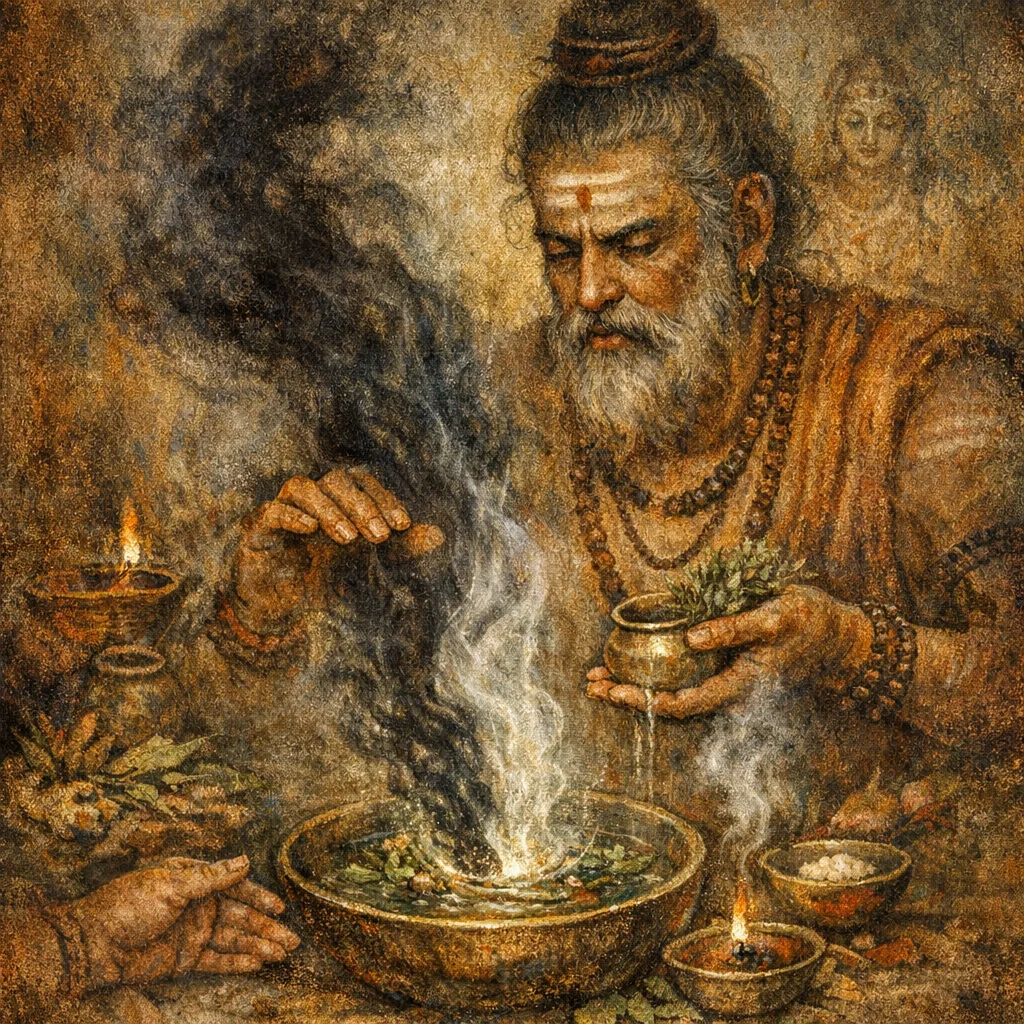
Sukta 96
Rishi: Atharvanic tradition (exact r̥ṣi not specified in the provided excerpt)
Devata: Soma (as pāvaka/purifier)
Chandas: Anuṣṭubh (probable; common for such expiatory verses)
Mantras
Mantra 1
चिकित्सा। या ओषधयः सोमराज्ञीर्बह्वीः शतविचक्षणाः । बृहस्पतिप्रसूतास्ता नो मुञ्चन्त्वंहसः
Healing: the herbs which are Soma-ruled, many, of a hundredfold wisdom, brought forth by Bṛhaspati—let them release us from distress and harm.
Mantra 2
मुञ्चन्तु मा शपथ्या३दथो वरुण्याऽदुत। अथो यमस्य पड्वीशाद् विश्वस्माद् देवकिल्बिषात्
Let them release me from the oath-born curse, and also from Varuṇa’s (penalty), and further from Yama’s snare—yea, from every divine transgression.
Mantra 3
यच्चक्षुषा मनसा यच्च वाचोपारिम जाग्रतो यत् स्वपन्तः । सोमस्तानि स्वधया नः पुनातु
What, by the eye, by the mind, and what by speech we have overpassed—what (we have done) waking, what sleeping—Soma, by his own sustaining might, let him cleanse those (sins) from us.
Frequently Asked Questions
Both together. The hymn treats suffering as linked with aṃhas/devakilbiṣa (harmful taint or offense) and seeks healing through herbal power plus ritual purification by Soma.
Varuṇa and Yama represent binding constraints—punitive fetters and the death-snare. The mantra asks to be released from these ‘bonds,’ a common Atharvanic way to speak about severe illness or fate-like affliction.
Prepare clean water or a mild herbal infusion, recite 6.96.1 over it, then sprinkle or sip while reciting 6.96.2–3, focusing on release from burdens and Soma’s cleansing of faults done by eye, mind, and speech in waking and sleep.