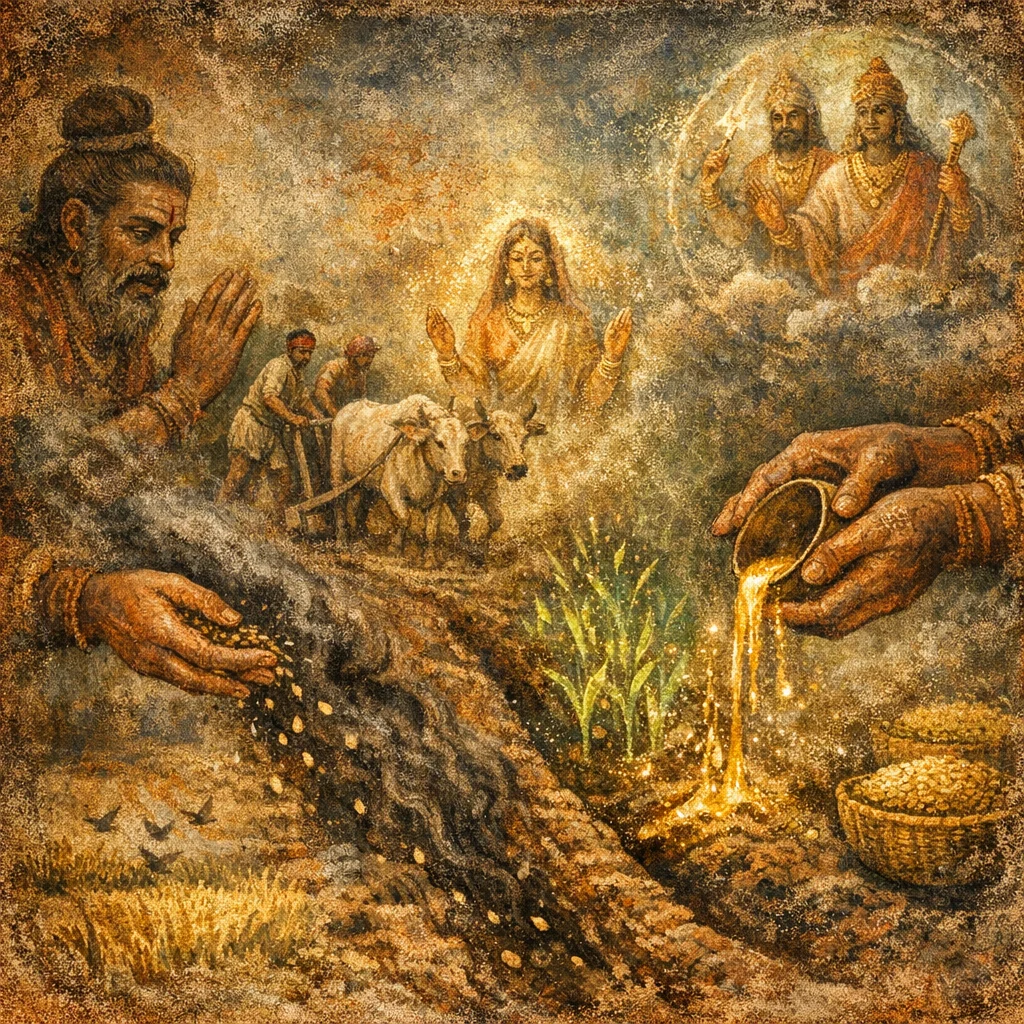
Sukta 17
Rishi: Traditionally Atharvanic/Angirasa attribution for kṣetra-hymns (varies by anukramaṇī).
Devata: Sītā (Furrow), with Maruts and Viśve Devāḥ as sanctioning powers
Chandas: Triṣṭubh (by cadence and length; common in agrarian invocations)
Mantras
Mantra 1
कृषिः। ३ पथ्यापङ्क्तिः, ७ विराट् पुर उष्णिक्, ८ निचृत्। सीरा युञ्जन्ति कवयो युगा वि तन्वते पृथक्। धीरा देवेषु सुम्नयौ
The skilful yoke the ploughs; the yokes they stretch forth, each apart. The steadfast, seeking favor, set their work in the gods.
Mantra 2
युनक्त सीरा वि युगा तनोत कृते योनौ वपतेह बीजम्। विराजः श्नुष्टिः सभरा असन्नो नेदीय इत् सृण्यः पक्वमा यवन्
Let him yoke the ploughs; let him stretch the yokes abroad; in the prepared womb let him sow the seed here. Let Virāj’s increase, well-bearing, be ours; and may the sickles indeed come nearer with the ripened grain.
Mantra 3
लाङ्गलं पवीरवत् सुशीमं सोमसत्सरु । उदिद् वपतु गामविं प्रस्थावद् रथवाहनं पीबरीं च प्रफर्व्यऽम्
The plough, iron-pointed, well-compacted, Soma-speeded—let it indeed cast up, cow-winning; well-based, chariot-drawing; and make the soil swelling-rich and well-furrowed.
Mantra 4
इन्द्रः सीतां नि गृह्णातु तां पूषाभि रक्षतु । सा नः पयस्वती दुहामुत्तरामुत्तरां समाम्
Let Indra take firm hold of the Furrow; let Pūṣan guard her round about. May she, rich in milk-like sap, milk forth for us, year after year, an ever ampler yield.
Mantra 5
शुनं सुफाला वि तुदन्तु भूमिं शुनं कीनाशा अनु यन्तु वाहान्। शुनासीरा हविषा तोशमाना सुपिप्पला ओषधीः कर्तमस्मै
Auspiciously let the good ploughshares cleave and pierce the earth; auspiciously let the ploughmen follow on behind the teams. O Śunāsīrau, rejoicing in the oblation, make for this man plants richly fruited.
Mantra 6
शुनं वाहाः शुनं नरः शुनं कृषतु लाङ्गलम्। शुनं वरत्रा बध्यन्तां शुनमष्ट्रामुदिङ्गय
Auspicious be the teams, auspicious the men; auspiciously let the plough do its ploughing. Auspiciously let the traces be fastened; auspiciously ply thou the goad.
Mantra 7
शुनासीरेह स्म मे जुषेथाम्। यद् दिवि चक्रथुः पयस्तेनेमामुप सिञ्चतम्
O Śunāsīrau, take pleasure here in mine offering. With the milk-like nourishment which ye fashioned in heaven, with that sprinkle ye this (field) upon us.
Mantra 8
सीते वन्दामहे त्वार्वाची सुभगे भव । यथा नः सुमना असो यथा नः सुफला भुवः
O Sītā, we reverence thee: turn hitherward; be thou of happy portion. So mayest thou be kindly-minded toward us; so mayest thou become for us of goodly fruit.
Mantra 9
घृतेन सीता मधुना समक्ता विश्वैर्देवैरनुमता मरुद्भिः । सा नः सीते पयसाभ्याववृत्स्वोर्जस्वती घृतवत् पिन्वमाना
With ghee, O Sītā, with honey art thou anointed, approved by all the Gods, by the Maruts sanctioned. Turn thou to us, O Sītā, with milk encompass us—rich in sustaining strength, ghee-laden, swelling us with increase.
Frequently Asked Questions
Sītā is the personified furrow—the life-bearing line opened by the plough. She represents the field’s capacity to receive moisture, hold seed, and yield food.
They are prosperity-substances: ghee and honey signify sweetness and strength, while payas is the fertility-fluid (milk/rain/sap) that moistens and nourishes the crop.
It is recited at the start of ploughing or sowing, often with sprinkling the first furrow using milk-water and dedicating a small offering, to seek rain, good furrows, and abundant harvests.