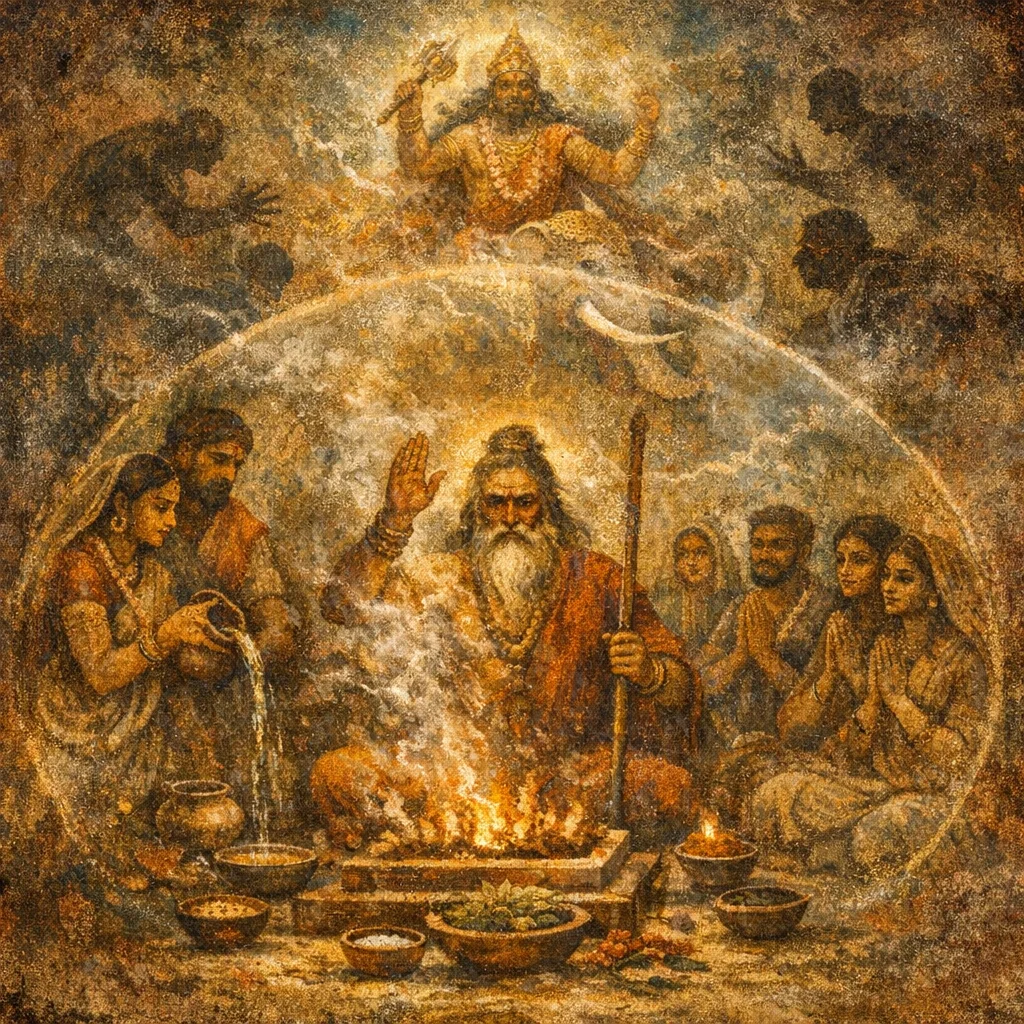
Sukta 85
Rishi: RV-source seer (Indra hymn tradition; AV 20 inherits RV arrangement).
Devata: Indra
Chandas: RV-derived meter (per source)
Mantras
Mantra 1
मा चिदन्यद् वि शंसत सखायो मा रिषण्यत । इन्द्रमित् स्तोता वृषणं सचा सुते मुहुरुक्था च शंसत
Praise not, even in the least, another—O comrades, do ye no hurt: Indra alone, the Bull, let the singer praise; with the pressed Soma, again and again, recite the solemn hymns.
Mantra 2
अवक्रक्षिणं वृषभं यथाजुरं गां न चर्षणीसहम्। विद्वेषणं संवननोभयंकरं मंहिष्ठमुभयाविनम्
Him, the side-glancing Bull, enduring as with age; like a cow, overpowering the peoples—stirrer of enmity, uniter, making both sides fear, most bounteous, helper in either wise.
Mantra 3
यच्चिद्धि त्वा जना इमे नाना हवन्त ऊतये । अस्माकं ब्रह्मेदमिन्द्र भूतु तेहा विश्वा च वर्धनम्
Though, verily, these men in many a fashion call on thee for aid, yet let this our sacred word, O Indra, be for thee here—an increase of all things.
Mantra 4
वि तर्तूर्यन्ते मघवन् विपश्चितोऽर्यो विपो जनानाम्। उप क्रमस्व पुरुरूपमा भर वाजं नेदिष्ठमूतये
Forth press the wise and far-discerning, O Bounteous; the noble, the inspired of the peoples. Step hither; bring, in thy many-formed might, the prize most near at hand, for our succour.
Frequently Asked Questions
To keep the ritual effective by concentrating praise on Indra alone, preventing harm from misdirected invocation, and obtaining immediate strength, victory, and prosperity.
In this liturgical logic, scattered praise ‘dilutes’ the intended channel of power; exclusive address ensures the brahman and offering reach Indra without error and return as a clear boon.
In its original setting Soma is central, but the Atharvanic practice often allows symbolic substitutes (like water or milk) while treating the recited uktha/brahman as the primary operative force.