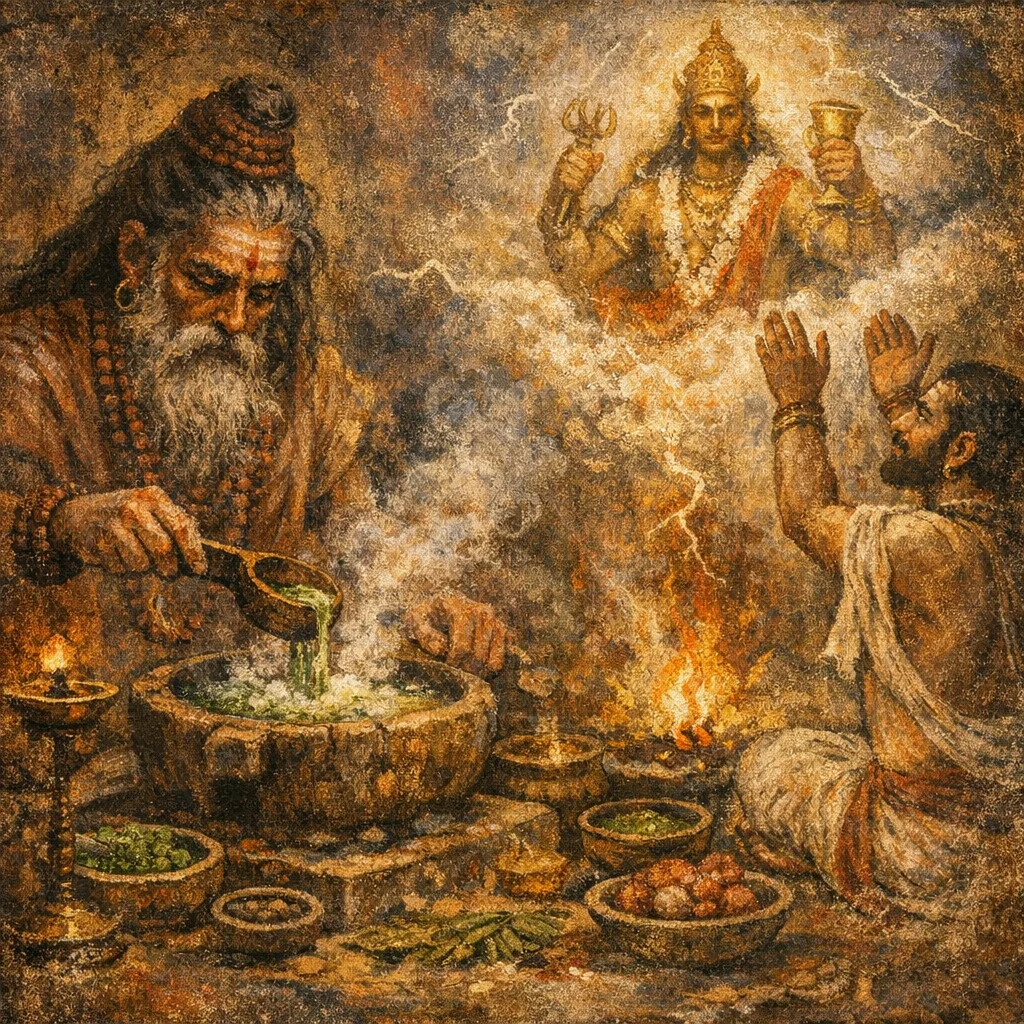
Sukta 84
Rishi: RV-source seer (Indra-stotra tradition); in AV 20 these are RV borrowings (exact RV attribution varies by verse-source).
Devata: Indra
Chandas: Anuṣṭubh/Trisṭubh-type RV meter (as transmitted in AV 20; metrical identity follows RV source)
Mantras
Mantra 1
इन्द्रा याहि चित्रभानो सुता इमे त्वायवः । अण्वीभिस्तना पूतासः
Indra, come hither, O bright-flaming one: these draughts are pressed for thee—thine own—purified with the slender (stalks/strainers), wholly made clean.
Mantra 2
इन्द्रा याहि धियेषितो विप्रजूतः सुतावतः । उप ब्रह्माणि वाघतः
O Indra, come hither—by prayer impelled, by the inspired urged—unto the hymns of him who hath the Soma pressed, the singer’s sacred words.
Mantra 3
इन्द्रा याहि तूतुजान उप ब्रह्माणि हरिवः । सुते दधिष्व नश्चनः
O Indra, come hither, speeding; draw near unto the hymns, O Bay-steeded: in the pressed Soma set thou thyself, and grant us favor.
Frequently Asked Questions
It is used to invite Indra to the pressed Soma so his presence empowers the rite—bringing favor, strength, victory, and prosperity to the patron.
Because the hymn treats brahman as ritual force: well-formed sacred speech ‘draws’ Indra near, while Soma provides the offering that confirms and sustains his presence.
In its original liturgical setting it accompanies Soma-pressing; outside that context, reciters commonly treat it as an Indra-invocation for vigor and success, using a symbolic offering (clean water or a permitted substitute) according to their tradition.