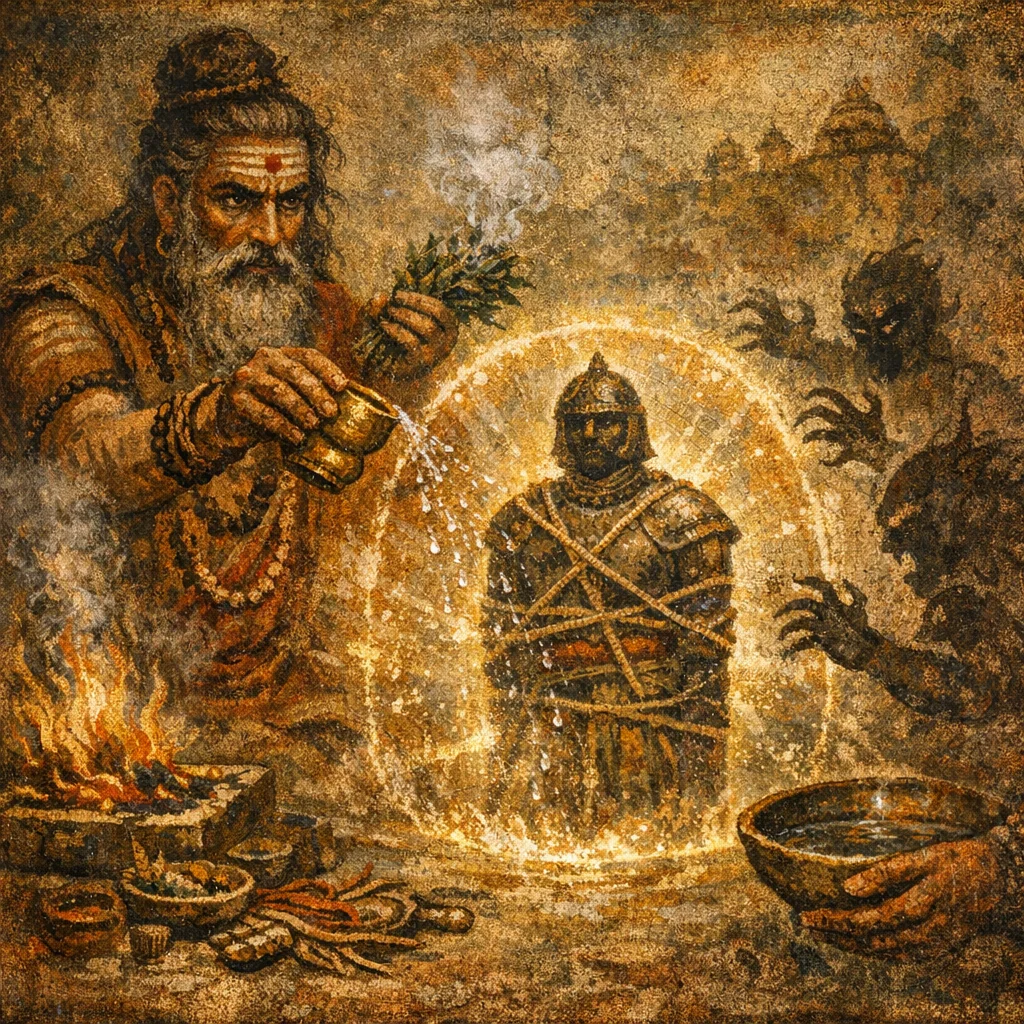
Sukta 46
Rishi: Rigvedic source attribution (Indra hymn tradition)
Devata: Indra
Chandas: RV-derived (likely Triṣṭubh segmental phrasing)
Mantras
Mantra 1
प्रणेतारं वस्यो अच्छा कर्तारं ज्योतिः समत्सु । सासह्वांसं युधामित्रान्
Hither to the Leader unto the better good; to the Doer, the Light in battles; to him who overcometh the foes by fight.
Mantra 2
स नः पप्रिः पारयाति स्वस्ति नावा पुरुहूतः । इन्द्रो विश्वा अति द्विषः
He, our helper, shall bear us over in safety, as with a boat—the much-invoked Indra—over all the haters.
Mantra 3
स त्वं न इन्द्र वाजेभिर्दशस्या च गातुया च । अच्छा च नः सुम्नं नेषि
So thou, O Indra, with winnings, with our homage, and with guidance, leadest us; and hither to us thou bringest gracious favour.
Frequently Asked Questions
It is used to invoke Indra for victory in conflict or competition and for protection—especially the idea of being carried safely through danger and beyond hostile forces.
The “boat” is a metaphor for Indra’s protective power: just as a boat carries people across risky waters, Indra is asked to carry the chanter across threats and opposition in safety (svasti).
Not explicitly. The text is primarily a spoken invocation; some practitioners may use clean water or a vessel symbolically to represent the ‘crossing,’ but it is optional.