Sukta 40
Rishi: Traditionally aligned with Ṛgvedic provenance in AV 20 (late appendix); specific seer uncertain without full anukramaṇī context.
Devata: Agni/Svadhā (functional focus on fire and svadhā-power; Pitṛ-oriented efficacy).
Chandas: Likely Anuṣṭubh or related (requires full pada count verification).
Mantras
Mantra 1
इन्द्रेण सं हि दृक्षसे संजग्मानो अबिभ्युषा। मन्दू समानवर्चसा
With Indra, verily, thou art made manifest, assembling with the fearless one—O gladdening power—of equal splendour.
Mantra 2
अनवद्यैरभिद्युभिर्मखः सहस्वदर्चति । गणैरिन्द्रस्य काम्यैः
With faultless, overmastering powers the Sacrifice, mighty, lifts its song—by Indra’s companies, desirable and wish-bestowing.
Mantra 3
आदह स्वधामनु पुनर्गर्भत्वमेरिरे। दधाना नाम यज्ञियम्
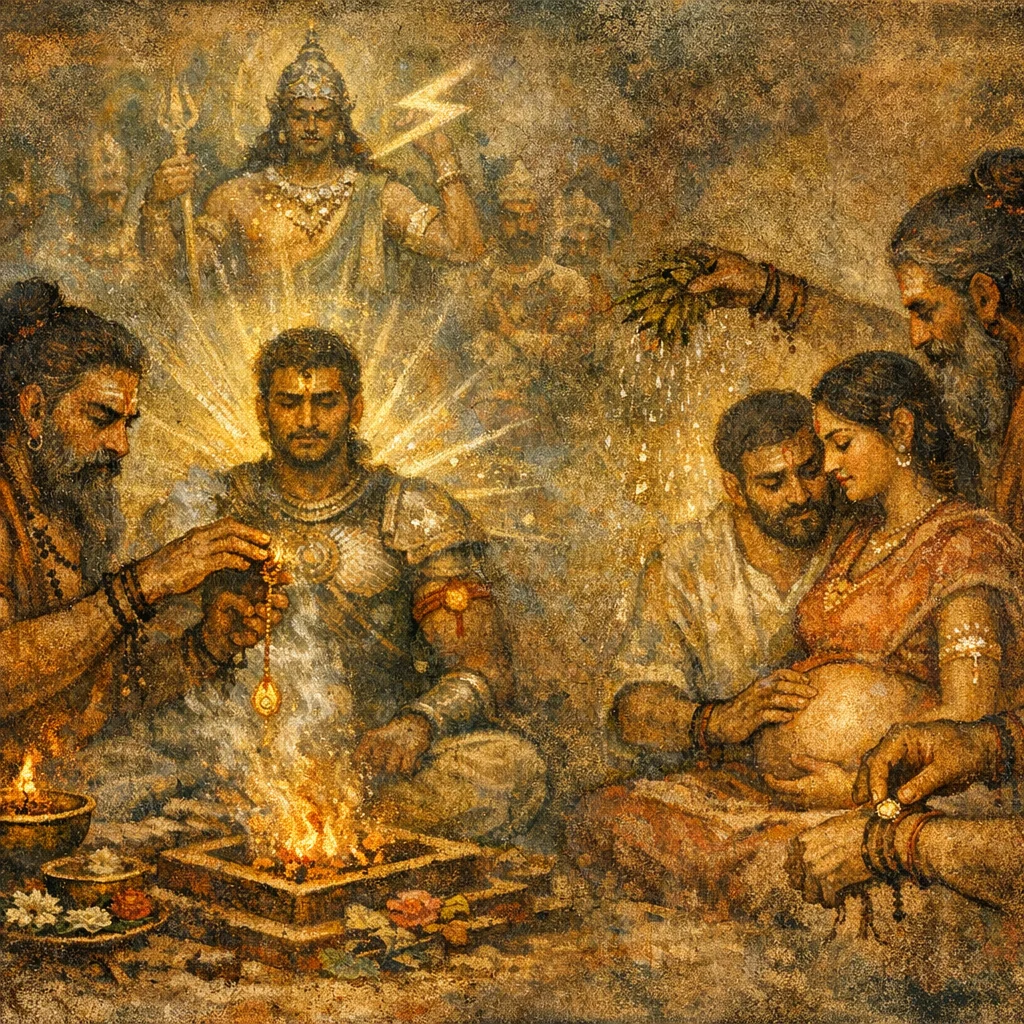
Burn on, in ordered course, the Svadhā-power: again they have set a return to embryo-state in motion, establishing the sacrificial Name.
Frequently Asked Questions
For paustika aims: strengthening prosperity and continuity by making the rite powerful and faultless, granting fearlessness and radiance, and sealing Pitṛ-facing efficacy through Agni and Svadhā.
Indra supplies victorious protection and shared splendour that stabilizes the practitioner and rite, while Svadhā (carried by Agni) supplies ancestral authorization and continuity-power—together they make success both protective and generative.
It is renewal imagery: a ‘return to embryo-state’ as a ritual way of speaking about reconstitution—restoring embodied continuity, identity, and efficacy—sealed by establishing the yajñiya (sacrificial) Name.