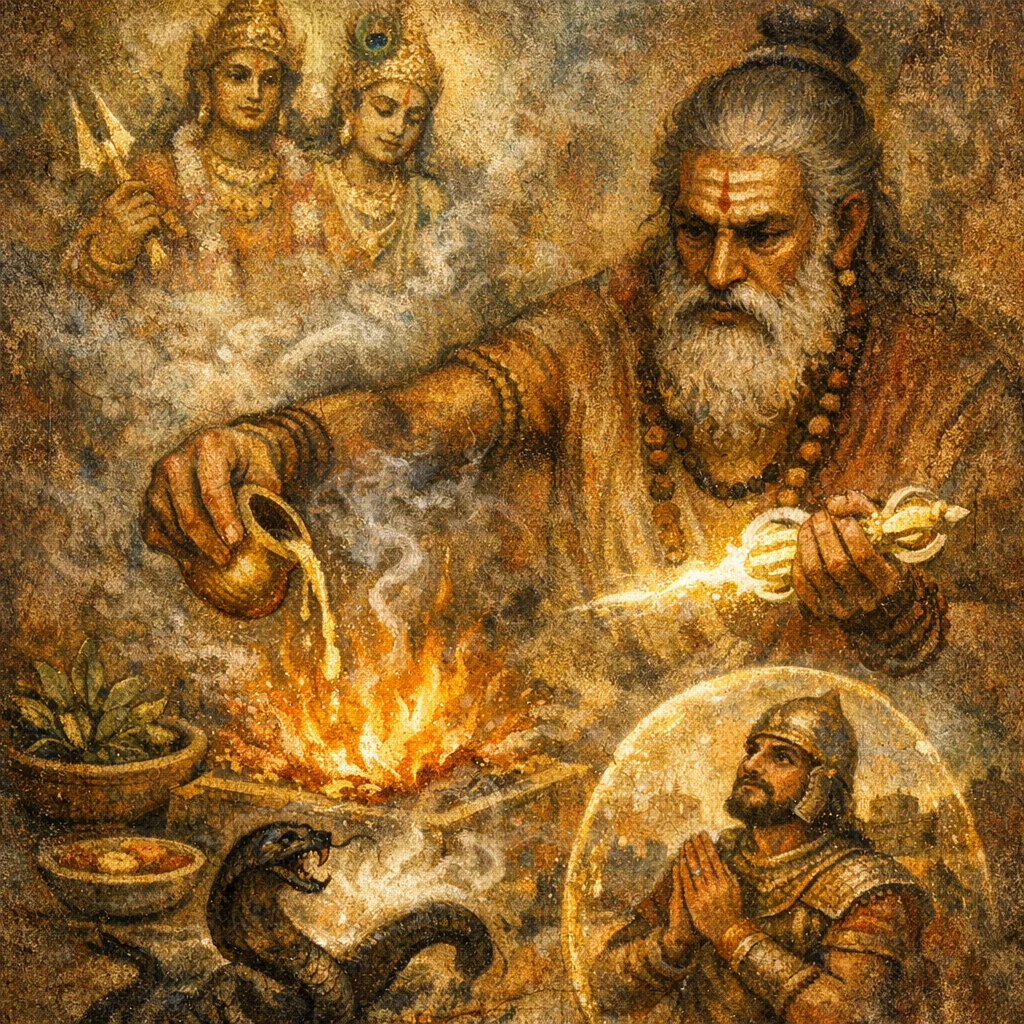
Sukta 30
Rishi: Traditionally aligned with RV Indra-hymn transmission (AV 20 is largely RV-derived); specific seer for this RV-parallel verse to be confirmed via AV anukramaṇī.
Devata: Indra (with Haris as his conveyance/power)
Chandas: Triṣṭubh/Jagatī-type RV meter (to be verified against pada count; AV 20 preserves RV meters).
Mantras
Mantra 1
प्र ते महे विदथे शंसिषं हरी प्र ते वन्वे वनुषो हर्यतं मदम्। घृतं न यो हरिभिश्चारु सेचत आ त्वा विशन्तु हरिवर्पसं गिरः
Forth to thee, the Great, in the solemn session I would proclaim, O Bay Steeds; forth to thee I strive to win the tawny rapture of the Winner. Like ghee, he who with the Bays pours a fair libation—let the songs enter unto thee, O thou of tawny splendour.
Mantra 2
हरिं हि योनिमभि ये समस्वरन् हिन्वन्तो हरी दिव्यं यथा सदः । आ यं पृणन्ति हरिभिर्न धेनव इन्द्राय शूषं हरिवन्तमर्चत
For they who chant in concord toward the tawny seat, urging on the Bay Steeds, as (men urge) the heavenly session; whom they fill with the Bays as milch-cows (fill) with milk—praise ye for Indra that impetuous strength, him who is attended by the Bays.
Mantra 3
सो अस्य वज्रो हरितो य आयसो हरिर्निकामो हरिरा गभस्त्योः । द्युम्नी सुशिप्रो हरिमन्युसायक इन्द्रे नि रूपा हरिता मिमिक्षिरे
His thunderbolt is tawny, which is of metal; tawny, at his will, tawny in his two hands. In splendours, fair-lipped, with tawny wrath, missile-bearing—within Indra the tawny forms have been firmly commingled.
Mantra 4
दिवि न केतुरधि धायि हर्यतो विव्यचद् वज्रो हरितो न रंह्या । तुददहिं हरिशिप्रो य आयसः सहस्रशोका अभवद्धरिंभरः
Like a banner in heaven was set the tawny one’s sign; the tawny thunderbolt flashed abroad like a racer. Thrusting at the Serpent, fair-lipped, that bolt of metal—thousand-flamed—became he who bears the Bays.
Mantra 5
त्वंत्वमहर्यथा उपस्तुतः पूर्वेभिरिन्द्र हरिकेश यज्वभिः । त्वं हर्यसि तव विश्वमुक्थ्य१मसामि राधो हरिजात हर्यतम्
Thou, thou wast irresistible when praised of old by the former sacrificers, O Indra of tawny hair. Thou art the tawny-bright; all that is worthy of hymn is thine: I win thy bounty, O tawny-born, the tawny boon most to be desired.
Frequently Asked Questions
For prosperity and success—especially victory and protection—by invoking Indra’s swift help with his Haris and requesting rādhas (bounty).
Because ‘hari’ marks Indra’s concentrated power: his bay steeds that bring him quickly, his tawny radiance, and even the tawny vajra and wrath that overcome obstacles.
No. In AV practice, ‘mada’ can be understood as mantra-born vigor and confidence; a simple ghṛta offering and focused recitation can serve the hymn’s intended aim.