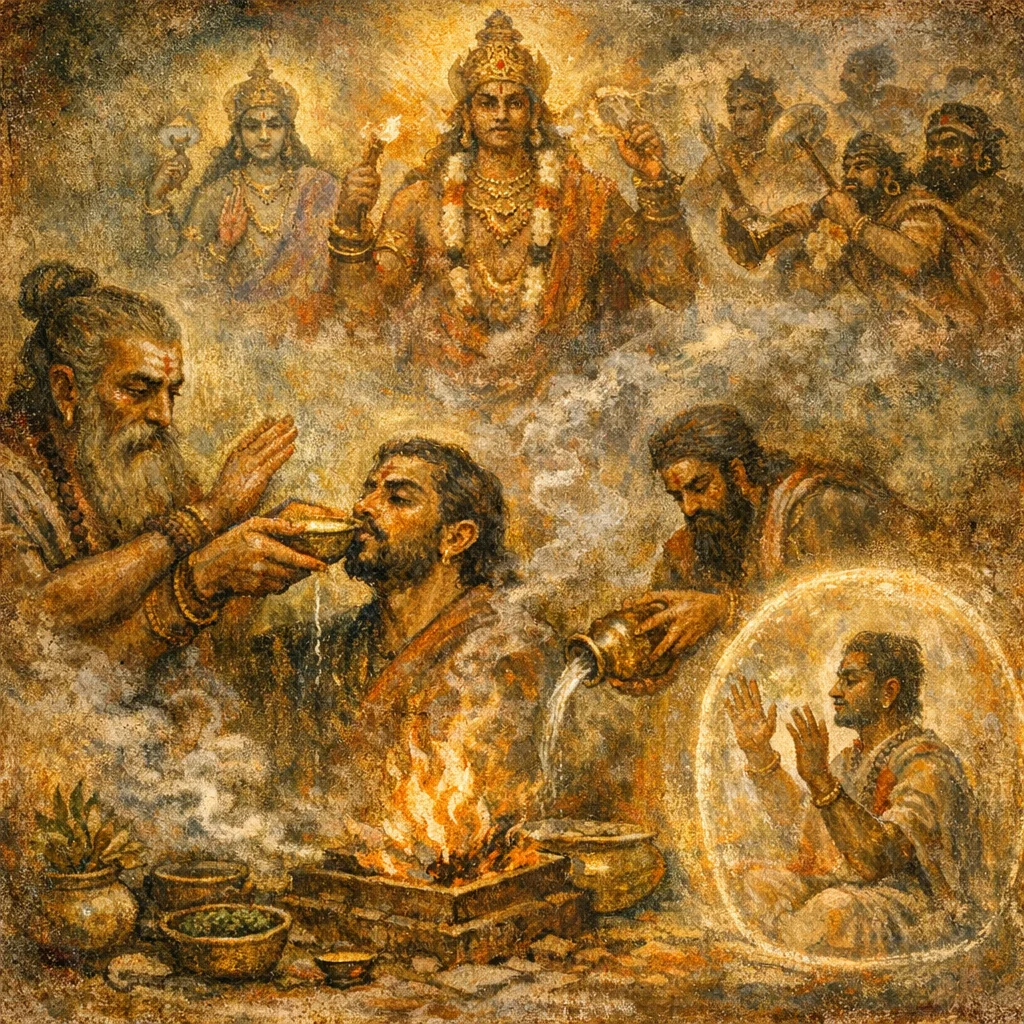
Sukta 111
Rishi: Ṛgvedic provenance; r̥ṣi not determinable from excerpt alone.
Devata: Indra (with Viṣṇu/Maruts/Trita as associated figures).
Chandas: Not securely determinable from excerpt alone.
Mantras
Mantra 1
यत् सोममिन्द्र विष्णवि यद् वा घ त्रित आप्त्ये। यद् वा मरुत्सु मन्दसे समिन्दुभिः
What Soma, O Indra, thou drinkest with Vishnu; or verily what (thou drinkest) with Trita Āptya; or what among the Maruts thou art made glad withal—(be thou glad) wholly with the drops.
Mantra 2
यद् वा शक्र परावति समुद्रे अधि मन्दसे । अस्माकमित् सुते रणा समिन्दुभिः
Or if, O Śakra, in the far region, upon the sea, thou art exhilarated—then even in our pressed Soma, for battle, be thou wholly exhilarated with the drops.
Mantra 3
यद् वासि सुन्वतो वृधो यजमानस्य सत्पते । उक्थे वा यस्य रण्यसि समिन्दुभिः
Or if thou art the presser’s increaser, the sacrificer’s helper, O Satpati; or if in whose uktha thou delightest—be thou wholly delighted with the drops.
Frequently Asked Questions
To draw Indra’s full delight in Soma to the sacrificer’s present pressing, so that his exhilarated power becomes help, increase, and victory—especially in contest or battle.
They are recognized settings where Indra is traditionally pleased by Soma. The hymn gathers all those ‘stations’ and redirects the same delight to the current rite, leaving no competing claim elsewhere.
It functions like a repeated seal: ‘together/wholly with the drops.’ It concentrates Indra’s exhilaration onto the Soma-drops offered here, ensuring his presence and favor for the patron.