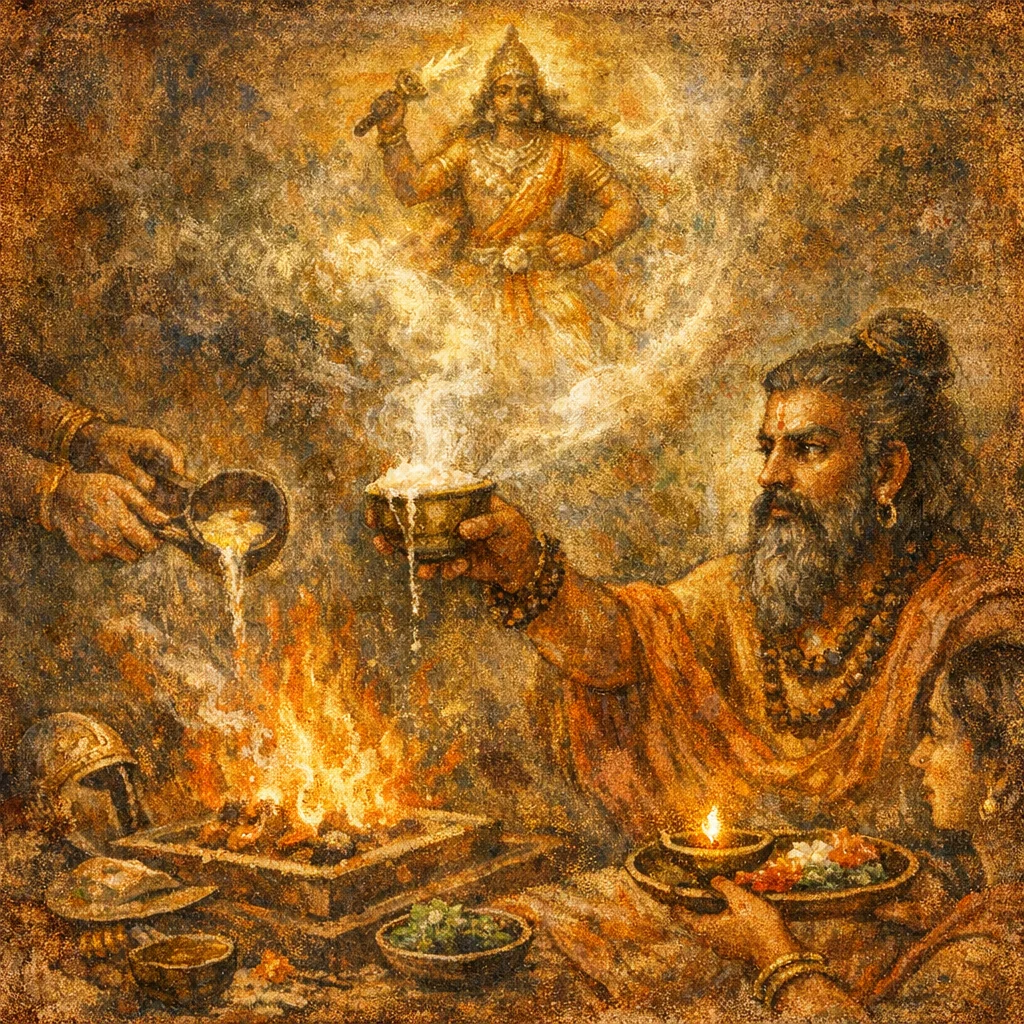
Sukta 110
Rishi: Ṛgvedic provenance (AV 20 ‘borrowed’ material); specific r̥ṣi not determinable from the provided excerpt alone.
Devata: Devas (collective), with Soma-rite as the operative focus.
Chandas: Likely Triṣṭubh/Jagatī-family in RV source; meter not securely determinable from excerpt alone.
Mantras
Mantra 1
इन्द्राय मद्वने सुतं परि ष्टोभन्तु नो गिरः । अर्कमर्चन्तु कारवः
For Indra, for exhilaration, round about the pressed draught let our songs resound; let the singers hymn the radiant praise.
Mantra 2
यस्मिन् विश्वा अधि श्रियो रणन्ति सप्त संसदः । इन्द्रं सुते हवामहे
In whom all prosperities rejoice, and the seven assemblies—Indra, at the pressed draught we invoke.
Mantra 3
त्रिकद्रुकेषु चेतनं देवासो यज्ञमत्नत । तमिद् वर्धन्तु नो गिरः
In the Trikadruka pressings the Gods stretched forth the quickening power, the Sacrifice. That very power—may our uttered hymns increase it.
Frequently Asked Questions
To strengthen the efficacy of a Soma-oriented sacrifice and to draw Indra’s presence so prosperity (śrī), strength, and success accrue to the patron.
Because the sukta treats correctly voiced praise as an active force that increases the sacrifice’s quickening power (cetanā) and makes the offering effective.
They refer to a Soma-pressing context (a recognized pressing-setting in Vedic ritual language), marking the moment/place where the Gods extend the sacrifice’s enlivening power.