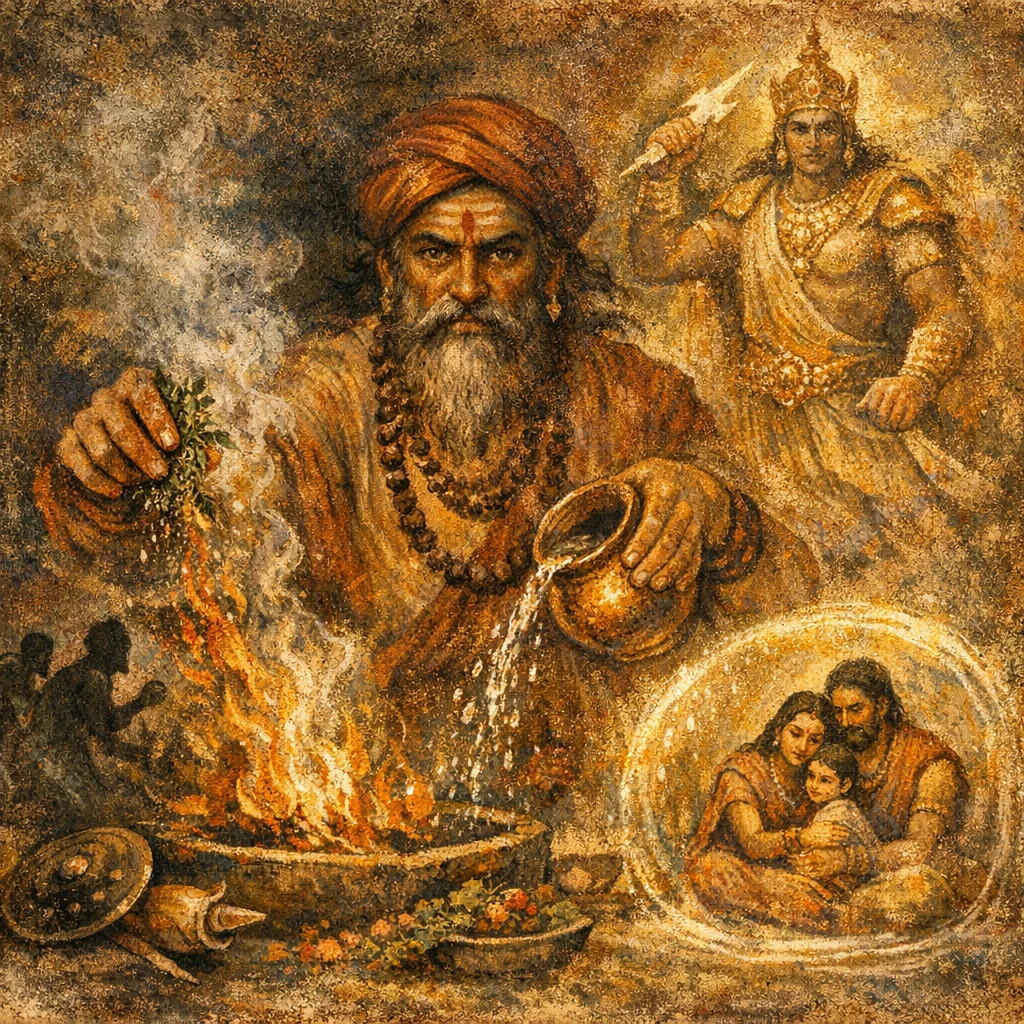
Sukta 7
Rishi: Ṛgvedic provenance; attributed per the corresponding RV hymn’s seer in traditional indices.
Devata: Sūrya (with heroic epithets overlapping Indraic style)
Chandas: Anuṣṭubh (as transmitted)
Mantras
Mantra 1
उद् घेदभि श्रुतामघं वृषभं नर्यापसम्। अस्तारमेषि सूर्य
Up verily thou movest against the famed evil—(as) the Bull of manly deeds, the Overcomer: thou goest on, O Sūrya.
Mantra 2
नव यो नवतिं पुरो बिभेद बाह्वोजसा । अहिं च वृत्रहावधीत्
He who with arm-born might hath shattered nine-and-ninety fortresses, and the Serpent too the Vṛtra-slayer hath smitten down.
Mantra 3
सन इन्द्रः शिवः सखाश्वावद् गोमद् यवमत्। उरुधारेव दोहते
For us may Indra—kindly Friend—yield wealth of steeds, of cattle, and of barley, as one that milketh like a broad-flowing stream.
Mantra 4
इन्द्र क्रतुविदं सुतं सोमं हर्य पुरुष्टुत । पिबा वृषस्व तातृपिम्
O Indra, knower of sacred purpose, O tawny One, much praised of men—drink the pressed Soma; wax strong therewith, unto full content.
Frequently Asked Questions
It is primarily a śānti/protective recitation: it uses the Sun’s victorious rising to drive away harmful influence (agha) and restore auspiciousness.
In this short RV-derived set, Sūrya clears away harm through light and forward motion, while Indra is invoked as the beneficent ally who ‘yields’ prosperity and, when strengthened by Soma, stabilizes protection and success.
No. The hymn works as a mantra-recitation by itself; optional additions (like sprinkling water or keeping barley as a prosperity token) are supportive but not required.