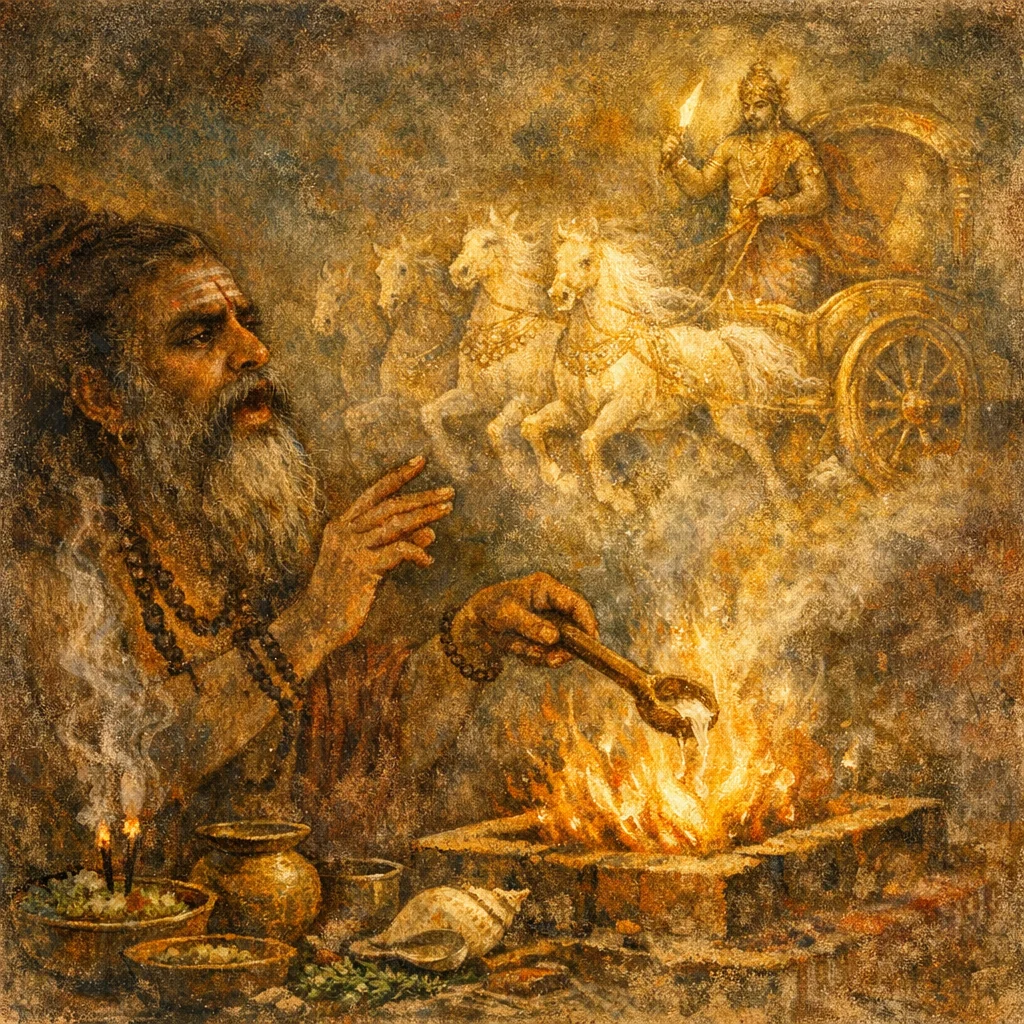
Sukta 10
Rishi: RV-derived; exact AV 20 r̥ṣi assignment varies.
Devata: Indra (implicit in Indra-stuti context)
Chandas: Anuṣṭubh-like cadence is possible in some recensional analyses, but the RV source context typically favors Triṣṭubh/Jagatī groupings; meter identification here remains uncertain without full pada-count verification.
Mantras
Mantra 1
उदु त्ये मधुमत्तमा गिर स्तोमास ईरते । सत्राजितो धनसा अक्षितोतयो वाजयन्तो रथा इव
Up rise, in sooth, those honey-sweetest songs; the lauds are set astir— Ever-victorious, with wealth, of aid unperishing, prize-winning, like unto chariots in their course.
Mantra 2
कण्वा इव भृगवः सूर्या इव विश्वमिद्धीतमानशुः । इन्द्रं स्तोमेभिर्महयन्त आयवः प्रियमेधासो अस्वरन्
Like Kaṇvas, like Bhṛgus, like suns, they won, in very truth, the whole of sacred thought. Exalting Indra with their lauds, the Āyavas, of pleasing wisdom, lifted up their song.
Frequently Asked Questions
For paustika aims—prosperity, prize-winning success, and steady help—by energizing Indra-focused praise (stoma) as an effective force.
They function as proof of efficacy: the hymn links your recitation to celebrated seer lineages whose praise successfully magnified Indra and ‘won’ inspired thought and results.
Not strictly. The core requirement is focused dhīti and clear intention; a small sweet offering (honey or sweetened water) can be added as a symbolic support for ‘honey-sweet’ speech.