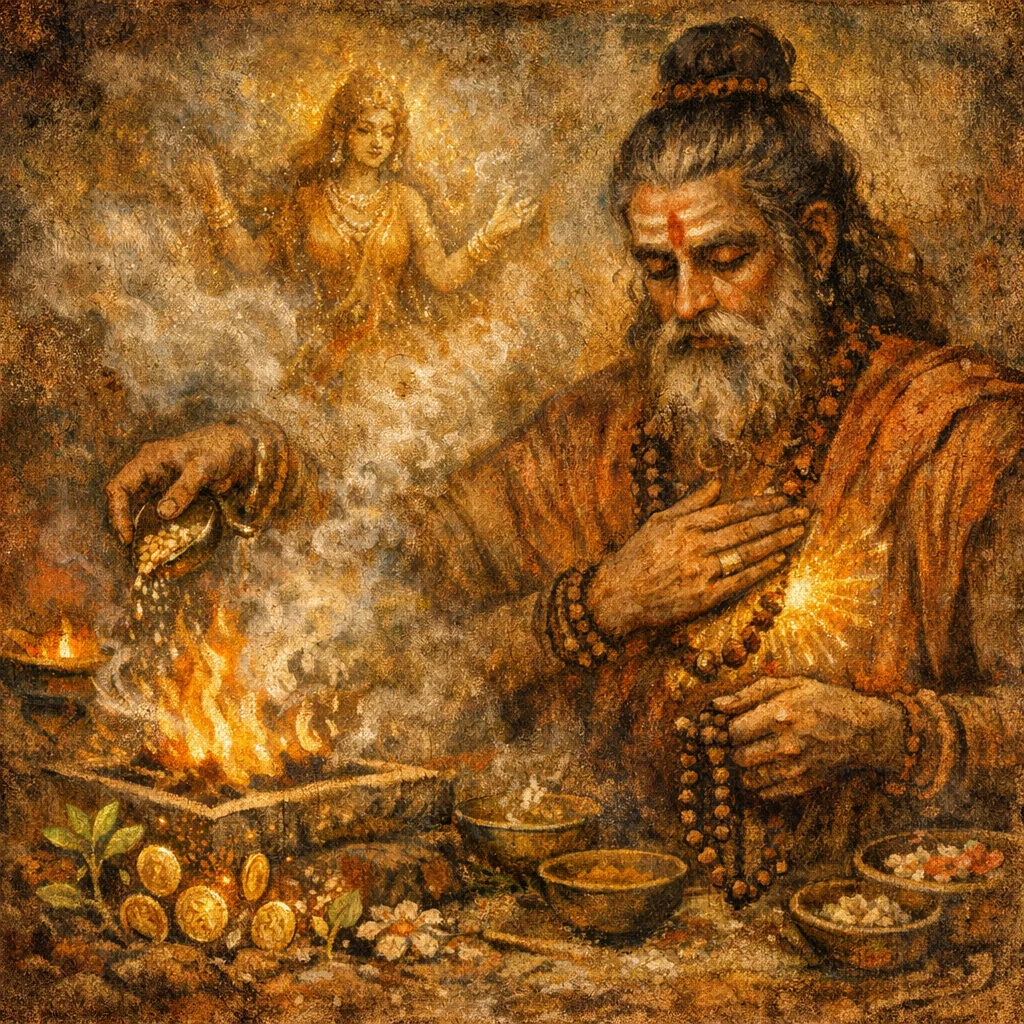
Sukta 52
Rishi: To be confirmed by AVŚ 19.52 anukramaṇī
Devata: Kāma (personified Desire)
Chandas: Triṣṭubh (probable; requires metrical verification)
Mantras
Mantra 1
कामः। कामस्तदग्रे समवर्तत मनसो रेतः प्रथमं यदासीत्। स काम कामेन बृहता सयोनी रायस्पोषं यजमानाय धेहि
Kāma—Desire—arose in the beginning; the mind’s seed, the first that was. Do thou, O Kāma, with mighty desire, of one womb with it, bestow increase of wealth and thriving for the sacrificer.
Mantra 2
त्वं काम सहसासि प्रतिष्ठितो विभुर्विभावा सख आ सखीयते। त्वमुग्रः पृतनासु सासहिः सह ओजो यजमानाय धेहि
Thou, O Kāma, art established with might—wide-ruling, far-radiant—an ally that is made a friend. Thou art fierce, conquering in battles: bestow strength and vigour for the sacrificer.
Mantra 3
दूराच्चकमानाय प्रतिपाणायाक्षये । आस्मा अशृण्वन्नाशाः कामेनाजनयन्त्स्वः
From far away, unto him who draweth nigh, unto the hand that answereth hand, for unfailing gain—unto this man the Hopes gave ear; by Kāma they engendered Heaven’s good fortune.
Mantra 4
कामेन मा काम आगन् हृदयाद्धृदयं परि । यदमीषामदो मनस्तदैतूप मामिह
By Kāma, O Kāma, come thou unto me: from heart to heart encompass wholly. What mind is yonder theirs, that selfsame mind—let it draw near, let it come unto me here.
Mantra 5
यत् काम कामयमाना इदं कृण्मसि ते हविः । तन्नः सर्वं समृध्यतामथैतस्य हविषो वीहि स्वाहा
What, O Kāma, we—desiring—prepare for thee as oblation, may that for us in all things prosper and be fulfilled. Then of this offering do thou partake: Svāhā!
Frequently Asked Questions
No. Kāma here is broader: the cosmic impulse that drives creation and attainment. The hymn applies that power to prosperity, success, and fulfilment of aims, not only romance.
Akṣaya means “unfailing” or “imperishable.” The hymn seeks gains that do not diminish—stable prosperity or success that remains secure.
Traditionally it culminates in a havis offering with svāhā (19.52.5). A household fire is ideal, but a minimal offering setup (lamp/fire substitute) with clear dedication is often used in practice when a full rite is not possible.