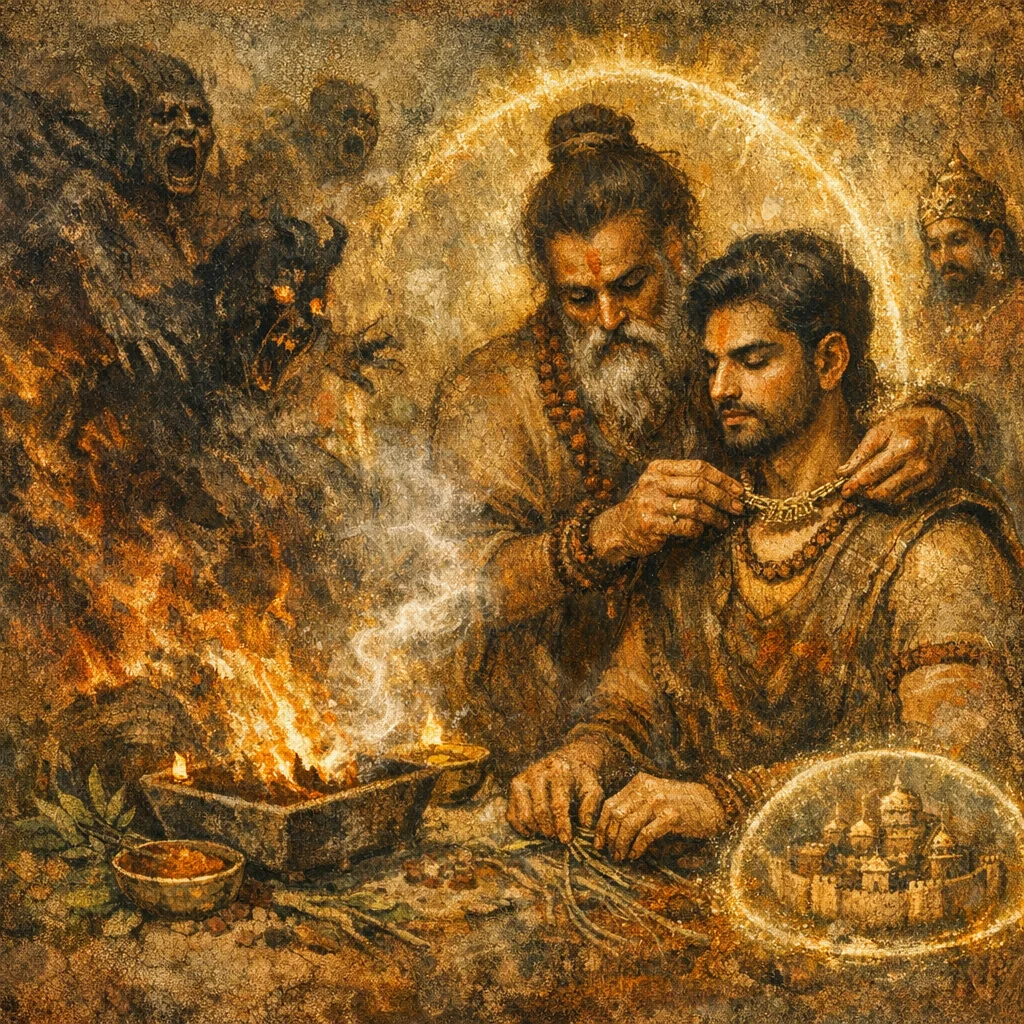
Sukta 30
Rishi: Atharvanic tradition (rakṣā-hymn; specific r̥ṣi not supplied in the input)
Devata: Darbha as deified protective agent; Indra/Brahmaṇaspati as empowering identifications
Chandas: Anuṣṭubh (probable; standard for many AV rakṣā verses)
Mantras
Mantra 1
दर्भमणिः। यत् ते दर्भ जरामृत्युः शतं वर्मसु वर्म ते । तेनेमं वर्मिणं कृत्वा सपत्नां जहि वीर्यैः
Darbha-amulet. Since, O Darbha, Age-and-Death are to thee a coat of mail amid a hundred armours—therewith, having made this man armoured, smite thou the adversaries with thy heroic powers.
Mantra 2
शतं ते दर्भ वर्माणि सहस्रं वीर्याणि ते । तमस्मै विश्वे त्वां देवा जरसे भर्तवा अदुः
A hundred are thy armours, O Darbha; a thousand are thy powers. Thee have all the Gods bestowed for this man to wear, for old age—unto long life.
Mantra 3
त्वामाहुर्देववर्म त्वां दर्भ ब्रह्मणस्पतिम्। त्वामिन्द्रस्याहुर्वर्म त्वं राष्ट्राणि रक्षसि
Thee they entitle divine armour; thee, O Darbha, (they call) the Lord of sacred power. Thee they call Indra’s armour: thou dost guard the kingdoms.
Mantra 4
सपत्नक्षयणं दर्भ द्विषतस्तपनं हृदः । मणिं क्षत्रस्य वर्धनं तनूपानं कृणोमि ते
Foe-wasting, O Darbha, heart-scorching to the hater—an amulet, the increaser of dominion, a guardian of the body, I make for thee.
Mantra 5
यत् समुद्रो अभ्यक्रन्दत् पर्जन्यो विद्युता सह। ततो हिरण्ययो बिन्दुस्ततो दर्भो अजायत
When the Ocean roared aloud, and Parjanya with his lightnings joined him, thence sprang the golden drop; thence Darbha was brought to birth.
Frequently Asked Questions
In AV 19.30 darbha is treated as a deified protective power. It is praised as “divine armour” and even identified with Brahmaṇaspati and Indra’s varman, so it functions as a sacred protector, not merely a plant.
The hymn aims at rakṣā and paustika results: strong protection like armour, support for long life into old age, and safeguarding of one’s well-being—extended in the text to protection of the rāṣṭra (the realm/community).
It is applied by consecrating darbha grass through recitation and then wearing or tying the darbha as an amulet/armour (varman). The act of ‘wearing’ is central to the hymn’s imagery and intended effect.