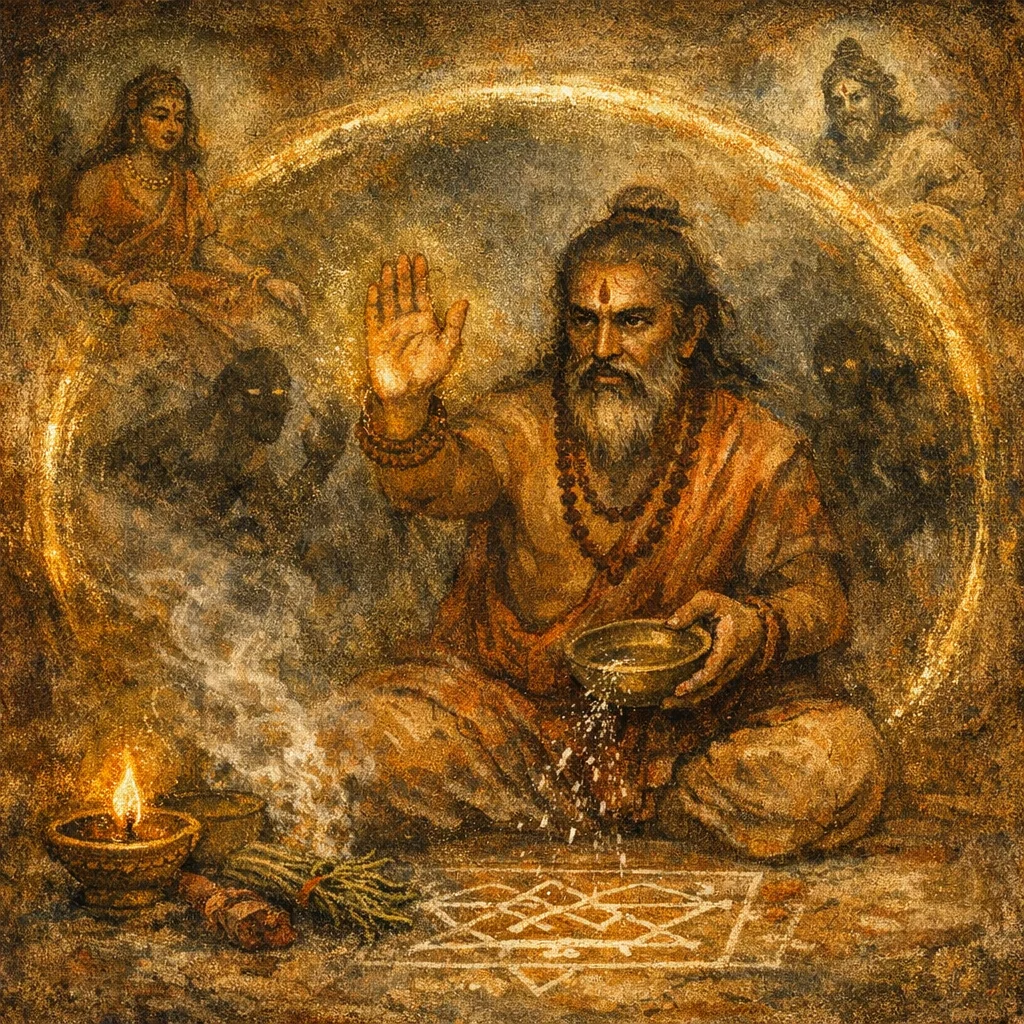
Sukta 14
Rishi: Atharvanic tradition (late AV śānti corpus; specific ṛṣi not explicit in the provided excerpt)
Devata: Abhaya (Fearlessness) with Dyāvā-Pṛthivī and the Pradiśas (quarters) as supporting powers
Chandas: Mixed/late AV style; predominantly anuṣṭubh-like cadence (not strictly determinable from excerpt alone)
Mantras
Frequently Asked Questions
For establishing fearlessness and protection—especially when entering uncertain situations, facing opposition, or seeking an auspicious resolution to a matter.
Because the hymn builds safety on two supports: cosmic stability (Heaven–Earth becoming benign) and spatial stability (the quarters becoming free of rivals), creating all-around protection.
No. The verse is self-sufficient as a śānti/rakṣā recitation; it can be spoken with a clear intention for safety and a calm, non-hostile closing attitude.